
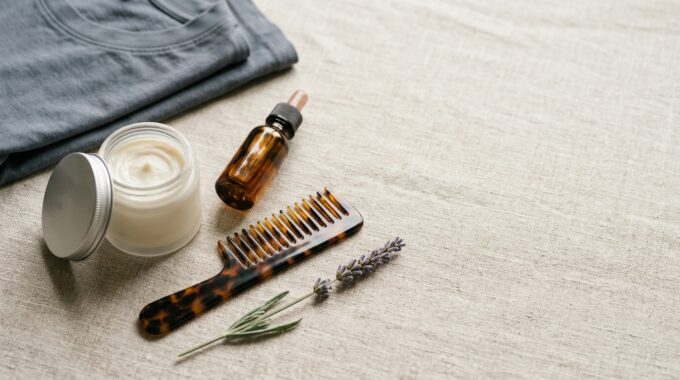
There’s a reason why curly hair is more difficult to manage than straight hair, and it can be boiled down to one structural explanation — the dryness, frizz, and “why does my curl pattern change every day” frustration. I’m Alex, and the formula has been the same with men for years: the ones that give up on quick fixes and create a regimen around hydration and gentle treatment are the ones that achieve the most consistent results.
Table Of Content
- Key Takeaways
- Why Curly Hair Behaves Differently
- Why Natural Styling Tends to Work Better
- Common Curl Struggles and What’s Actually Causing Them
- Dryness and Frizz
- Uneven Curl Pattern
- Volume That’s Either Flat or Overwhelming
- Scalp Discomfort
- Getting the Basics Right
- Washing Frequency
- Conditioning
- Drying Without Damage
- Choosing Natural Styling Products
- Oils for Sealing Moisture
- Creams for Definition
- Gels for Hold
- Application Technique Matters as Much as Product Choice
- Learning What Your Hair Is Telling You
- Haircuts That Work With Your Curl Pattern
- Shorter Curly Styles
- Medium-Length Styles
- Longer Curly Hair
- Talking to Your Barber
- Comparison: Natural Styling Products by Curl Need
- Curl Type-Specific Care
- Loose Curls
- Tight Curls and Coils
- Thick, Dense Curls
- Nighttime Care
- Weather and Environmental Adjustments
- Humidity
- Cold, Dry Air
- Active Lifestyles and Curl Care
- Diet and Hydration
- Scalp Care
- FAQ
- Q1: How do I style curly hair without gel?
- Q2: How often should men wash curly hair?
- Q3: What are the best natural products for men’s curly hair?
- Q4: Why does curly hair frizz so easily after styling?
- Q5: Does curly hair improve over time with the right routine?
- The Bottom Line
Key Takeaways
- Frizz and most dryness in curly hair result from the spiral arrangement of the hair, which makes it more difficult for natural oils to travel down the strand.
- The one thing most people do wrong is overwashing; most curl types should be washed every few days to once a week, not daily.
- Products work best applied to damp hair, not dry hair.
- Rough towel-drying with a regular towel loosens up curl clumps and increases frizz — a microfiber towel or old cotton t-shirt works better.
- A haircut that follows your natural curl pattern makes daily styling significantly easier than one that fights it.
Why Curly Hair Behaves Differently
Curly hair is formed by an oval or asymmetrical hair follicle, which causes the hair to bend as it grows instead of staying straight. That bend reduces the flow of the scalp’s natural oils down the hair shaft the way they do with straight hair, causing the hair to dry out and show damage more clearly.
That dryness creates a vicious circle: dry hair frizzes more readily, frizz breaks up the natural clump of the curl, and a broken-up curl pattern looks less defined even when the hair is otherwise perfectly healthy. Another common misconception is that dry, frizzy curls are shorter because the coil tightens up and shrinks in size, not because the hair isn’t growing. Measuring hair length when it’s wet and stretched out gives you the true length.
Why Natural Styling Tends to Work Better
Heavy, alcohol-based products can cause curls to lose moisture quickly, as can strong synthetic fragrances. Lighter, water-based and oil-based formulas generally work with the curl rather than against it, since they don’t pull the moisture from the curl that it needs to maintain its shape.
None of this means “no products” — it means selecting formulas that add or lock in moisture instead of ones that strip it out for the sake of quick hold.
Common Curl Struggles and What’s Actually Causing Them
Dryness and Frizz
Curly hair loses moisture to the air faster than straight hair, and heat tools make that worse. Once the outer cuticle is roughed up, curls stop clumping cleanly and start looking frayed instead of defined.
Uneven Curl Pattern
Curls that are tighter in some places and looser in others are typically a drying and handling problem, not a “bad hair” problem — hair dried without any shape guidance, or scrunched unevenly, will set unevenly.
Volume That’s Either Flat or Overwhelming
Too much product or too little is typically the culprit for both: too little means the hair lacks definition, while too much — particularly heavy oils on fine curls — weighs it down instead of lifting it.
Scalp Discomfort
Dryness isn’t the only cause of an itchy, flaky scalp under curly hair — it may also be product buildup caused by infrequent washing. It’s a balance: washing too often strips oils, waiting too long lets buildup irritate the scalp.
Pro Tip: If your scalp gets itchy between washes, that’s a signal to shorten the interval slightly or add a light clarifying wash — not to pile on more oil.
Getting the Basics Right
Washing Frequency
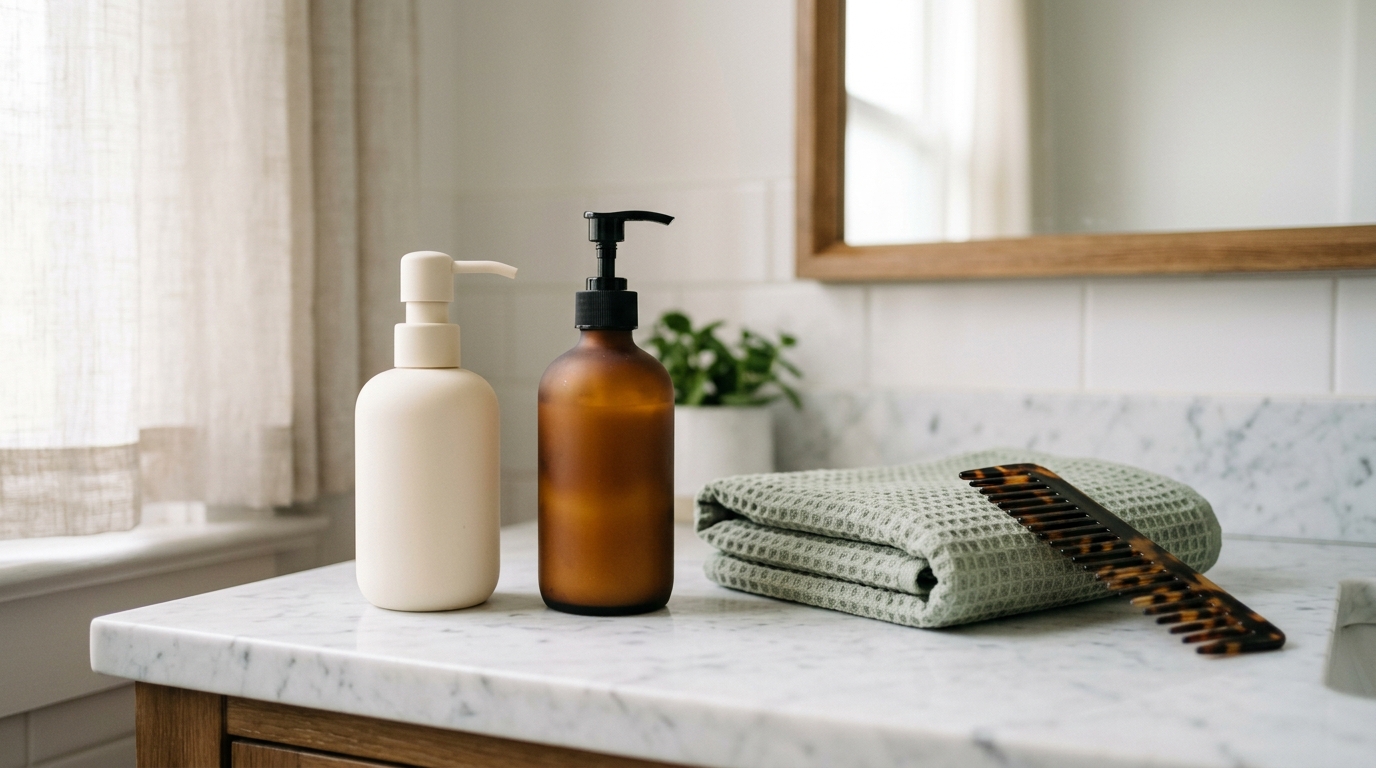
This is where a lot of routines go wrong in both directions. Dermatologists at the American Academy of Dermatology say that thick or curly hair generally doesn’t need daily or even weekly washing, and washing at least every 2 to 3 weeks is enough for scalp and hair health for many curl types — though tighter, coilier textures often do fine even less often than that, while looser curls with an oilier scalp may need something closer to once or twice a week.
The right frequency really depends on your specific curl pattern and scalp — using a mild, moisturizing shampoo and paying attention to how your scalp feels is a better guide than a fixed rule.
Co-washing — cleansing with a conditioner instead of shampoo between full washes — is a common middle ground that removes some buildup without stripping oil the way shampoo does.
Conditioning
Conditioner does more than add slip. It smooths the cuticle layer of the hair, and a smoother cuticle reflects less frizz and lets curls clump together more cleanly.
Apply conditioner from mid-length to ends, where hair is driest and oldest, and focus less on the scalp itself. Rinsing with cooler water at the end can help the cuticle lie flatter, though the effect is modest.
Drying Without Damage
Rubbing curls dry with a regular towel is one of the more damaging habits in a curly routine — the friction roughs up the cuticle and breaks apart curl clumps that took real effort to form. A microfiber towel or an old cotton t-shirt, used to gently press (not rub) water out, causes noticeably less frizz.
Pro Tip: Apply your styling product while hair is still soaking wet, not just damp — curls hold product and shape best when there’s still water weighing down the strand.
Choosing Natural Styling Products
Natural styling isn’t product-free — it’s about choosing formulas that support moisture rather than fight it.
Oils for Sealing Moisture
Light oils — coconut, argan, and jojoba are common choices — work best applied after water and cream, to seal moisture in rather than provide it directly. A few drops rubbed between the palms and scrunched into damp hair is usually plenty; too much oil just leaves curls looking greasy rather than more defined.
Creams for Definition
Curl creams work best applied to soaking wet hair and are generally more effective at holding curl clumps together than oil alone. Fewer ingredients and lighter fragrance tend to mean less risk of buildup over time.
Gels for Hold
A lightweight gel — aloe-based or flaxseed gel are common natural options — applied after cream can lock the curl shape in place while it air-dries. The trick is leaving hair alone once gel is applied; touching or restyling while it’s still wet is one of the most common causes of frizz.
Application Technique Matters as Much as Product Choice
Product choice gets most of the attention, but how it’s applied matters just as much:
- Always apply to damp or soaking wet hair — dry hair absorbs far less product.
- Use fingers rather than a comb when defining curls, since combing breaks up clumps that fingers can shape more gently.
- Once product is applied and curls are set, leave hair alone until fully dry — repeated touching is one of the most common causes of frizz.
For a full walkthrough of an actual wash day from shampoo to final styling, see our step-by-step wash-day routine guide.
Learning What Your Hair Is Telling You
Dry curls feel rough to the touch. Overloaded curls feel greasy or heavy. Well-balanced curls feel springy and hold their shape without extra weight. Paying attention to that feedback, and changing one variable at a time rather than several products at once, is the fastest way to actually learn what your specific hair needs instead of guessing.
Haircuts That Work With Your Curl Pattern
A cut that respects the natural direction of the curl makes daily styling significantly easier than one that fights it.
Shorter Curly Styles
Very short cuts can shrink curly hair’s visible length further, so leaving a bit more length on top gives curls room to actually form rather than just coiling tight against the scalp. Clean, tapered sides paired with a slightly longer top is a common low-maintenance combination.
Medium-Length Styles
Medium length lets curls stack and move without the extra weight of longer hair pulling them straight, which is part of why many men with looser curl patterns find this length easier to manage day-to-day than either very short or very long hair.
Longer Curly Hair
Length adds weight, and weight pulls curls looser and straighter over time. Layering removes some of that added weight and helps curls keep their shape rather than being dragged down, though longer hair generally does need more frequent moisture and slightly more patience to style well.
Pro Tip: If your curls seem to loosen dramatically as hair gets longer, that’s usually the hair’s own weight overriding the curl pattern — not a sign your curl type is changing.
Once you’ve decided on the type of curl you want, talk to your barber or stylist about the direction of the cut. For more on this, see our guide on communicating curl goals and cut direction to a barber or stylist.
Talking to Your Barber
A lot of frustrating haircuts come down to a communication gap rather than a bad barber. Being specific helps: mention that you want the cut to follow your curl’s natural direction, ask that heat tools not be used to force a shape into hair that will spring back once washed, and specify whether you want the cut done on dry or wet hair.
Cutting curly hair dry, when a stylist is experienced with curl patterns, often gives a more accurate sense of how the finished cut will actually sit — wet hair stretches out and can lead to more length being removed than intended.
Comparison: Natural Styling Products by Curl Need
| Product Type | Best For | Key Ingredients | Applied To |
|---|---|---|---|
| Curl Cream | Definition, taming frizz | Shea butter, glycerin, aloe | Soaking wet hair |
| Light Oil (jojoba, argan) | Sealing in moisture, shine | Fatty acids, vitamin E | Damp hair, after cream |
| Natural Gel | Hold, frizz control in humidity | Aloe vera, flaxseed extract | Damp hair, after oil/cream |
| Leave-In Conditioner | Detangling, daily moisture top-up | Cetyl alcohol, panthenol | Damp hair before styling |
If your curls are looking flat, waxy, or weighed down, see our troubleshooting guide for product buildup on curly hair.
Curl Type-Specific Care
Loose Curls
Heavy product can flatten loose curls easily, so a lighter cream and less oil generally work better than a rich formula. Focusing product near the roots helps maintain lift rather than weighing the whole strand down.
Tight Curls and Coils
Tighter curl patterns lose moisture fastest and shrink up more visibly when dry, so these benefit from richer cream applied to soaking wet hair, with gel layered on top for extra hold. Stretching the hair gently while styling can help reduce shrinkage without disrupting the curl itself.
Thick, Dense Curls
Thick hair takes more product to cover fully and can dry out in patches if product isn’t distributed evenly. Sectioning hair with fingers and applying product layer by layer, rather than trying to cover it all at once, gives more even coverage and reduces dry patches.
Nighttime Care
What happens overnight has a bigger effect on next-day frizz than most routines account for. A rough pillowcase creates friction that breaks up curl clumps while you sleep — a satin or silk pillowcase, or a silk/satin bonnet, reduces that friction significantly. Loosely gathering curls into a high, loose “pineapple” style before bed, rather than a tight band, keeps volume at the roots protected without crushing the curl pattern.
Weather and Environmental Adjustments
Humidity
Extra moisture in the air causes curls to swell and frizz, since hair absorbs ambient moisture unevenly. A light gel applied to damp hair before the humidity hits helps create a barrier that reduces frizz, though nothing fully eliminates humidity’s effect on curl texture.
Cold, Dry Air
Cold air pulls moisture out of hair the same way heat does, leaving curls feeling stiff and looking dull. Slightly heavier cream, plus keeping hair covered during extended cold exposure with a smooth-lined hat (not wool, which causes friction), helps offset the moisture loss.
Active Lifestyles and Curl Care
Sweat carries salt, and salt residue dries hair out over time the same way ocean water does. Rinsing hair with water after a workout — without necessarily doing a full wash — helps clear salt buildup without over-stripping natural oils. Blotting sweat gently rather than tying wet hair up tightly also helps prevent breakage at the point where hair is pulled back.
Diet and Hydration
Hair health does reflect overall diet and hydration over time, even though no single meal changes texture overnight. Adequate water intake supports scalp and hair moisture balance, protein supports the hair’s structural strength, and dietary fatty acids support scalp condition. These are slow, cumulative effects — the payoff shows up over months, not days.
Scalp Care
A calm, non-irritated scalp is the foundation curls grow from. Gentle scalp massage with fingertips (never nails) can support blood flow to the scalp without requiring a wash every time. If itching develops between washes, it’s usually product buildup rather than a hygiene failure, and a light clarifying rinse solves it faster than skipping washes altogether.
FAQ
Q1: How do I style curly hair without gel?
A light curl cream combined with a natural oil like jojoba or argan, applied to soaking wet hair and left to air-dry, can define curls without gel’s stronger hold. It won’t last as long through humidity as a gel would, but it gives a softer, more natural finish.
Q2: How often should men wash curly hair?
Most curl types do well with washing every 2 to 3 days up to once every couple of weeks, depending on curl tightness and scalp oiliness, according to dermatologist guidance from the AAD. Washing daily is one of the most common causes of dryness and frizz in curly hair.
Q3: What are the best natural products for men’s curly hair?
Plant-based curl creams and lightweight gels — aloe vera and flaxseed gel are common choices — tend to define curls without the drying effect of alcohol-based products. Light oils like jojoba or argan work well layered on top to seal in moisture.
Q4: Why does curly hair frizz so easily after styling?
Curly hair loses moisture faster than straight hair because its coiled structure makes it harder for scalp oil to travel down the strand, and touching or restyling curls before they’ve fully dried disrupts the clumps that create definition. Letting hair dry completely undisturbed after applying product significantly reduces frizz.
Q5: Does curly hair improve over time with the right routine?
Consistent moisture-focused care and gentle handling do tend to improve curl definition and reduce breakage over a period of months, though the change is gradual rather than immediate. Most people notice a difference in texture within 4 to 8 weeks of consistent care.
The Bottom Line
Curly hair isn’t harder to manage than straight hair — it just responds to different inputs, and most of the frustration people run into comes from applying straight-hair habits (daily washing, dry-hair combing, rough towel-drying) to a texture that needs the opposite. Get the fundamentals right — wash less, apply product wet, dry gently — and the rest of this becomes fine-tuning rather than guesswork.