
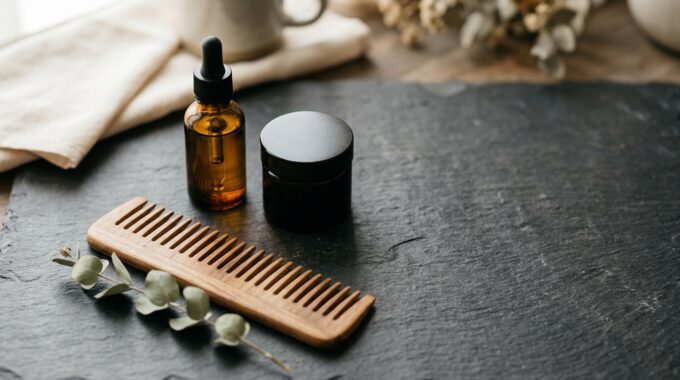
Most men have the same hair-care routine for their beard as they do for their head: the same shampoo, towel-drying, and “figuring it out as you go” strategy. Typically, that’s where things go wrong. I’m Alex, and I’ve been assisting men for years to develop a routine that really lasts, and the main change I’ve made is this: beard hair and scalp hair are not made of the same fabric, and they don’t have the same needs.
Table Of Content
- Key Takeaways
- Why Beard Hair and Scalp Hair Aren’t the Same Thing
- The Skin Underneath Gets Ignored
- Common Problems, and Why They Happen
- Building the Right Toolkit
- Tools for Scalp Hair
- Tools for the Beard
- Choosing Products That Actually Match Your Hair
- Shampoo and Conditioner
- Beard Oils and Balms
- Styling Products
- A Simple Daily Routine
- Morning
- Evening
- Weekly and Monthly Maintenance
- Diet, Sleep, and the Stuff That Isn’t a Product
- Common Mistakes Worth Fixing
- When to See a Professional
- Adjusting for the Seasons
- Comparison: Common Beard Product Types
- The Bottom Line
- FAQs
- Q1: How often should I wash my beard and hair?
- Q2: Does beard oil help scalp hair grow?
- Q3: What’s the best product for dry, coarse beard hair?
- Q4: How do I stop getting split ends?
- Q5: Why does my beard flake even though I moisturize it?
Once you stop treating them the same, most of the frustrating stuff — patchiness, flaking, dryness — gets a lot easier to manage.
Key Takeaways
- Hair on the beard is thicker and more wiry than hair on the scalp, so it requires more weight and emollient than the typical scalp shampoo offers.
- Too frequent washing removes the natural oils that help to keep the hair and skin underneath it healthy; 2-3 times a week is sufficient for most men.
- Beard dandruff and itching are caused by neglecting the skin under the beard, just as much as they are caused by neglecting the hair itself.
- Most long-term damage can be avoided through a simple weekly regimen of one deep-conditioning treatment and one gentle exfoliating treatment, followed by a trim every 3–4 weeks.
- The health of hair and beard is affected by diet, hydration, sleep, and stress — not just in theory.
Why Beard Hair and Scalp Hair Aren’t the Same Thing
Hair from the scalp is finer, fairly regular in growth pattern, and more likely to break and split over a longer length. Beard hair is coarser and more wiry, and it grows out of a different follicle structure — part of why beards often come in patchy or uneven even when scalp hair grows in evenly.
That difference matters practically. A fine scalp hair shampoo will typically leave a beard feeling dry and irritated, while a rich beard oil applied to scalp hair will weigh it down and give it an oily appearance. Choosing the right product for your hair type — not just whatever’s available in the shower — is a more significant factor than many routines account for.
The Skin Underneath Gets Ignored
This is something most routines ignore entirely: a beard’s underlying skin behaves differently than the rest of the face. Without regular washing, oil, sweat, dead skin cells, and everyday dirt build up against the skin, which can clog pores and trigger breakouts or beard dandruff. The American Academy of Dermatology’s beard care guidelines recommend washing the face and beard daily to remove the dirt, oil, and dead skin cells that build up underneath facial hair.
Common Problems, and Why They Happen
A few issues come up again and again:
- Dry, flaky skin under the beard — usually from under-washing (buildup) or over-washing (stripped oils), not a lack of beard oil alone.
- Split ends on scalp hair — mechanical damage from rough towel-drying, over-brushing, or heat styling.
- Dandruff on the scalp or under the beard — often driven by yeast (seborrheic dermatitis) rather than simple dryness, which is why moisturizer alone doesn’t fix it.
- Patchy beard growth — largely genetic, though skin health underneath can affect how full existing hair looks.
Pro Tip: If a patch under your beard looks scaly, red, and itchy rather than just dry, it’s more likely dandruff-related than a moisture problem — a shampoo with an antifungal ingredient will usually do more than a heavier oil.
Building the Right Toolkit
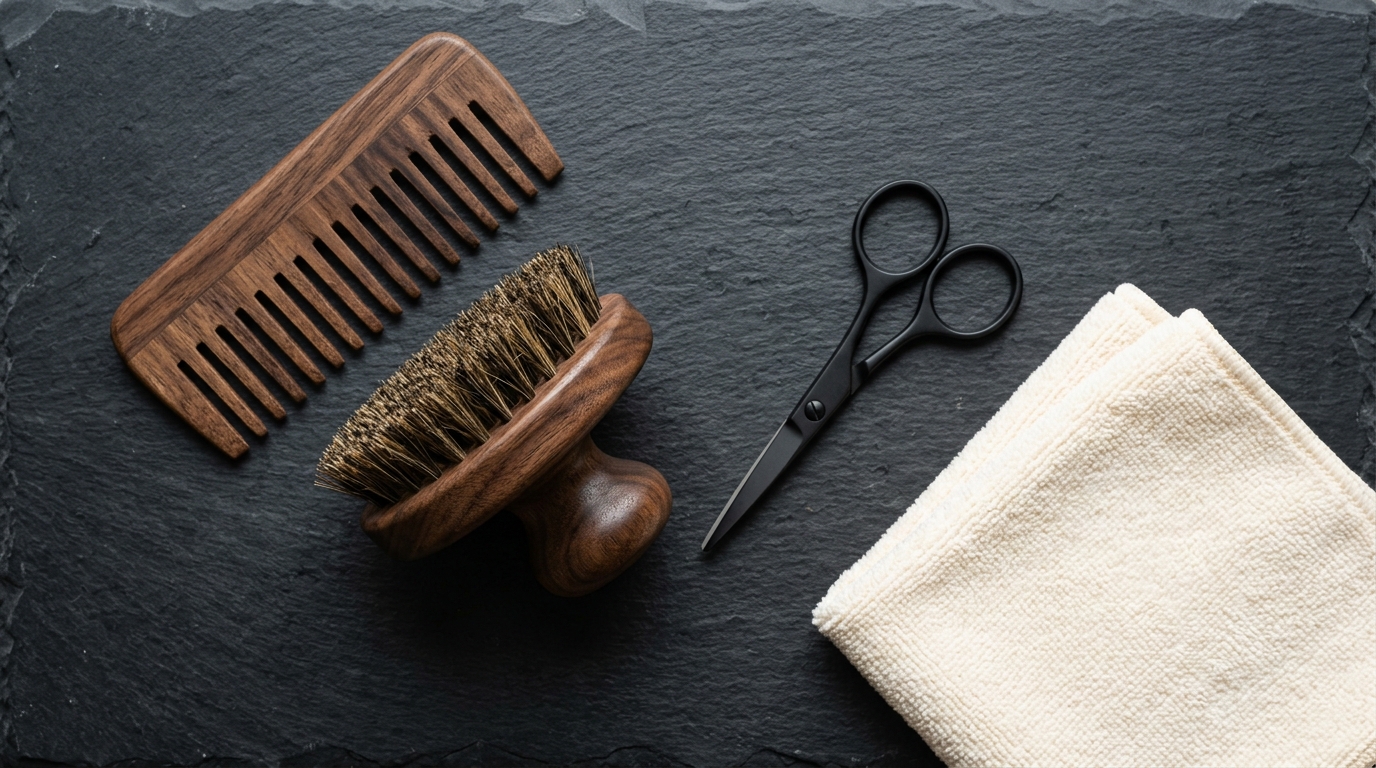
Before touching a single product, having the right basic tools cuts down on a lot of avoidable damage.
Tools for Scalp Hair
- A wide-tooth comb for detangling wet hair, which is more fragile than dry hair.
- A soft brush for daily distribution of natural oils.
- A hair dryer with a low-heat setting, since high heat is one of the more common causes of dryness and breakage.
Tools for the Beard
- A dedicated beard brush or comb — sturdier than a scalp brush, built for coarser hair.
- Small grooming scissors or a trimmer for split ends, used sparingly.
- A microfiber towel, which causes less friction damage than a standard terrycloth towel.
Choosing Products That Actually Match Your Hair
Shampoo and Conditioner
A shampoo’s main job is removing buildup without stripping the scalp of the oils it needs. For dry or coarse hair, a moisturizing, sulfate-free formula is usually a safer default than a stripping “clarifying” shampoo used every day. If thinning is a concern, formulas built around biotin, caffeine, or keratin are common starting points, though the evidence for topical caffeine and biotin shampoos improving thickness is mixed rather than settled.
Conditioner matters just as much, since it reduces tangling and mechanical breakage. Beard hair can be conditioned too, but a lighter, beard-specific conditioner tends to work better than a heavy scalp formula.
Beard Oils and Balms
Beard oil’s job is mostly about the skin underneath, not just the hair itself. According to the AAD, beard oil is generally recommended for men with normal to dry skin, while a lighter, fragrance-free moisturizer is better suited to sensitive or acne-prone skin — a distinction a lot of “just use beard oil” advice online skips entirely.
Common ingredients worth knowing:
- Jojoba oil — chemically similar to natural skin sebum, so it tends to absorb without feeling heavy.
- Argan oil — adds shine and moisture, particularly for coarser beard hair.
- Vitamin E — often included for its antioxidant properties, though it’s a supporting ingredient rather than a standalone fix.
Balms add hold and shape on top of moisture, which makes them more useful for longer or unruly beards than for short stubble.
Pro Tip: A few drops of beard oil goes further than most people expect — applying too much just leaves the beard looking greasy without adding real benefit.
Styling Products
Heavy gels and waxes on scalp hair can trap oil and debris close to the follicle. Lighter pomades or creams give hold without the same buildup risk. On a beard, a small amount of wax is usually enough to control flyaways and shape without stiffening the hair unnaturally.
A Simple Daily Routine
Morning
- Cleanse — wash hair and beard with a gentle, appropriate shampoo using warm (not hot) water, which preserves natural oils better than hot water does.
- Condition — apply conditioner to scalp hair, a lighter conditioner or oil to the beard, and let it sit briefly before rinsing.
- Style — apply a light styling product only where needed.
Evening
- Rinse if needed — a quick rinse is usually enough unless the day was unusually dirty or sweaty.
- Hydrate — a small amount of beard oil and, if the scalp is dry, a light leave-in product.
- Massage — a couple of minutes massaging the scalp and beard with fingertips can help distribute oils and may support circulation, though the effect on actual hair growth is modest at best.
Five minutes a day, done consistently, tends to matter more than an elaborate routine done occasionally.
Weekly and Monthly Maintenance
- Deep conditioning — once a week, a hair mask or beard conditioning treatment adds moisture that daily products don’t fully deliver.
- Exfoliation — gently exfoliating the scalp and the skin under the beard once a week helps clear dead skin and reduce buildup, which supports both comfort and the appearance of growth.
- Trimming — every 3 to 4 weeks keeps split ends and shape under control without over-cutting length.
Diet, Sleep, and the Stuff That Isn’t a Product
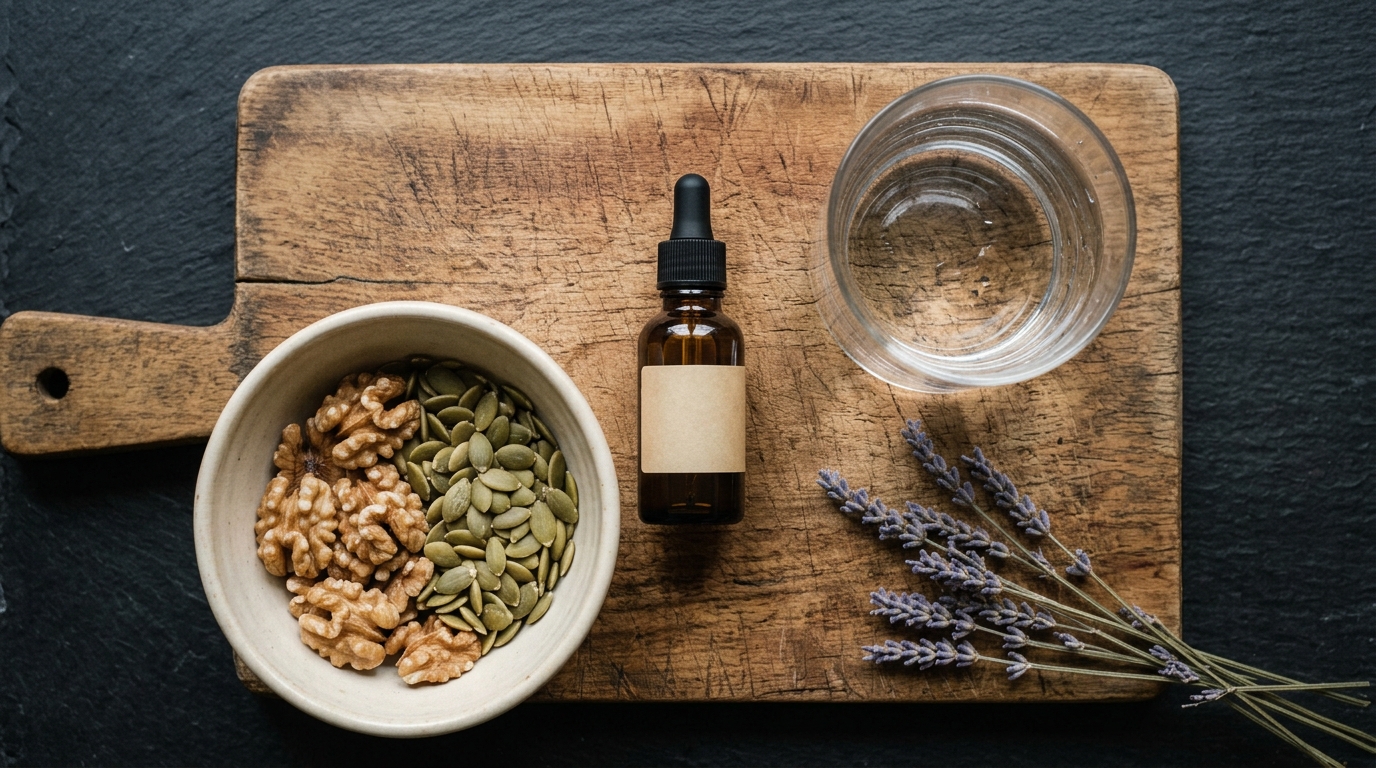
A poor diet or chronic sleep deficit won’t make up for a good shampoo or oil. Hair and skin health are tied to overall nutrition in ways that are easy to overlook:
- Protein (eggs, lean meat, legumes) provides the building blocks for hair strands.
- Vitamin D, zinc, and iron support follicle health, and low levels of any of these are linked to increased shedding in some studies.
- Hydration affects skin elasticity and, indirectly, how dry hair and beard feel.
- Sleep and stress management matter because chronic stress is linked to certain types of hair shedding (telogen effluvium), even though it’s rarely the sole cause.
None of this replaces a real diagnosis if something’s genuinely wrong — but as a baseline, it moves the needle more than most people expect.
Common Mistakes Worth Fixing
- Over-washing, which strips natural oils and leaves hair and skin drier than before.
- Harsh chemical formulas — sulfates and high-alcohol products in particular — on hair that’s already dry or coarse.
- Ignoring the skin under the beard, which is often the actual source of itching and flaking, not the hair itself.
- Skipping trims entirely, which lets split ends travel further up the hair shaft over time.
- Removing product before bed inconsistently, which can leave residue that clogs pores overnight.
When to See a Professional
A consistent routine handles most day-to-day issues, but some problems need more than a product swap. A dermatologist can properly diagnose things like androgenic hair loss, seborrheic dermatitis, or folliculitis — conditions that look similar to ordinary dryness or dandruff but don’t respond to it the same way. Cleveland Clinic explains that dandruff and dry scalp can look nearly identical but have different causes — dandruff is linked to excess oil and yeast, while dry scalp comes from a lack of moisture — exactly the kind of distinction that’s hard to make without a professional opinion, and one reason a persistent flaky scalp is worth getting checked rather than guessing at.
If symptoms don’t improve after a few weeks of consistent home care, that’s generally the signal to stop self-treating and get it looked at. The NHS guidance on dandruff specifically recommends seeing a doctor if symptoms haven’t improved after a month of anti-dandruff shampoo, or if the scalp is very itchy, red, or swollen.
Adjusting for the Seasons
Hair and beard needs shift with the weather more than most routines account for:
- Winter — cold, dry air pulls moisture out of hair and skin. Heavier beard oils and more frequent conditioning treatments help; hot showers make it worse, not better.
- Summer — sun, sweat, and chlorine or salt water weaken hair strands over time. Lighter oils, a rinse after swimming, and sun protection on the scalp (especially for thinning areas) help offset the damage.
- Spring and fall — humidity swings during transitional months often show up as scalp or beard flaking, even without a real change in routine.
Comparison: Common Beard Product Types
| Product Type | Best For | Key Ingredients to Look For | Price Range (per oz) |
|---|---|---|---|
| Beard Oil | Normal to dry skin, softening coarse hair | Jojoba, argan, vitamin E | $2–$6 |
| Beard Balm | Longer beards needing hold and shape | Beeswax, shea butter, essential oils | $3–$8 |
| Beard Conditioner | Daily detangling, sensitive/acne-prone skin | Lightweight silicones, panthenol | $1–$4 |
| Dandruff Shampoo (for beard) | Flaking, itching, beardruff | Zinc pyrithione, ketoconazole, selenium sulfide | $1–$3 |
The Bottom Line
There’s no single product that fixes everything, and most of what actually works is unglamorous: wash less than you think you need to, treat the skin under your beard as seriously as the hair itself, and give a routine a few weeks before judging it.
If you only change one thing, make it washing frequency and gentleness of formula — it affects both the beard and the scalp more than any oil or serum layered on top of a routine that’s already stripping natural moisture.
FAQs
Q1: How often should I wash my beard and hair?
Most dermatologists suggest washing the face and beard daily to clear buildup, while scalp hair generally does better with 2–3 washes a week to avoid stripping natural oils. Daily washing with too harsh a shampoo can actually make dryness and flaking worse rather than better.
Q2: Does beard oil help scalp hair grow?
No — beard oil is formulated for facial skin and coarser beard hair, and there’s no evidence it affects scalp hair growth. Using it on the scalp mainly just adds unnecessary weight and shine rather than any growth benefit.
Q3: What’s the best product for dry, coarse beard hair?
A beard oil or balm containing jojoba oil, argan oil, or vitamin E tends to work well for dryness, typically priced around $3–$6 per ounce. For very coarse hair, balm’s added wax content often provides more lasting softness than oil alone.
Q4: How do I stop getting split ends?
Regular trims every 3–4 weeks, gentle detangling with a wide-tooth comb, and limiting high-heat styling are the main fixes. The American Academy of Dermatology’s general hair care guidance also points to reducing friction from rough towel-drying as a contributing factor.
Q5: Why does my beard flake even though I moisturize it?
Flaking that persists despite regular moisturizing is often dandruff-related (seborrheic dermatitis) rather than simple dryness, since the two conditions look similar but have different causes. A shampoo with zinc pyrithione or ketoconazole is generally more effective in that case, and it’s worth seeing a doctor if it doesn’t improve within about a month.