

Key Takeaways
- Stretch and cool down for at least 5-10 minutes after each session to remove lactic acid from the body, limit soreness and to help your body understand that the session is over.
- Wash your skin within 20-30 minutes after workout — sweat stuck on skin can clog pores, break down the skin barrier, and cause breakouts after working out.
- Consume 20-40g of protein in 30-60 minutes after training to take advantage of the ‘window of opportunity’ for muscle building.
- Get a good night’s sleep 7-9 hours a night, every night—this is when growth hormone is produced, muscles grow and strength is improved—no supplement does this.
- The only way to recover is to take care of yourself after training, otherwise there is a high risk of injury, a lack of progress after 4-6 weeks and a loss of motivation to continue training.
Intro
People tend to concentrate on the training and ignore recovery. Self-care after your workout is the difference between making steady progress and burning out.
Table Of Content
- Key Takeaways
- Intro
- Why Post-Workout Self-Care Matters
- The Importance of Post-Workout Recovery
- Benefits for Mind and Body
- Immediate Post-Workout Steps
- Cool Down and Stretching
- Gentle Cool-Down & Targeted Stretching
- Stretch, Don’t Skip It
- Stretches or Yoga
- Hydration and Nutrition
- Rehydrate Properly
- Refuel with Post-Workout Nutrition
- Protein & Nutrient Intake
- Skincare and Hygiene
- Cleansing: The First Step to Refreshing Your Skin
- Get Changed Promptly After a Workout
- Post-Workout Skincare Routine
- Post-Workout Skincare Routine for the Body
- Self-Massage and Foam Rolling
- Use a Foam Roller
- Massage or Self-Myofascial Release
- Long-Term Recovery Strategies
- Active Recovery and Rest Days
- Mix in Active Recovery
- Take Rest Days
- Sleep and Stress Management
- Prioritize Getting Enough Good Quality Sleep
- Inconsistent Sleep Patterns
- Chronic Stress & Tension
- Contrast Therapy and Temperature Treatments
- Contrast Therapy (Hot-Cold Exposure)
- Consider a Cool Shower
- Mindful and Mental Self-Care
- Meditation and Deep Breathing
- Meditation
- Deep Breathing Exercises
- Journaling and Reflection
- Log Your Workout
- Reflect on Your Session
- Digital Detox and Relaxation
- Digital Detox Strategies
- Micro-Dosing Relaxation
- Holistic Self-Care Practices
- Pampering and Body Care
- Luxurious Baths
- Skincare Rituals
- Nutrition and Nourishment
- Mindful Eating
- Balanced Nutrition
- Nature and Outdoor Activities
- Nature Walks
- Gardening
- Building Consistent Self-Care Habits
- Creating a Routine
- Adapting to Needs
- Celebrating Progress
- Common Challenges and Solutions
- Time Constraints & Busy Lifestyles
- How Much Does a Personal Trainer Cost?
- Do I Really Need a Dedicated Post-Workout Routine?
- Can Good Recovery Speed Up Weight Loss?
- Summary
- Author Information
This post workout self care routine is what will make all the difference between consistent progress and frequent burnout.
This guide outlines the specific steps you should take following each session to feel better, recover quickly and continue showing up.
Why Post-Workout Self-Care Matters
The Importance of Post-Workout Recovery
Post-workout recovery is the time that your body and nervous system take to recover from the micro-tears, reset and restock your energy levels. This stage is essential in order to move forward — and to avoid injury. This I learned the hard way.
In my early training days, after I would train on the STRIDE-6S treadmill, I would drink a lot of water and go back to work. In a few weeks my knees were hurting, my skin was acneic, and I was sleeping shit. It wasn’t the exercise that was the issue. Skipping recovery was.
The recovery time after exercise depends on how intense the exercise was: With light activity: 24 hours with moderate activity: 24-48 hours with intense or heavy strength activity: 48-72 hours proper recovery.
Benefits for Mind and Body
There are 6 clear benefits of a structured post-workout self-care routine:
- Lowered post exercise muscle soreness (DOMS)
- Maintain lower training-induced cortisol level.
- Improved fluid and mineral balance
- Better-looking skin as a result of good post-gym hygiene.
- Better sleep quality and length of sleep.
- Greater commitment to continuing training opportunities.
- Higher level of commitment to ongoing training opportunities.
Immediate Post-Workout Steps
Cool Down and Stretching
Gentle Cool-Down & Targeted Stretching
Cool down stretching allows for a gradual decrease in the heart rate, elimination of lactic acid and helps prevent blood from pooling in the legs. Take 5–10 minutes of walking of low intensity or light movement before sitting down completely.
Stretch, Don’t Skip It
Regularly skipping the stretch after exercise will cause muscles to become tighter. Focus on the muscle group that you have just exercised.
Once you have finished your leg work with the Echelon Meridian Pilates Reformer or the SUMMIT STAIRMILL, target the hip flexors, hamstrings and calves. Chest openers and shoulder rolls should be done after upper body exercises.
Pause for 20-30 seconds for each stretch. Static is more effective than bounce, for cooling down.
Stretches or Yoga
Yoga after exercise combines breath with action, thus helping to calm down the body and switch from Fight or Flight to a resting state.
This 10-minute post-session flow serves as great eccentric recovery breathwork and continues to maintain flexibility week in and week out. Programs such as Physique 57 feature a cool down flows, which are worth following.
Hydration and Nutrition
Rehydrate Properly
After exercise, fluid is replenished with the fluid lost due to sweat. The rule of thumb: 16–24 oz (0.47–0.71 liters) of water for every pound (0.45 kg) of weight lost while exercising.
I always have the Echelon Water Bottle on hand for this reason — to make it easy to monitor intake, without me having to think about it.
Refuel with Post-Workout Nutrition
Feed within 30-60mins of training. This is the “glycogen refilling window” and the time at which muscles are most ready to absorb carbohydrates and proteins. A post workout food combination is a protein source that is easily digestible and moderate amounts of carbs: Greek yogurt with banana or a protein drink with oats.
Protein & Nutrient Intake
Try to get 20-40g of protein after exercise. Clean protein fuels are available in the market and are available at a variety of brands such as Women’s Best which are focused on workout recovery.
Include anti-inflammatory foods such as berries, leafy greens and turmeric to help with inflammation in a natural way. The metabolic reset electrolyte elixir phase: replenish, repair, restore.
Skincare and Hygiene
Cleansing: The First Step to Refreshing Your Skin
This section is the one that I personally like as after years of breakouts in the post gym phase. The combination of sweat, bacteria, and other contaminants from sunscreen, gym gear, etc. builds up quickly on the skin and can block pores.
Post workout skin care is the most crucial step in any skin care regimen after exercise. Facial Cleanser (Sulfate free) be used after 20-30 minutes of the finish. Avoid sweat on skin as it will increase the PH value of the skin, and will damage the moisture barrier.
Use an antibacterial body wash for body cleansing and body care after exercise. Watch for friction or heat spots: back, chest and underarms. Pat dry, not rub, as rubbing will decrease skin irritation.
Get Changed Promptly After a Workout
Post-Workout Skincare Routine
There are 4 steps in a complete post workout skin care routine:
- Cleanse — gently wash away sweat, oil and bacteria with a gentle face wash
- Tone — restore pH balance to the skin using an alcohol free toner
- Treat — The Ordinary Niacinamide 10% + Zinc 1% helps to control oil, minimize pores and reduce redness due to increased circulation
- Moisturize — Rehydrate skin barrier with a light, non-comedogenic moisturizer.
You’ll also need to take care of the hair when it comes to skin, hair & body comfort after exercise. After sweaty workouts, rinse hair with cool water to get rid of residue and salt. On non-shampoo days, if you are shampooing every day, co-washing (conditioner only) will prevent over drying.
Post-Workout Skincare Routine for the Body
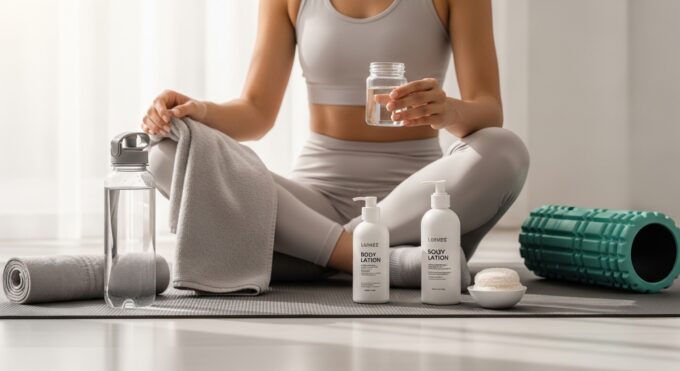
Shower then apply a body lotion containing ceramides or shea butter when skin is slightly moist. This keeps the skin hydrated and replenishes the moisture lost from the skin due to sweating. If you are prone to acne on your back, you will see a difference replacing your body wash with a salicylic acid body wash two or three times a week.
Self-Massage and Foam Rolling
Use a Foam Roller
Post exercise foam rolling is called myofascial decompression which is the technique of releasing adhesions in the fascia (connective tissue) and enhancing blood flow to the exercised or worked muscle. Roll each significant muscle group for 60-90 seconds. Don’t roll quickly, stop on tight spaces for 5-10 seconds.
Massage or Self-Myofascial Release
Common massage and self myofascial release exercises are foam rolling, lacrosse ball work (myofascial decompression with lacrosse) and percussion therapy. Theragun is one of the many tools that offer fast-acting pressure simulating deep massage, which helps to minimize soreness 24 hours after.
Following rowing on ECHELON ROW 4S, I’ll target the thoracic spine and lats, which tend to tighten up first after training with a lot of pulls.
Long-Term Recovery Strategies

Active Recovery and Rest Days
Mix in Active Recovery
Active recovery is about doing low intensity activity on non-training days (walking, cycling on a Recumbent Sport Bike at low intensity or gentle swimming).
These activities help the blood flow to sore muscles, without the training stress. Active recovery sessions are part of programs like HYROX and FitPass, and are beneficial to fit into a weekly plan.
Take Rest Days
Rest days are training days! Rest is when protein synthesized is high and strength is improved. Make sure to have 1-2 full rest days each week. On these days, prioritize rest, diet, fluids and the following mental self care strategies.
Sleep and Stress Management
Prioritize Getting Enough Good Quality Sleep
Sleep is a must for good health. When a person is sleeping deeply, their body starts to secrete growth hormone, which stimulates the repair of muscles. Adults require 7-9 hours of sleep each night. Post hard training 9 hours is better than 7.
Inconsistent Sleep Patterns
Skipped sleep or poor sleep quality decreases muscle recovery due to the disruption of the hormonal environment, which is conducive to muscle recovery. The best sleep hygiene tip for recovery from athletics is to go to bed and get up at the same time every day, even on weekends!
Chronic Stress & Tension
Chronic stress increases cortisol, leading to loss of muscle and preventing recovery. The following relaxation strategies minimize this effect: Progressive muscle relaxation (PMR) and light stretching before going to sleep and managing training loads during periods of high stress.
Contrast Therapy and Temperature Treatments
Contrast Therapy (Hot-Cold Exposure)
Contrast therapy is heat-cold therapy, which uses alternating heat and cold to help decrease inflammation, eliminate metabolic waste and enhance circulation. Normal protocol: 3 min hot, 1 min cold, 3–4 cycles. Products such as Smart Cold Plunge, COLD-HOT CHILLER PRO and STEP-IN VERTICAL HARD TUB make it possible to experience cold exposure in the home on a regular basis.
The Two-Person Three-In-One Full Spectrum Hybrid Sauna or Sauna Blanket offers controlled infrared heat that goes deeper than the steam heat that occurs at the surface.
The Echelon Advanced Cold Chiller provides precision temperature control with cold therapy, allowing you to set precise temperatures and achieve consistent results. This is what mitochondrial biogenesis cold exposure really is: a cold stimulus induces adaptation in the cells leading to better energy output over time.
Consider a Cool Shower
After exercise, a cool shower (not a cold one) will tighten up the blood vessels, lessen surface inflammation and close the pores after cleansing. It also makes everyone who trains in the morning more alert. Take a hot shower to cleanse and then a cool shower for the last 60-90 seconds.
Mindful and Mental Self-Care
Meditation and Deep Breathing
Meditation
One of the principal reset techniques of the CNS is post-workout meditation. The nervous system remains activated after high intensity exercise (on the CONNECT EX-8S or in a HYROX event prep session) for 20-40 minutes. The window can be shortened and the body put into recovery mode more quickly through a 10-minute guided or breath-focused meditation.
Deep Breathing Exercises
Box breathing (4 counts in, 4 hold, 4 out, 4 hold) is a type of deep breathing that directly activates the parasympathetic nervous system. These are easy, free and scientifically proven methods. Immediately following cool down I do box breathing for 5 minutes — this has been the best cue for my body that I am finished training.
Journaling and Reflection
Log Your Workout
Logging workouts only takes 3-5 minutes and you will produce data that can be used. Record: exercise, set, reps or duration, effort (1-10) and how they felt. Patterns emerge after 4-6 weeks; which sessions have you been fatigued at, which ones are getting stronger and which ones require more recovery.
After the endorphin rush, writing in the endorphin journal room additionally reinforces the favorable link to exercise with time, helping to establish a long-term routine.
Reflect on Your Session
In addition to the numbers, think of 3 things: what felt good, what felt different, and what you would do differently. This somatic tracking for soreness practice helps to develop the awareness skills of the body and minimises the chances of training through early signs of injury.
Digital Detox and Relaxation
Digital Detox Strategies
Micro-Dosing Relaxation
Micro-dosing relaxation is getting brief breaks of rest time regularly, not necessarily a day off. These small behaviours add up to big changes in quality of recovery over weeks, such as 10 minutes of no headphones after training or a few minutes of breathing practice.
Holistic Self-Care Practices

Pampering and Body Care
Luxurious Baths
A hot bath containing Epsom salts (magnesium sulfate) helps to relieve the tension in muscles, eases toxins through the skin and helps to improve sleep if taken an hour or two before bedtime.
Dip in the warm water for 20 minutes, 2 cups (480 ml) of Epsom salt. Sweat ritual salt scrub, which is a light body scrub, exfoliates and enhances circulation even more before bathing.
Skincare Rituals
Post-training skin care is not self-indulgent, it’s care. In addition to the 4-step routine outlined above, face masks and exfoliation once a week and twice a week respectively helps to keep pores clear and skin even.
Niacinamide 10% + Zinc 1% serum by The Ordinary is especially useful after exercise since niacinamide helps to diminish redness and manage overproduction of oil generated by the increased temperature in the body brought on by exercise.
Nutrition and Nourishment
Mindful Eating
Post-workout mindful eating involves avoiding screens, taking the time to chew food thoroughly and recognizing when to stop eating. The exercise aids digestion and helps to stop over-eating after a high level workout.
Balanced Nutrition
These 3 macronutrient goals per post-workout meal are used for balanced nutrition for recovery: 20-40g protein, 30-60g carbohydrates and 10-15g healthy fats. Include micro-nutrients, particularly magnesium, zinc and vitamin C, that are lost with excessive training.
Nature and Outdoor Activities
Nature Walks
The cortisol drop and enhanced mood and mobility flow after training or light lactic acid clearance in the outdoors during 15-20 minutes of activity reduces the training stress. There are measurable effects of nature exposure (such as trees, open sky, natural light) on nervous system recovery.
Gardening
Gardening as a recovery activity may seem a little unusual but it does provide light movement, time spent outside and a sense of achievement when it comes to feeling better after a hard training block. The slight bending, carrying and squatting actions are considered low stakes proprioceptive reeducation stretching.
Building Consistent Self-Care Habits
Creating a Routine
The foundation of developing a consistent self-care routine is to link recovery actions with anchors in everyday activities. Complete the training, begin cool down. Change clothes, initiate skincare routine. Eat, then journal. Get used to the order of the stack behaviours.
Monitor how hard the session is — this will guide the needed focus of recovery on workout days, using a Echelon Beat Advanced Armband Heart Rate Monitor or a Garmin device.
Adapting to Needs
There are individual differences in recovery due to training load, life stress, sleep quality and nutrition. Adapting to needs involves monitoring what is happening from day to day: resting heart rate, mood and performance, and making necessary adjustments to recovery.
More rest, less training and more planned nutrition is required during higher stress weeks. This isn’t being weak. This is a smart training.
Celebrating Progress
Little habits over a long period of time add up to a lot. Compliment behavior — whether it is a post-workout stretching regimen every day for 14 days or something that is only done once in a while, but continues for a longer period of time — reinforces behavior that will lead to good long-term outcomes. Monitor, recognise and maintain a realistic level of the standard.
Common Challenges and Solutions
Time Constraints & Busy Lifestyles
An hour is not required for a full post workout self care routine! There is a minimum effective version: 15-20 minutes consists of 5 minutes of cool down stretching, 2 minutes of skincare, a protein rich snack and 5 minutes of breathing or journaling.
This can be shortened, while maintaining the essence of self care, in a self care routine for the working mom or anyone with a working routine of 9–5.
How Much Does a Personal Trainer Cost?
The fee of a personal trainer can range from Rs 40 to Rs 150 per session (approx Rs 11000 to 42000 per session) depending on the area, experience and format of the trainer. This cost is greatly diminished with online coaching, such as FitPass or Echelon.
Many classes offered in a fitness program over Echelon (CONNECT EX-5S or ELLIPTICAL SPORT 2) have structured guidance and aren’t a per-session charge.
Do I Really Need a Dedicated Post-Workout Routine?
Yes. Without post-workout recovery practices, within 4-6 weeks people lose their performance, their risk of injury will rise and so too will their motivation. The extent to which one recovers after a workout is directly linked to the quality of the adaptations that are made from each session.
Can Good Recovery Speed Up Weight Loss?
Yes. When cortisol is high for an extended period of time, it leads to fat storage, especially around the abdomen, but good recovery can help lower cortisol. Proper sleep, balanced nutrition and stress management sets the hormonal balance post workout that is conducive to the improvement of the body composition along with training.
Summary
Author Information
Mahrukh is the founder of BeautyKob and writes practical skincare and haircare guides focused on simple routines, ingredient awareness, and beginner-friendly beauty habits.