


Intro
A body-care reset is a simple way to restart a consistent skincare routine for the body. It focuses on gentle cleansing, regular moisturising, careful exfoliation, and sun protection. It is not a detox, weight-loss program or treatment for an internal health conditio
Table Of Content
- Intro
- Signs Your Body-Care Routine Needs Simplifying
- Does Your Routine Need a Reset?
- Science and Principles Behind Body Reset
- Who Is This Body-Care Routine For?
- What This Routine Does Not Promise
- Keep the Routine Simple
- Reduce Skin Irritation
- Five Habits That Can Make Dry Skin Feel Worse
- Taking very hot, lengthy showers
- Use warm water and shorten bathing time
- Scrubbing rough areas every day
- Reduce friction and prioritise moisture
- Layering several active products
- Introduce only one new product at a time
- Waiting too long to moisturise
- Moisturise shortly after bathing
- Ignoring repeated stinging or redness
- Stop the product and assess the reaction
- Four Principles of a Simple Body-Care Reset
- The Four-Part Body-Care Reset
- Simplify the Routine
- Cleanse Gently
- Moisturise Consistently
- Protect Exposed Skin
- Lifestyle and Behavioral Components
- Physical Activity and Movement
- Sleep for Recovery
- Stress Reduction and Mindfulness
- Mindful Eating
- Behavioral Coaching & Accountability
- What Results Can You Expect?
- Pros and Cons
- What a Body-Care Reset Can and Cannot Do
- Why the Routine May Help
- What the Routine Cannot Guarantee
- Risks of Detox Diets
- Disclaimer
A body reset doesn’t have to be a crash diet as it focuses on changing the type and timing of what enters the body.
If you’re seeking a framework, the Whole Body Reset Book provides a detailed description.
Signs Your Body-Care Routine Needs Simplifying
Science and Principles Behind Body Reset
Who Is This Body-Care Routine For?
This routine is intended for adults who want a simpler approach to caring for dry, rough or inconsistently moisturised body skin.
Product choice should be adjusted according to skin sensitivity, allergies and previous reactions. People with persistent or diagnosed skin conditions should follow advice from their healthcare professional.
What This Routine Does Not Promise
This body-care routine does not claim to reset metabolism, burn fat, balance blood sugar, remove toxins or cause weight loss. It is limited to external skincare habits that may help dry or rough skin feel more comfortable.
Keep the Routine Simple
A body-care reset does not require a restrictive diet, detox drink or supplement program. Start by using a gentle cleanser, a moisturiser suited to your skin and sunscreen on exposed areas. Introduce one new product at a time so it is easier to identify irritation.
Reduce Skin Irritation
Five Habits That Can Make Dry Skin Feel Worse
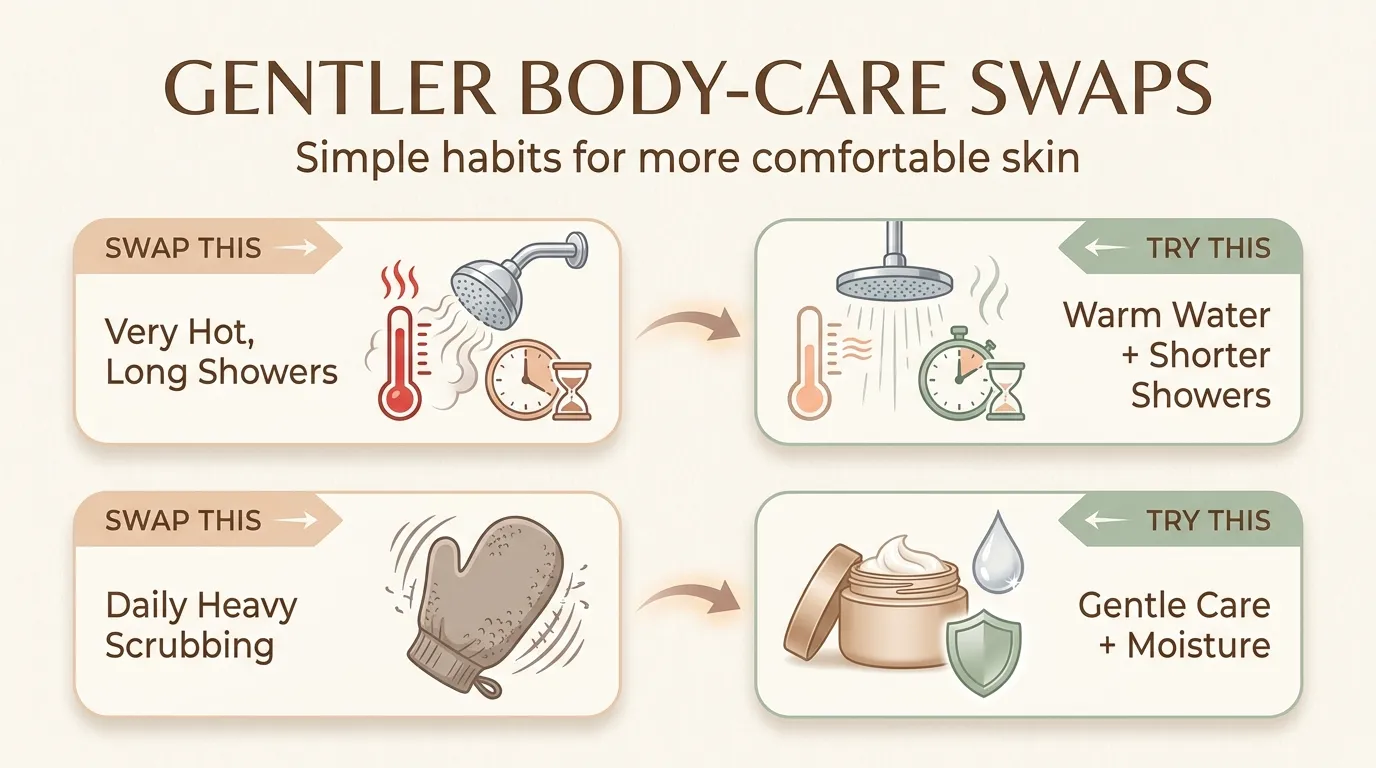
Use these practical swaps to make your body care reset routine gentler, simpler and easier to maintain.
Taking very hot, lengthy showers
Extended exposure to hot water can leave dry body skin feeling tighter and less comfortable.
Use warm water and shorten bathing time
Choose a comfortable temperature and avoid remaining under hot water longer than necessary.
Scrubbing rough areas every day
Daily friction does not always make elbows, knees or heels smoother and may increase irritation.
Reduce friction and prioritise moisture
Pause aggressive scrubbing and apply a suitable cream or ointment consistently instead.
Layering several active products
Using acids, scrubs and exfoliating washes together makes it harder to identify the source of irritation.
Introduce only one new product at a time
Keep the rest of the routine stable while observing how your skin responds to the new addition.
Waiting too long to moisturise
Applying moisturiser much later may miss the convenient post-bathing window when skin is slightly damp.
Moisturise shortly after bathing
Pat the skin gently and apply moisturiser before it becomes completely dry.
Ignoring repeated stinging or redness
Continuing a product despite a significant reaction can make discomfort more difficult to evaluate.
Stop the product and assess the reaction
Discontinue products that cause significant burning, redness, swelling or itching and seek advice when needed.
Avoid using several harsh body products at the same time. Strong scrubs, heavily fragranced products and excessive exfoliation may irritate sensitive skin. When trying a new product, test it on a small area first and stop using it if significant redness, burning, swelling or itching develops.
Four Principles of a Simple Body-Care Reset
Lifestyle and Behavioral Components
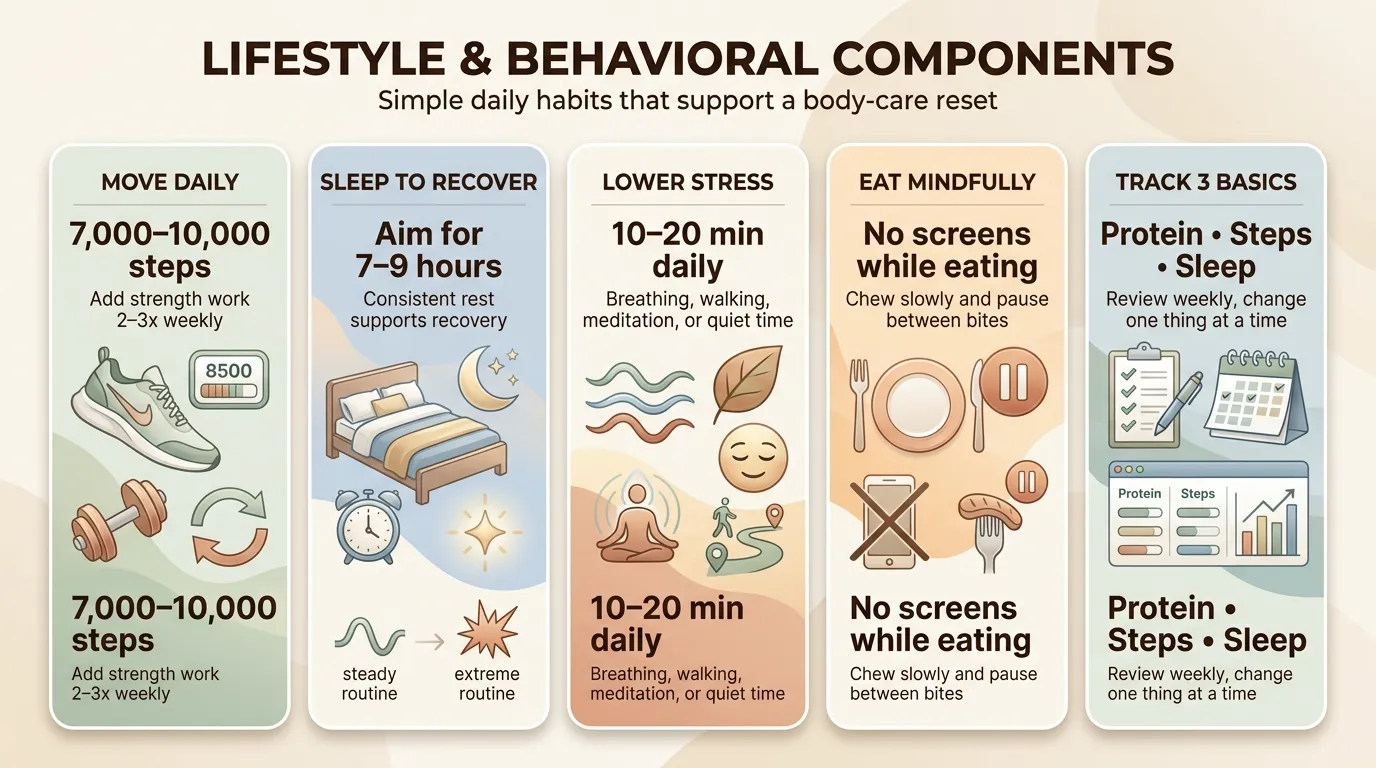
Physical Activity and Movement
Walk 7,000–10,000 steps daily during a reset. Introduce resistance training 2-3 times a week, to help with muscle protein synthesis and metabolic function. Schedules, such as P90X, Insanity and The 21 Day Fix offer a plan for movement that is easily structured to match reset periods.
Begin with the intensity that will allow it to be done through complete — consistent intensity workout is better and more effective than an intense one that is done for three days and then abandoned.
Sleep for Recovery
During a reset, get 7-9 hours of sleep. Growth hormone levels are highest during sleep, cortisol is lowest during sleep, and cellular repair takes place during sleep.
If sleep is poor during a reset this will increase cortisol, increase hunger hormones (ghrelin), and impact the effectiveness of any diet. Breathing problems during sleep, persistent fatigue or other concerning symptoms require appropriate medical assessment and are outside the scope of this skincare guide.
Stress Reduction and Mindfulness
Chronic stress raises cortisol, which can lead to abdominal fat retention, weakened immune system and imbalance of the gut bacteria. Include 10-20 minutes of stress reduction per day during a reset – breathwork, walking outside, meditation and/or progressive muscle relaxation (PMR).
Mindsets are covered in books such as The Let Them Theory, The High 5 Habit and The 5 Second Rule where they explain how to get a reset to stick.
Mindful Eating
Eat without a screen, chew 20-25 times per bite and take a break between bites. Mindful eating lowers cortisol levels during eating, stimulates the parasympathetic nervous system, which aids digestion, and also helps to lower overall calorie consumption by 15-20%, due to greater expression of satiety signals.
Behavioral Coaching & Accountability
Select three things to monitor every day for at least one week (What is your protein intake, steps you take and sleep hours?) These 3 data points contain the most important variables and will only take about 2 minutes to log. Analyze weekly and make one change to the variables per week based on the results.
What Results Can You Expect?
A simpler routine may help reduce the dry or uncomfortable feeling caused by harsh cleansing, inconsistent moisturising or excessive exfoliation. Some people may notice that their skin feels softer or smoother with consistent care, but results vary according to skin type, product choice and the cause of the dryness.
This routine is not intended to produce weight loss, improve immunity, balance hormones or treat digestive or metabolic conditions.
Pros and Cons
Risks of Detox Diets
This body-care routine does not include fasting, juice cleanses, meal-replacement plans or restrictive diets. It focuses only on external skincare. Readers considering significant dietary changes should seek advice appropriate to their individual health and nutritional needs.
Disclaimer
This article provides general information about external body skincare and is not medical advice. It does not diagnose, prevent or treat skin or health conditions. Stop using any product that causes a significant reaction, and consult a qualified healthcare professional for persistent, severe or worsening symptoms.