
Key Takeaways
-
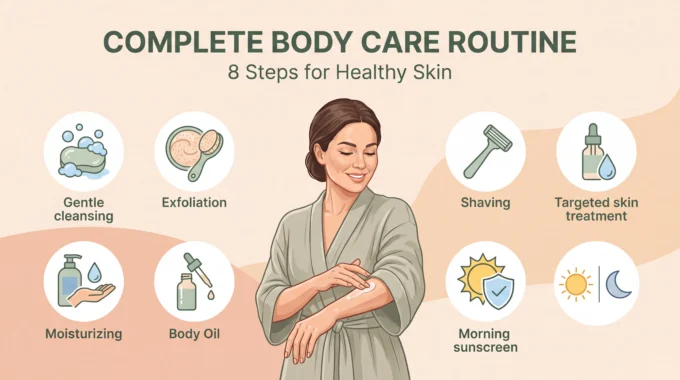
Cleanse your body gently with warm water and a mild body wash.
Table Of Content
- Key Takeaways
- Quick Ans
- Your Skin Type and Seasonal Needs
- How Skin Type Affects Product Choice
- PRODUCT SELECTOR
- Your Custom Body Care Match
- Adjusting Your Routine for Hot, Humid Weather
- Adjusting Your Routine for Cold, Dry Weather
- Step-by-Step Body Care Routine
- The Optimal Evening Sequence
- Step 1: Dry Brush (Optional) to Prepare Skin
- Step 2: Cleanse with the Right Body Wash
- Choosing Your Body Wash
- Cleansing Best Practices
- Step 3: Exfoliate 2-3 Times Per Week
- Physical vs. Chemical Exfoliation
- Body Exfoliation Tips
- Step 4: Shave (If Desired)
- Step 5: Apply Treatment Products
- Body Serums for Enhanced Hydration
- Leave-On Chemical Exfoliants
- Step 6: Moisturize While Skin Is Damp
- Choosing Between Body Lotion, Body Butter, and Body Oil
- Don’t Forget These Areas
- Step 7: Lock in Moisture and Add Glow
- Step 8: Apply Sunscreen (Morning Routine)
- Morning vs. Night Body Care Routine
- Daily Morning Routine
- Daily Evening Routine
- 2-3 Times Per Week Additions
- Addressing Specific Skin Concerns
- Common Pitfalls & Fixes
- For Keratosis Pilaris (KP)
- For Body Acne
- For Dry Skin
- For Sensitive Skin
- For Dull or Uneven Tone
- For Firmness and Toning
-
Exfoliate one to three times weekly based on your skin’s tolerance.
-
Apply body lotion while your skin is still slightly damp.
-
Use body oil after lotion to seal moisture in very dry areas.
-
Apply broad-spectrum SPF 30 or higher to exposed skin every morning.
Quick Ans
A simple evening body care routine starts with a short warm shower, gentle cleansing, targeted treatment when needed, and moisturizer applied to damp skin. Exfoliate carefully, use body oil only as a sealing step, and apply SPF 30 each morning. Adjust products for skin type, climate, sensitivity, acne, and dryness.
Your Skin Type and Seasonal Needs
Skin type describes how the skin typically behaves, while skin condition refers to a temporary issue such as irritation, dehydration, or a breakout. It is possible for a person to have oily skin on the back and dry skin on the legs. Do not use one label for the entire body. Choose products according to the area being treated.
How Skin Type Affects Product Choice
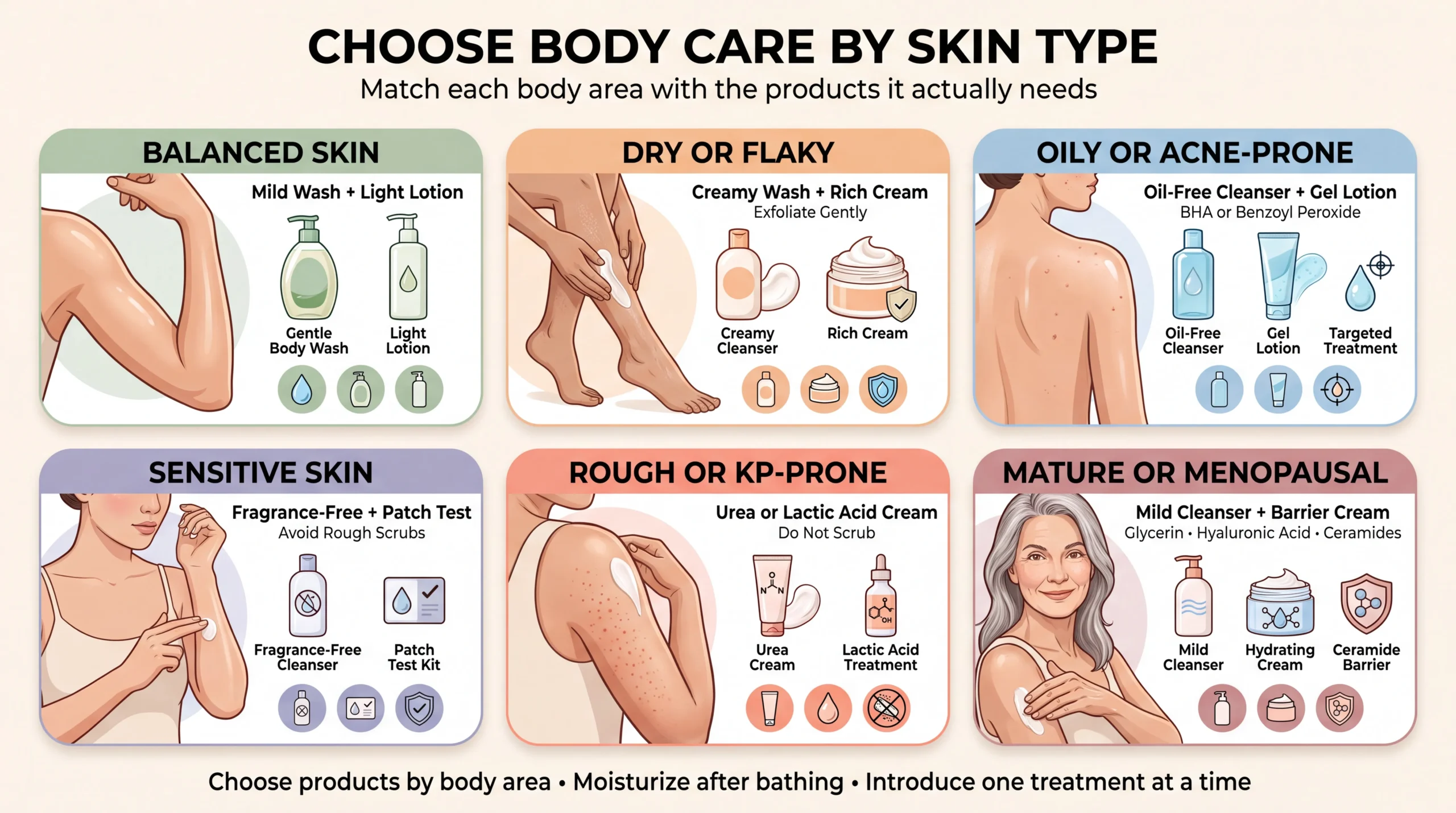
Follow this guide when creating a complete body routine:
-
Balanced or normal skin: Use a mild body wash and a small amount of lotion or cream. Add a treatment only for a specific concern.
-
Dry or flaky skin: Try a fragrance-free creamy wash or shower oil, followed by a cream, body butter, or ointment. Start exfoliating once weekly or pause exfoliation when the skin feels irritated.
-
Oily or acne-prone skin: Wash with a gentle, oil-free, non-comedogenic cleanser and apply a gel-based moisturizer or light lotion. Salicylic acid or benzoyl peroxide may help mild acne.
-
Sensitive or eczema-prone skin: Wash with a soap-free, fragrance-free cleanser and use a fragrance-free cream or ointment. Patch-test new products and avoid essential oils and rough scrubs on reactive skin.
-
Rough or KP-prone skin: Use a mild wash and a cream containing urea or lactic acid. Apply one keratolytic product as directed instead of scrubbing the skin.
-
Mature or menopause-related dry skin: Use a mild cleanser instead of deodorant soap and apply a cream containing glycerin, hyaluronic acid, or ceramides.
Holding water in the skin can become more difficult around menopause. According to the American Academy of Dermatology (AAD), it is best to use a mild cleanser and apply moisturizer after bathing. Glycerin and hyaluronic acid may be beneficial ingredients for dryness. When the skin has become thinner or more reactive, extra care is needed with exfoliation.
PRODUCT SELECTOR
Adjusting Your Routine for Hot, Humid Weather
Use lighter textures and remove perspiration promptly during hot, humid weather. A gel-based moisturizer or light body lotion tends to feel more comfortable on the chest, back, and folds of the skin. After heavy sweating, shower and change into dry clothes, particularly when body acne is a concern.
The climate varies from region to region in the Kingdom of Saudi Arabia (KSA). Jeddah may feel humid, while Riyadh may be quite dry. Even during hot weather, air conditioning can cause the skin to become dry. Ideally, use a light lotion on most of the body and apply a thicker cream only to the shins, elbows, knees, hands, and heels.
Cooling sprays and hydrating mists can feel pleasant, but they are not substitutes for moisturizer or body sun protection factor (SPF). Some fragranced body mists may irritate sensitive skin.
Deodorants help control odor, while antiperspirants help reduce sweating. Apply either product to clean, dry underarms. If you experience burning, swelling, or a rash, discontinue use.
Adjusting Your Routine for Cold, Dry Weather
Change from a gel or thin lotion to a fragrance-free cream or ointment when your skin begins to feel tight, dry, rough, or itchy. Take short showers and use warm rather than hot water.
The AAD recommends limiting baths and showers to approximately 5 to 10 minutes when dealing with dry skin. Pat the skin dry instead of rubbing and apply moisturizer while the skin is still damp.
When indoor air feels dry, you can use a humidifier. Follow the humidifier’s instructions for washing and drying so it does not become a source of mold or bacteria. If your skin needs a stronger pre-sleep moisture lock, apply body oil after a water-based lotion or cream.
Step-by-Step Body Care Routine
Step 1: Dry Brush (Optional) to Prepare Skin
Dry brushing is a form of mechanical exfoliation, but it is not a detox treatment and is not necessary. Although it can remove some loose surface flakes, there is no proof that dry brushing removes toxins, treats cellulite, or permanently firms the skin.
If you prefer to dry brush, use a clean brush with soft bristles and apply light pressure. Start no more than once weekly and discontinue use if the skin becomes red, sore, itchy, or scratched.
Keep the brush away from:
- Your face
- Your breasts and groin
- Varicose veins
- Inflamed body acne
- Irritated KP bumps
- Eczema or psoriasis
- Cuts and wounds
- Sunburned skin
- Freshly shaved skin
Clean the brush regularly and allow it to dry thoroughly. People with dry or sensitive skin can skip this step. Most individuals find that gently using a soft washcloth in the shower provides enough physical exfoliation.
Step 2: Cleanse with the Right Body Wash
Cleanse with warm water and a mild product for 5 to 10 minutes. The objective is to remove sweat, dirt, odor, and sunscreen without stripping the skin.
Choosing Your Body Wash
Select a body wash according to your skin’s requirements:
- Choose a creamy, fragrance-free body wash or shower oil for dry skin.
- Choose a soap-free, fragrance-free cleanser for sensitive skin.
- Choose an oil-free, non-comedogenic cleanser for acne-prone areas.
- Choose a salicylic acid or benzoyl peroxide wash only when treating mild body acne.
- Choose a pH-balanced body cleanser if regular soap causes the skin to feel tight or itchy.
“Fragrance-free” is more useful than “unscented.” An unscented product may still contain masking fragrance.
Brand name alone does not indicate whether a formula will work for your skin. Products from CeraVe, Cetaphil, Aveeno, Eucerin, Neutrogena, Nivea, and other brands vary according to formula and country. Read the directions, active ingredients, and fragrance label.
An oil-based cleanser or shower oil can break down water-resistant sunscreen on dry skin. Using a separate water-based cleanser on the entire body is rarely necessary unless residue remains. Do not double cleanse every night because this can worsen dryness.
Cleansing Best Practices
Use clean hands or a soft cloth to apply the cleanser. Focus on the underarms, groin, feet, and visibly dirty or sweaty areas. Excessively scrubbing every inch until the skin squeaks can remove too much surface oil.
Rinse thoroughly with lukewarm water. A cool-water final rinse may feel good during hot weather, but it will not close pores.
Gently pat the skin with a clean cotton or microfiber towel and leave a light film of water on the surface. Wash the towel regularly. A damp, dirty, or rough towel is not helpful.
Step 3: Exfoliate 2-3 Times Per Week
Exfoliate up to two or three times per week, depending on the exfoliation method and your skin’s tolerance. Exfoliating once weekly or not at all may be enough for dry or sensitive skin.
The AAD states that exfoliation frequency varies according to skin type and the exfoliation method. Stronger exfoliation should be performed less frequently.
Physical vs. Chemical Exfoliation
Physical exfoliation involves using a washcloth, scrub, sponge, or brush to remove loose surface cells. Use small, light movements for approximately 30 seconds and rinse. Coarse salt, rough sugar crystals, stiff brushes, and hard scrubbing can irritate the skin.
Chemical exfoliation uses ingredients that loosen surface buildup. Common options include:
-
Lactic acid or glycolic acid: These alpha hydroxy acids (AHAs) may help dry, rough, or dull-looking skin.
-
Salicylic acid: This beta hydroxy acid (BHA) may help clogged follicles and acne-prone areas.
-
Urea: Urea can soften dull, thick, dry, or coarse areas, depending on the strength of the product.
Leave-on chemical exfoliants may provide a more even application than a scrub, but stronger does not mean better. Do not use chemical exfoliants on damaged or irritated skin, and follow the application instructions on the product label.
Body Exfoliation Tips
Use only one exfoliation method per session. Avoid dry brushing, using a grainy scrub, applying an acid treatment, and shaving the same area during one evening.
You can gently exfoliate one day before shaving the knees or legs to remove loose flakes. Hard exfoliation immediately before or after shaving may trigger stinging, irritation, and dark marks.
Apply moisturizer after exfoliation. Stop using scrubs and acids if the skin develops burning, peeling, cracking, or persistent redness.
Step 4: Shave (If Desired)
Shave near the end of a warm shower when the hair has softened. Use a fragrance-free shaving gel or cream and a clean, sharp razor.
When ingrown hairs are a problem, shave in the direction of hair growth. Rinse the blade after every pass and keep the number of passes to a minimum.
After shaving:
- Rinse the skin with lukewarm water.
- Gently pat the skin dry without rubbing.
- Apply a plain, fragrance-free moisturizer.
- Keep acids and scrubs away from the shaved area.
- Avoid tea tree oil, perfume, and fragranced body mists.
- Replace a dull blade and never share razors.
“Strawberry legs” is a visual description rather than a single medical diagnosis. Causes of dark dots can include visible follicles, keratosis pilaris, ingrown hairs, folliculitis, and shaving irritation.
Gentle shaving and a lactic acid, salicylic acid, or urea product used on a separate night may help some causes. If you develop painful bumps, pus, spreading redness, or recurrent scarring, the area should be assessed by a medical professional.
Step 5: Apply Treatment Products
Apply treatments only to targeted problem areas and introduce one active ingredient at a time. Using more active ingredients increases the potential for irritation but does not necessarily produce better results.
Before using a product more widely, test it on a small area. According to the AAD, apply the product to a quarter-sized test spot twice daily for 7 to 10 days. Use the same amount and leave it on for the same length of time as you would during normal use.
Discontinue use if the test area becomes red, itchy, swollen, or painful.
Body Serums for Enhanced Hydration
Hydrating body serums typically contain humectants such as glycerin, hyaluronic acid, or urea. Niacinamide can support the skin barrier and may be helpful in formulas intended for uneven-looking skin tone. Niacinamide is not a skin-bleaching ingredient, and results may differ.
Spread a thin layer of serum over slightly damp skin and cover it with body lotion or cream. A serum is optional and does not replace moisturizer if the formula does not contain sufficient emollient and occlusive ingredients.
Leave-On Chemical Exfoliants
Use leave-on lactic acid, glycolic acid, salicylic acid, or urea only as directed on the label. Start with one or two nights per week on intact skin. Increase use only if there is no persistent stinging, redness, or peeling.
Do not apply multiple acids to the same area. Avoid using strong acids on freshly shaved skin.
Consult a clinician before using a topical retinoid during pregnancy or breastfeeding. Apply body SPF to exposed treated areas because irritation and sun exposure may worsen uneven tone.
Step 6: Moisturize While Skin Is Damp
Apply moisturizer within a few minutes of bathing while the skin is still damp. This post-shower sealing technique retains some of the moisture already present on the skin.
Apply enough moisturizer to leave the skin feeling comfortable but not slippery. Reapply it to your hands and rough patches whenever these areas feel dry.
Choosing Between Body Lotion, Body Butter, and Body Oil
Body lotion is suitable for normal skin, daytime use, and humid climates. Lotion is light and easy to apply, but it may not be rich enough for severe dryness.
Body cream or body butter is suitable for dry legs, elbows, knees, and cold weather. It contains more emollient and occlusive ingredients but may feel very greasy on acne-prone areas.
Body oil is best applied as a final layer over damp, moisturized skin. Adding oil helps reduce the rate at which water evaporates, but it does not add much water when used alone.
Ointment creates a thick seal over extremely dry or cracked small areas. It may feel greasy and may not be suitable for sweaty folds or acne-prone areas.
Cetearyl alcohol is a fatty alcohol that softens and stabilizes creams. It is different from drying alcohols such as alcohol denat.
Depending on the complete formula, squalane, dimethicone, petrolatum, ceramides, and shea butter can help smooth or seal dry skin.
As an optional final emollient layer, you can use a cold-pressed oil such as jojoba oil, argan oil, rosehip oil, apricot kernel oil, hemp oil, or evening primrose oil.
Plant oils alone are not proven treatments for hormonal acne, KP, or loose skin. When a product is called “natural,” it does not necessarily mean that it is free from allergens. Patch-test plant oils and avoid using heavy oils on areas that clog easily.
Don’t Forget These Areas
Carefully apply cream to the elbows, knees, shins, hands, cuticles, and heels.
For very dry heels, a urea foot cream followed by a thin layer of petroleum jelly and clean cotton socks may help. Do not apply thick ointment between the toes because trapped moisture may cause skin problems.
For dry hands, apply fragrance-free cream before going to sleep and wear clean cotton gloves if you want a stronger overnight seal.
Gently apply moisturizer to the neck and décolletage. Upward strokes may feel pleasant, but they will not lift the skin. Apply sunscreen to these exposed areas the following morning.
Avoid applying rich creams to sweaty skin folds unless recommended by a clinician. If a rash persists under the breasts, abdomen, groin, or between the toes, it may require diagnosis rather than additional moisturizer.
Step 7: Lock in Moisture and Add Glow
Apply a few drops of body oil over lotion on extremely dry areas. This process creates a pre-sleep hydration lock:
-
Damp skin provides water.
-
Moisturizer binds moisture and softens the skin.
-
Oil or ointment helps reduce water loss.
Jojoba oil, squalane, mineral oil, or a plain ointment can be used as the final layer. Use a small amount and allow it to settle before putting on clothes. Cotton pajamas can minimize product transfer to bedding.
Clean oil from the bathroom floor promptly because it can create a slipping hazard.
Body oil creates surface shine. It does not provide as much hydration as lotion or cream when used alone, and it does not offer SPF protection unless it is a properly tested and labelled sunscreen.
Step 8: Apply Sunscreen (Morning Routine)
Apply a broad-spectrum, water-resistant body sunscreen with SPF 30 or higher to all exposed skin. Apply sunscreen approximately 15 minutes before going outside.
Most adults require approximately 1 ounce or 30 millilitres—about a shot-glass amount—for all uncovered body skin. The amount needed may vary depending on body size and how much skin is exposed.
Reapply sunscreen every two hours while outdoors and immediately after swimming or sweating.
Cover these commonly missed areas:
- Ears
- Neck
- Chest
- Arms
- Hands
- Legs
- Tops of the feet
Clothing and shade offer additional protection.
A mineral sunscreen containing squalane may feel more comfortable on dry skin. Squalane is an emollient rather than a sunscreen filter. The labelled mineral filters and tested SPF provide ultraviolet protection.
Even if a product is marketed as “Mineral Squalane Sunscreen,” it should still have broad-spectrum SPF 30 or higher on its label.
Morning vs. Night Body Care Routine
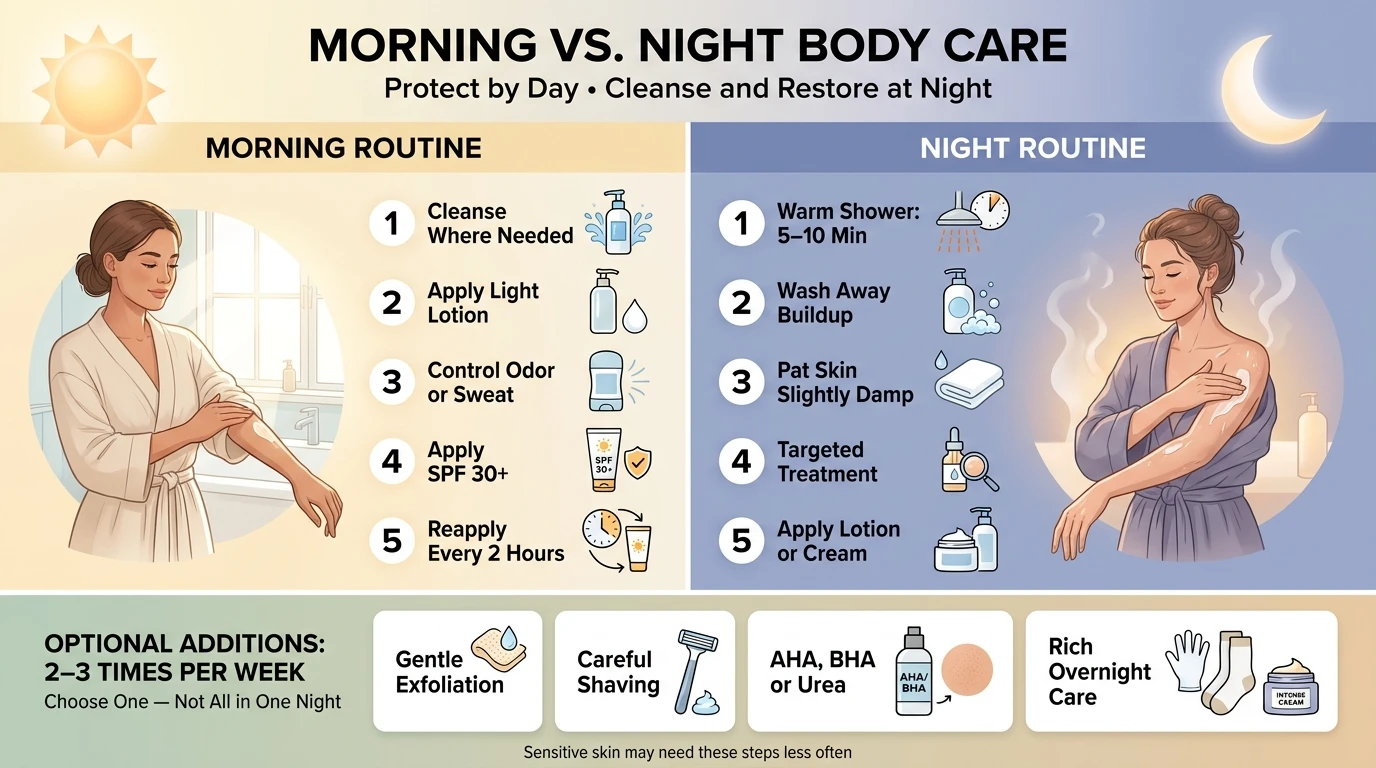
Morning care protects exposed skin and helps manage perspiration. Night body care removes the day’s buildup and restores moisture. Both routines should be brief enough to repeat regularly.
Daily Morning Routine
- Rinse or cleanse only where necessary.
- Apply a light body lotion to dry areas.
- Apply deodorant for odor control or antiperspirant for sweat control.
- Apply a broad-spectrum, water-resistant sunscreen with SPF 30 or higher.
- Reapply sunscreen every two hours while outdoors and after swimming or heavy perspiration.
Daily Evening Routine
- Take a warm 5- to 10-minute shower.
- Gently wash away sweat, sunscreen, dirt, and odor.
- Pat the skin dry but leave it slightly damp.
- Apply one body serum or treatment to targeted problem areas, if needed.
- Apply lotion or cream.
- Seal very dry areas with oil or ointment.
Most of the time, this simple evening body care routine should be sufficient. Although a warm bath can be relaxing, extended hot baths may worsen dry skin.
2-3 Times Per Week Additions
Choose one optional addition on a scheduled night:
- Try one gentle physical or chemical exfoliant.
- Shave with a clean razor and shaving gel.
- Use a leave-on AHA, BHA, or urea product on rough patches.
- Apply a richer hand, heel, or elbow treatment under clean cotton gloves or socks.
Do not perform all these additions in one session. People with sensitive skin may need these steps less than once weekly.
Addressing Specific Skin Concerns
For Keratosis Pilaris (KP)
Treat KP with gentle handling, one keratolytic product, and regular moisturizer. Keratosis pilaris causes small, rough bumps that commonly appear on the upper arms and thighs. Scrubbing hard may make the bumps look and feel worse.
Select one product containing:
- Lactic acid
- Glycolic acid
- Salicylic acid
- Urea
- A dermatologist-recommended retinoid
Use the product according to its instructions and apply moisturizer afterward. If the skin becomes raw or irritated, pause treatment for a few days.
KP can be controlled but is not permanently cured, so maintenance may be necessary. If the bumps remain irritated or do not improve with gentle home care, see a dermatologist.
For Body Acne
Treat mild body acne with gentle cleansing, non-comedogenic products, and an evidence-based acne ingredient. Shower and change clothes soon after sweating.
Avoid applying rough scrubs, loofahs, oily hair products, and heavy body butter to the back and chest.
For mild to moderate back acne, an over-the-counter benzoyl peroxide wash may be helpful. According to the AAD, a 5.3% benzoyl peroxide wash is less likely to cause irritation than stronger concentrations. It works best when left on the back for two to five minutes before rinsing.
Benzoyl peroxide can bleach towels, sheets, and clothing. Salicylic acid is another option for clogged pores.
Deep, painful, scarring, or widespread acne requires assessment by a dermatologist. Although acne around the menstrual cycle can have a hormonal component, body wash cannot diagnose or correct hormonal acne.
For Dry Skin
Take a short, warm shower, use a fragrance-free cleanser, and apply cream or ointment to damp skin. Reapply moisturizer whenever the skin feels dry.
A cream or ointment will typically seal in water more effectively than a thin lotion. For barrier support, apply a simple ceramide cream. Apply ointment to small cracked areas.
Seek medical care if the dryness becomes:
- Painful
- Deeply cracked
- Bleeding
- Swollen
- Persistently itchy
- Resistant to regular moisturizing
These signs could indicate eczema, an infection, or another condition requiring more than cosmetic treatment.
For Sensitive Skin
Keep sensitive-skin care fragrance-free, simple, and patch-tested. Begin with one cleanser, one moisturizer, and one sunscreen. Add a treatment only after the basic routine feels comfortable.
Avoid essential oils, fragranced cooling sprays, rough scrubs, and multiple acids used at the same time.
Tea tree oil can irritate the skin and should never be applied undiluted. Marketing terms such as “clean,” “herbal,” and “natural” are not proof that a product is gentle.
For Dull or Uneven Tone
Protect exposed skin from sun damage first, and then treat texture or discoloration carefully. Applying body SPF daily can help minimize the sun-related darkening of existing marks.
Some forms of uneven tone may improve with a suitable formula containing niacinamide, lactic acid, glycolic acid, or azelaic acid.
Avoid lemon juice, household bleach, and unregulated skin-lightening products. Irritation may worsen post-inflammatory marks, particularly in deeper skin tones.
A new, thick, velvety dark patch or rapidly changing discoloration should be assessed by a medical professional.
For Firmness and Toning
No body lotion or oil can permanently tighten loose skin or tone muscles. Moisturizer may temporarily alter the appearance of the skin’s surface, making it look smoother and plumper. Sunscreen helps prevent additional ultraviolet-related collagen damage.
Strength training develops the muscles beneath the skin, but building muscle is different from tightening skin.
Bakuchiol oil may be marketed as a retinol alternative, although there is limited research showing meaningful body-firming results. Treat bakuchiol as an optional cosmetic ingredient rather than a lifting treatment.
A dermatologist can discuss evidence-based options for significant skin laxity, stretch marks, or sun damage.