
Thinning hair is a common problem that many men experience by the time they are 40, and most will turn to any shampoo that claims to give them the thickest hair. The ingredients are so important; the marketing is so unimportant — if you know which ones are truly supported by research, you can tell the difference between a product that works and a product that’s a waste of time and money.
Table Of Content
- Key Takeaways
- Understanding Why Men’s Hair Thins
- The Genetic and Hormonal Driver
- Lifestyle Factors That Compound the Effect
- What Shampoo Can and Can’t Do
- The Realistic Role of Shampoo
- Ingredients With the Strongest Evidence
- Ingredients With Weaker or Preliminary Evidence
- Choosing the Right Formula for Your Hair
- Matching Shampoo Type to Your Situation
- Ingredients Worth Avoiding
- Washing Technique Matters as Much as Product Choice
- Frequency and Water Temperature
- Application Technique
- Scalp Health Beyond the Shampoo Bottle
- Why the Scalp Environment Matters
- Building a Simple Daily Habit
- Lifestyle Factors That Genuinely Affect Hair
- Diet and Nutrients
- Sleep and Stress
- Common Mistakes That Undermine Results
- Frequently Asked Questions
- Q1: Does shampoo help prevent hair thinning?
- Q2: How often should men with thinning hair wash it?
- Q3: Do natural shampoos work for hair thinning?
- Q4: What ingredients should I avoid in a thinning-hair shampoo?
- Q5: Does scalp massage actually help hair grow thicker?
- The Bottom Line
Key Takeaways
- While there are a number of causes of hair thinning in men, the most common is genetics and sensitivity to DHT, a natural hormone that no shampoo can cure — but the right shampoo can help maintain scalp health and lessen hair breakage.
- Of the shampoo actives, ketoconazole and caffeine have the most credible evidence supporting them; the evidence supporting saw palmetto is less robust and may not be as convincing as prescription treatments.
- Sulfates, heavy silicones, and alcohol-based formulas are harmful to thinning hair, as they strip natural oils or weigh strands down.
- Washing 2-3 times per week with lukewarm water and gentle fingertip massage supports scalp health better than daily washing or vigorous scrubbing.
- Shampoo is part of a bigger picture — sleep, diet, and stress management all have a measurable impact on hair health alongside whatever’s applied topically.
Understanding Why Men’s Hair Thins
The Genetic and Hormonal Driver
Male pattern hair loss is caused mainly by the hormone dihydrotestosterone (DHT), which over time causes genetically sensitive hair follicles to shrink, resulting in progressively finer, shorter hair. This is known as androgenetic alopecia, and it’s responsible for the vast majority of hair loss in men, following a fairly predictable pattern — receding at the temples and then thinning at the crown.
Lifestyle Factors That Compound the Effect
Although they don’t cause most men to lose their hair, chronic stress, lack of sleep, and nutritional gaps can speed up visible thinning or trigger additional shedding on top of genetic hair loss. It’s important to recognize which factor is responsible for a specific pattern of hair loss, since genetic hair loss responds very differently to treatment compared to stress-induced shedding.
What Shampoo Can and Can’t Do
The Realistic Role of Shampoo
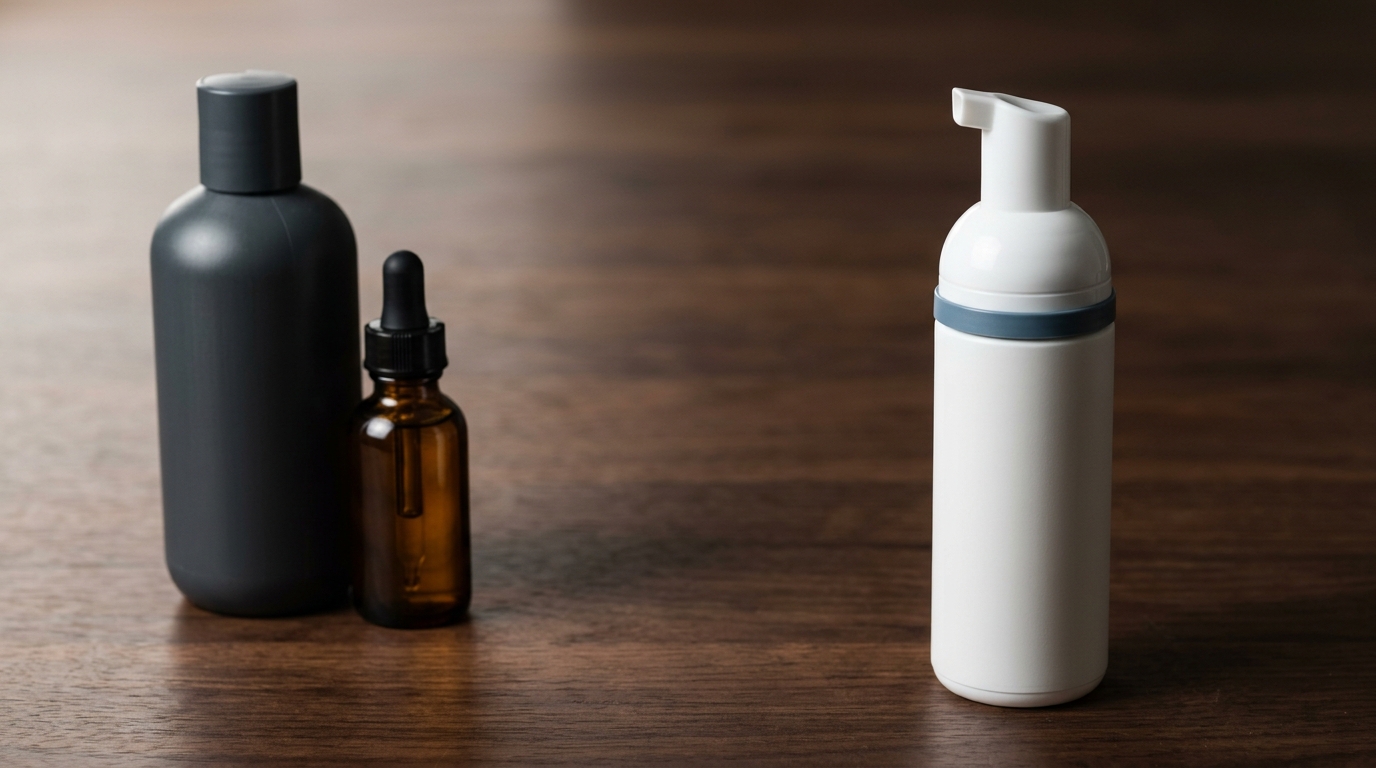
No topically applied wash product can halt genetically caused hair loss. What it can do is help ensure that oil, product residue, and dead skin don’t accumulate, creating a friendlier environment for an already healthy scalp, and help maintain the health of existing hair so it’s less likely to break.
Pro Tip: Treat shampoo as scalp maintenance, not a hair regrowth treatment. Methods that directly target the cause of hair loss, such as an evidence-based product like minoxidil (available over the counter) or a prescription like finasteride (discussed with a doctor), are far more effective at addressing the actual cause than any shampoo.
Ingredients With the Strongest Evidence
Ketoconazole, an antifungal medication used in dandruff shampoos, has research indicating it could have a mild independent effect on scalp health relevant to hair thinning, beyond its antifungal properties. Topical application of caffeine is backed by some evidence for stimulating hair follicles when used consistently, although the effect is generally considered modest rather than dramatic.
Ingredients With Weaker or Preliminary Evidence
Saw palmetto is often touted as a natural DHT blocker, and a few small studies suggest it may have some mild effect, but the evidence is far less convincing than for proven treatments such as minoxidil or finasteride. Biotin is also regularly found in hair-thinning shampoos, but it’s mainly useful in cases of an actual biotin deficiency — for most men who aren’t deficient, extra biotin offers no significant benefit for hair thickness.
Choosing the Right Formula for Your Hair
Matching Shampoo Type to Your Situation
For men with thin hair but not significant balding, a volumizing formula is a reasonable option, since it helps hair appear fuller without heavy coating agents. Shampoos built around ketoconazole or caffeine are more useful for men specifically concerned about DHT and thinning, while a basic, nourishing formula designed to minimize breakage is better suited to hair that’s more fragile than thin.
| Shampoo Type | Best For | Key Ingredients | Consideration |
|---|---|---|---|
| Volumizing | Fine, thin hair | Lightweight polymers | Doesn’t address underlying thinning cause |
| Anti-DHT support | Genetic thinning | Ketoconazole, saw palmetto | Evidence is modest, not a replacement for proven treatments |
| Strengthening | Fragile, breakage-prone hair | Biotin, keratin-supporting agents | Best for hair health, not regrowth |
| Scalp-focused | Oily or congested scalp | Salicylic acid, tea tree | Addresses buildup rather than thinning directly |
Ingredients Worth Avoiding
Sulfates, especially sodium lauryl sulfate, are great cleansers, but continued use can be drying enough to strip the scalp’s natural oils. Heavy silicones deposit on the hair shaft and can make already-fine hair appear even thinner. Alcohol-based formulas tend to dry out both hair and scalp, which works against the goal of a healthy growth environment.
Washing Technique Matters as Much as Product Choice
Frequency and Water Temperature
Most men need to wash only two to three times a week, since overwashing strips the natural oils that protect hair and scalp. Lukewarm water, rather than hot, helps preserve those oils while still cleansing effectively.
Application Technique
Use gentle fingertips rather than nails or vigorous scrubbing to massage shampoo into the scalp — this supports circulation without putting undue stress on already-fragile hair. A thorough rinse matters too, since leftover product residue can contribute to the same buildup a good shampoo is meant to prevent.
Scalp Health Beyond the Shampoo Bottle
Why the Scalp Environment Matters
A congested scalp — full of excess oil, product, or dead skin — makes it more difficult for existing hair follicles to thrive, even before genetic thinning enters the picture. Gentle massage helps promote blood flow, and some men find essential oils like rosemary or peppermint, diluted properly, provide a mild soothing effect, though the evidence for these specifically improving hair growth is weaker than for the ingredients discussed earlier.
Building a Simple Daily Habit
A soft-bristle brush distributes natural oils along the hair shaft without unnecessary pulling, and a few minutes of gentle scalp massage in the morning is a low-effort addition to an existing routine. None of this replaces addressing the underlying cause of thinning, but it supports the health of the hair that’s already there.
Lifestyle Factors That Genuinely Affect Hair

Diet and Nutrients
Human hair consists of protein, so adequate protein intake is essential to provide the building blocks hair needs to grow. Iron and zinc both play roles in follicle health, and a deficiency in either is linked to increased shedding — though supplementing beyond what’s needed to correct an actual deficiency provides no added benefit.
Sleep and Stress
Chronic stress can push more hair follicles into a shedding phase than usual, a pattern that’s generally temporary and reversible once the stress eases. Basic stress management — exercise, sleep hygiene, or simple mindfulness practices — supports hair health as a byproduct of supporting overall physiological balance.
Common Mistakes That Undermine Results
- Switching shampoos too frequently — most ingredients need several weeks to months of consistent use before any effect becomes noticeable
- Over-washing — daily washing with strong formulas tends to strip protective oils rather than help thinning hair
- Ignoring the scalp — focusing entirely on the visible hair while neglecting scalp health limits how much even a good shampoo can accomplish
- Expecting shampoo alone to reverse genetic thinning — shampoo supports hair health but doesn’t address the hormonal driver behind most male hair loss
- Rough towel-drying or tight hairstyles — both contribute to unnecessary breakage in hair that’s already more fragile than average
Frequently Asked Questions
Q1: Does shampoo help prevent hair thinning?
Not on its own — shampoo can strengthen existing hair and support scalp health, but it doesn’t address the genetic and hormonal drivers behind most male hair thinning. A combination of the right shampoo, scalp care, and, where appropriate, an evidence-based treatment like minoxidil addresses the issue more completely.
Q2: How often should men with thinning hair wash it?
Two to three times weekly is generally sufficient for most men, since more frequent washing strips the natural oils that protect both hair and scalp. Lukewarm water and gentle fingertip application support this same goal.
Q3: Do natural shampoos work for hair thinning?
They can help if they contain ingredients with actual supporting evidence, like ketoconazole or caffeine, rather than relying purely on “natural” labeling. Gentleness and effective ingredients matter more than whether a formula is marketed as natural specifically.
Q4: What ingredients should I avoid in a thinning-hair shampoo?
Sulfates, heavy silicones, and alcohol-based formulas are worth avoiding, since they tend to strip natural oils or weigh down already-fine hair. Checking the ingredient list rather than relying on front-of-bottle marketing claims is the more reliable approach.
Q5: Does scalp massage actually help hair grow thicker?
Gentle massage can help promote blood flow to the scalp, which may modestly support the health of existing follicles, but it’s a complementary practice rather than a direct treatment for hair loss. It’s a sensible, low-cost addition to a routine rather than something to rely on alone.
The Bottom Line
The best thinning-hair shampoos are built around ingredients with genuine evidence — ketoconazole and caffeine hold up better than saw palmetto or biotin for most men — paired with gentle washing habits and reasonable expectations about what a shampoo can actually accomplish.
For genetic hair thinning specifically, shampoo works best as a supporting habit alongside evidence-based options like minoxidil, not as a standalone solution. Consistency, patience, and attention to the whole picture — sleep, diet, stress, and scalp care — tend to produce better results than chasing whatever product promises the fastest fix.