
Key Takeaways
- Without moisturizer (without water) oily skin gets worse, because when it is dried out, it will pump out more oil — and a light gel moisturizer will stop this cycle in 2–4 weeks.
- Double cleaning is essential — one wash won’t get rid of the oil and wrinkle-causing SPF residue or make up that gets deposited in the pores overnight.
- Niacinamide (2-10%) is the most beneficial daily active to use on oily areas as it helps to decrease sebum production at the sebum gland, shrinks the pores, and is safe for use with all other actives.
- Facials once a week do not compare to the daily routine of fresh face cloths, changing pillowcase every 2-3 days and blotting the face each day to dry it down and remove the oiliness.
- Even oilier skin requires hydration in the winter – indoor heating causes more loss of water in any skin type, and oilier skins that fill in with a hyaluronic acid serum will not trigger the sebum surge that leads to winter breakouts.
Intro
Oily zone cleansing routines are designed to regulate excess sebum, reduce the look of pores, and stop acne by using the proper cleanser, toner, serum and moisturizer in an organized twice-daily schedule that doesn’t take away the skin barrier. The most frequent errors — no moisturizer, over-cleansing, alcohol-based toners, and reusing face cloths — aggravate oily skin by stimulating the skin to make more oil.
Table Of Content
- Key Takeaways
- Intro
- Understanding Oily Skin
- What Causes Oily Skin?
- Key Signs of Oily Skin
- How to Know If You Have Oily Skin
- Step-by-Step Skincare Routine for Oily Skin
- Morning Routine
- Step 1: Cleanse
- Step 2: Toner
- Step 3: Serum
- Step 4: Moisturizer
- Step 5: Sunscreen
- Evening Routine
- Step 1: Double Cleanse
- Step 2: Exfoliate (2–3 Times Per Week)
- Step 3: Toner
- Step 4: Treatment (Retinoid, Acne Treatment, or Serum)
- Step 5: Moisturizer
- Optional: Weekly Face Mask
- Additional Steps
- Eye Cream
- Lip Balm
- Blotting Papers
- Daily Cleansing Habits for Oily Zones
- Key Ingredients for Oily Skin
- Products to Avoid
- Lifestyle Factors That Support Oily Skin Care
- Diet and Hydration
- Stress Management
- Makeup Tips
- Professional Treatments
- Seasonal Adjustments
- Winter Skincare Routine for Oily Skin
- FAQs
- Q1: Does Moisturizing Make Oily Skin Oilier?
- Q2: How Often Should I Exfoliate?
- 3: Can I Use Oil-Based Products?
- Q4: Is Sunscreen Necessary in Winter?
- Q5: When to See a Dermatologist?
- Summary
- Author Information
It provides all the steps you need to take in the morning and evening, the 8 ingredients you should avoid if you have oily skin, daily routine tips, seasonal changes and when to visit the dermatologist if you still have oily skin.
Understanding Oily Skin
What Causes Oily Skin?
Overactive sebaceous glands in the skin cause oily skin, which is the result of their production of excess sebum, the natural oil that protects and waterproofs the skin. There are 5 main reasons for oily skin:
- Genetics — Sebaceous gland size and activity level is inherited. No matter how you take care of your skin, larger glands will create more sebum.
- Hormonal fluctuations — androgens, male hormones, are responsible for the production of sebum. Androgen activity is increased during puberty and menstruation, pregnancy and stress.
- Over-cleansing or harsh products — stripping the skin by using sulfate-based cleansers, toners containing alcohol causes the skin to stimulate more sebum production to counter the loss of its acid mantle (AM).
- Humidity and heat — warm and humid climates stimulate sebaceous gland activity. Oily Skin is worse during hot and humid weather, and is better during dry and cool weather.
- Wrong product choices — such as heavy creams, occlusive oils and comedogenic ingredients, can clog pores and make the skin surface more oily by keeping sebum trapped under the skin surface.
Key Signs of Oily Skin
- Shining forehead, nose and chin that last for 1-2 hours after washing
- Visible pores throughout the nose and on the face that are enlarged, most commonly on the cheeks and nose.
- Recurring black, whiteheads or outbreak in oily areas
- Make-up that “slides off” after 3-4 hours or is broken down during that time.
- Oily sensation on skin, not soft to the touch, in the middle of the day
- Soil that will separate or oxidize more rapidly in wet areas than in dry areas
How to Know If You Have Oily Skin
To check if your skin is oily, cleanse the face with a soft soap and pat dry. Do not use any product for 1 hour. Apply a clean tissue to forehead, nose, chin and cheeks. Oily skin is characterized by visible oil in the tissue from the T-zone (forehead, nose, chin) in less than an hour. Combination skin – oil is generated solely in the t-zone and cheeks are dry or normal. Dry skin does not provide any oil transfer on the tissue from any zone.
Step-by-Step Skincare Routine for Oily Skin
Morning Routine
Step 1: Cleanse
Use an oil and acne-control cleanser in the form of a foam or gel to cleanse. CeraVe Foaming Facial Cleanser is an oil-absorbing, surface-clearing cleanser that will not strip the skin of its natural moisture. During the morning cleanse, the Neutrogena Oil-Free Acne Wash helps to reduce congestion in the pores with salicylic acid, BHA. Rinse with lukewarm water, for 60 seconds, to remove AM, hot water may cause oil rebound. Dry off with a soft cloth, rubbing will activate the sebum glands.
Step 2: Toner
When you finish a cleansing sequence, apply a hydrating toner, to restore the skin’s pH level to its natural range of 4.5-5.5. Use a niacinamide or witch hazel essence toner or hydrating toners instead of high alcohol astringent toners. Alcohol based toners immediately dry off the surface oil, but cause extra oil production in a few hours.
This is an AHA or PHA (polyhydroxy acid) exfoliating toner that is used twice, in the morning, as a gentle exfoliation for oily skin that can be exfoliated daily with chemical exfoliants.
Step 3: Serum
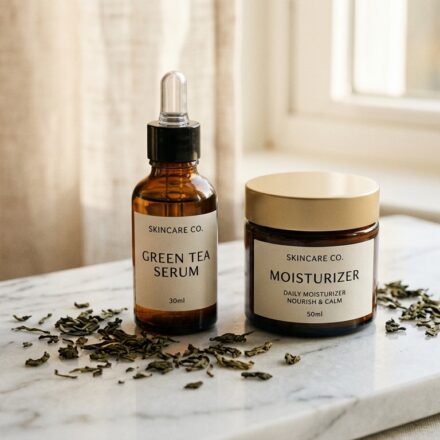
Post tone with an oil regulating serum with niacinamide (4-10%), zinc PCA or salicylic acid. According to published dermatology research, Niacinamide can decrease the secretion rate of sebum by 52% at 2%. The Bio Skin Glow serum is a blend of niacinamide and hyaluronic acid (HA) which balances oil and hydrates the skin. Apply 2-3 drops and apply gently to skin (DO NOT rub).
Step 4: Moisturizer
Step 5: Sunscreen
Use a wide-spectrum SPF 30 or higher as the last morning thing to do. Select a chemical or mineral sunscreen product that is formulated to be a mattifying, oil-free sunscreen. Korean sunscreens specifically gel and water based sun care products are absorbed without leaving behind the white cast and greasy feel of the traditional mineral sun care product for oily skin. If outdoors, reapply SPF after 2 hours.
Don’t skip sunscreen on oily skin – UV rays cause oxidation of sebum, making pores clogged and causing breakouts.
Personal experience: I used to avoid moisturizer for 6 months thinking that it would make my oily T-zone even worse. My skin started to get oily more and more by the middle of the day and I started to get acne. A dermatologist gave an explanation of the dehydration-sebum cycle.
I used a gel moisturizer which I used a half teaspoon of in the morning and after 3 weeks noticed a significant decrease in my midday shine and I had fewer acne breakouts than once a week, it was now monthly. The moisturizer was the main thing that my oily skin was missing.
Evening Routine
Step 1: Double Cleanse
The double cleaning process eliminates SPF, make-up, pollution and sebum produced during the day in 2 passes. To remove oil-based residue and waterproof SPF use a micellar water or cleansing balm as the first step. Wash with a water-based cleanser, such as Cetaphil DermaControl Foam Wash, as the second step for the removal of water-based impurities and any trace of the first cleanser. The double cleansing method (DCM) is to make sure the pores are free of all dirt and wax prior to night treatments.
Step 2: Exfoliate (2–3 Times Per Week)
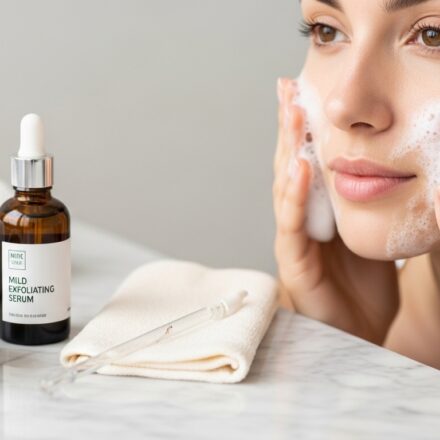
Gently exfoliate your facial skin 2-3 times a week in the evening with a face exfoliator that contains 1-2% salicylic acid. The BHA exfoliants will break down the sebum and dead skin cell plugs that cause blackheads and whiteheads. AHA exfoliants (glycolic acid, lactic acid) work on the surface and help to smooth texture and avoid dead cell buildup. Alternate days with AHA/BHA to treat surface and pore build-up. PHA exfoliants are ideal for oily skin that is also sensitive — PHAs do a much more gentle and gentle exfoliation.
Step 3: Toner
After evening cleansing use a hydrating or exfoliating toner to balance the pH and to prepare the skin for night-time treatments. A niacinamide toner at this time provides another dose of oil-controlling active ingredients immediately following the cleanse when oil permeation is at its peak.
If you have oily skin and are using retinoids, skip the exfoliating toner while you use retinoid on an evening — an acid-based exfoliating toner could aggravate the skin.
Step 4: Treatment (Retinoid, Acne Treatment, or Serum)
Do use an active treatment step (such as a retinoid, acne treatment or a targeted serum). Retinoids such as retinol and prescription tretinoin help regulate sebum production, promote cell turnover and stop plugging of the follicles that leads to acne. Begin at 2 nights/week; gradually up to 4-5 nights/week, over 8 weeks.
Use benzoyl peroxide (BP) spot treatment to treat only active acne to prevent drying the skin around it. Seacret Men All-In-One Skin Revolution night serum is a multi-active formulation that is formulated for one night use for oily and combination skin tone on dark skin tones.
Step 5: Moisturizer
To preserve the moisture and protect the skin from any irritation caused by the treatment, use a light gel moisturizer after the treatment actives.
Use moisturizer after retinoid on retinoid nights in order to minimize retinoid irritation while not substantially altering the efficacy of retinoid — known as the “sandwich method. Avoid petroleum-based occlusives as they seal pores on oily skin types and select an oil-free formula that contains ceramides or glycerin.
Optional: Weekly Face Mask
Use clay mask weekly as a last step before the moisturizer. Clay mask formulations, such as kaolin or bentonite, absorb excess sebum from the pore and help to decrease oiliness of the surface for 3-5 days after application. The Black Mud Soap from Seacret is made with Dead Sea minerals and clay compounds which attract impurities to the skin in case of oily skin.
Use sparingly, apply to the T-zone only, leave on for 10-12 minutes until partially absorbed and rinse with lukewarm water. If you use a complete acne treatment kit, with a clay mask step, you see results that are quicker than if you use one of the products alone.
Additional Steps
Eye Cream
After serums, apply a light eye cream, such as Korean eye creams that are gel texture, to the under eye area. The under eye area lacks sebaceous glands, and must be hydrated even in oily skin types. Do not apply the same oil-free gel moisturizer to the eyes; the skin around the eyes is thinner, so use a product that contains peptides and/or caffeine to target eyelines and dark circles.
Lip Balm
Finally, use an oil-free lip balm. Do not use lanolin or petrolatum (petroleum jelly) lip balms if the skin around the lips tends to get acne (acne perioralis) – these ingredients spread to the skin and cause breakouts around the mouth. Use a light gel (such as glycerin or aloe vera) lip balm instead.
Blotting Papers
Have blot papers on hand for mid day shine control. Press a blotting paper to the T-zone for 5-10 seconds to absorb excess sebum but not rub, to not disturb the SPF or remove any makeup. The silica powder blotting papers also have a better absorption rate for oil than the plain rice paper ones. Blotting papers will not lead to oil rebound like over-cleaning will.
Daily Cleansing Habits for Oily Zones
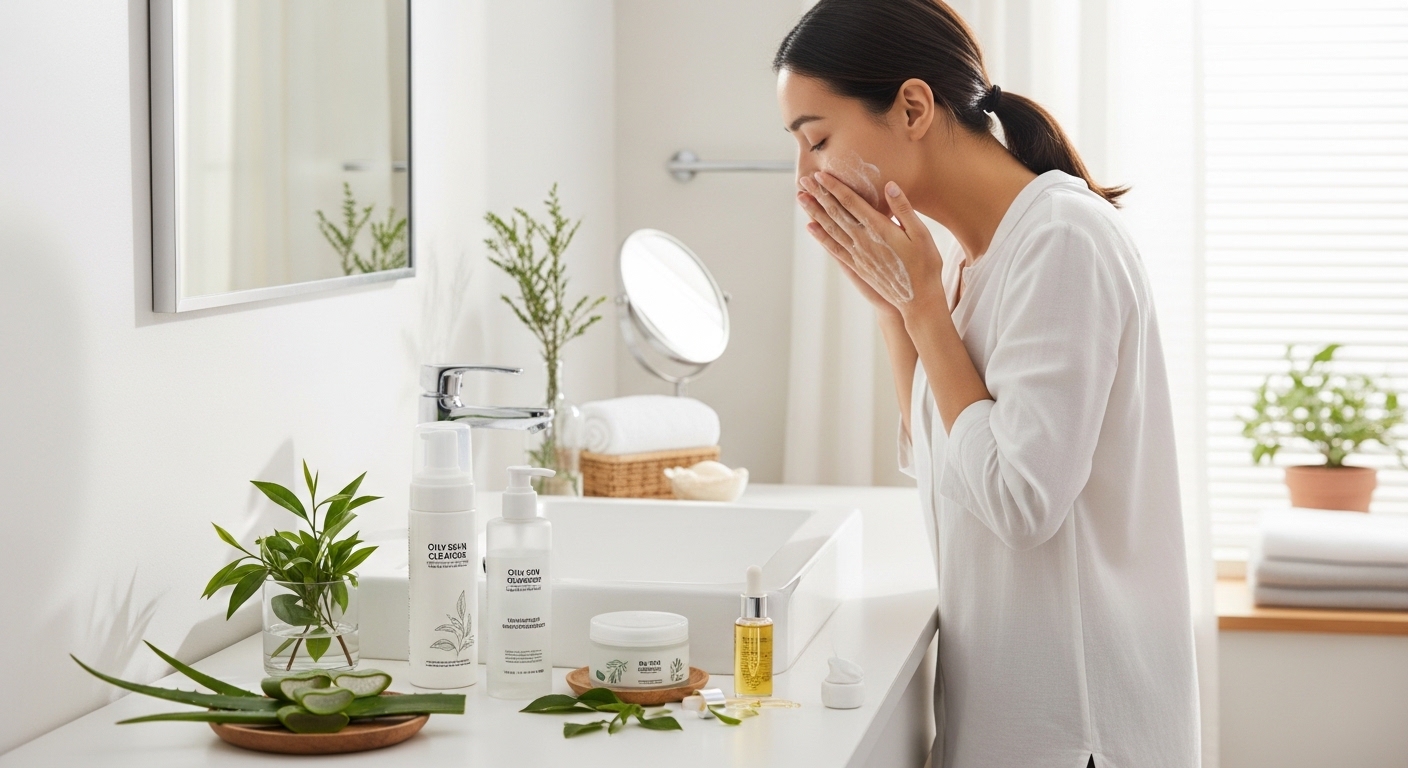 Every day, without fail, doing the proper oil control measures yields better oil control than intensive weekly oil control measures. There are 6 habits a person does everyday that directly diminishes the oiliness in certain facial areas:
1. Cleanse within 30 minutes of waking — sebum is at its maximum level in the first hours of the morning. This layer should be removed by cleansing in the morning before using any product to be able to absorb the product properly.
2. Double cleanse every evening without skipping — another prevalent oily skin error is missing the evening double cleanse on fatigued nights. Overnight makeup and oiliness is caused by not cleaning the skin during the night.One night’s worth of cleansing leaves behind leftover SPF and make-up that can cause pores to clog at night and leave them oily in the morning.
3. Change pillowcases every 2–3 days — Pillowcases will re-accumulate sebum, dead skin cells and product residue during sleep, which re-contaminates the skin. For oily skin types, a silk pillowcase or an antimicrobial pillow case that changes more often than a regular pillow case will prove more beneficial.
4. Apply toner with hands, not cotton pads — Directly apply toner onto the skin using hands rather than cotton pads, so that the maximized amount of toner can be absorbed by the skin, and the cotton pad is not wasted. If you are using a toner containing AHA/BHA use a cotton pad to apply and exfoliate evenly.
5. Use a clean face cloth daily — don’t reuse the same towel over several days as the bacteria and sebum can be re-distributed across the skin when it is subsequently cleaned. Have a fresh face cloth each morning and evening for face washing.
6. Apply blotting papers before reapplying SPF — blot off excess oil from the T-zone before applying SPF powder or spray. This will eliminate the sebum which has oxidized due to which the SPF deteriorates and will also prevent the pores from getting clogged with sebum and SPF.
Personal experience: I had these blackheads all over my nose even after I was double cleaning every night. I knew there was a face cloth that I was using for 5-6 days. Using fresh cloths every day (I have a bunch of 7 small face cloths) removed my blackheads from my nose after 2 weeks — without changing the product. The cloth was putting back sebum and bacteria that I was removing. The cheapest solution I could find for a problem which cost me money to try to solve by using products.
Key Ingredients for Oily Skin
- Niacinamide (2–10%) — decreases oil production, lessens the appearance of pores and preserves a healthy skin barrier without drying the skin.
- Salicylic acid / BHA (0.5–2%) —exfoliates in the pores, eliminates blackheads and decreases acne causing bacteria. The best single ingredient to clear up oily skin and acne.
- Zinc PCA — controls the secretion of sebum and minimizes inflammation causing oiliness and redness.
- Glycerin — Glycerin is the safest moisturizing ingredient for oily skin types, as it will not add oil to the skin.
- AHA (glycolic acid, lactic acid) — Exfoliates dead surface cells that when mixed with sebum, leads to pore congestion. AHA – glycolic acid, lactic acid.
- Retinol / Retinoids — After 8-12 weeks of regular use, they help to regulate cell sloughing, prevent blockage of the pores, and help to lower sebum production.
- Clay (kaolin, bentonite) — absorbs excess sebum from the openings in the pores in weekly mask treatments, but does not over-dry surrounding skin.
- Aloe vera gel — soothes inflammation, hydrates without adding sebum, and tightens pores temporarily after application.
Products to Avoid
- Alcohol-based toners — remove the AM and cause sebum to rebound within hours after use.
- Heavy creams and oils — occlusive products clog pores and form blackheads and whiteheads on the skin.
- Comedogenic ingredients — coconut oil, cocoa butter and isopropyl myristate) are on the comedogenic scale and directly clog pores on an oily skin.
- Sulfate cleansers (SLS/SLES) — over strip the skin barrier leading to a reactive oily film and barrier damage.
- Fragranced products — Oil production and acne breakouts can be exacerbated by oil-clogging fragranced products, which contain synthetic fragrance.
- Physical scrubs with large particles — cause micro-tears in the surface of the skin which can lead to more inflammation and oil production. Only use chemical exfoliants.
Lifestyle Factors That Support Oily Skin Care

Diet and Hydration
Too many processed sugar and refined carbohydrates lead to high levels of insulin-like growth factor 1 (IGF-1) which directly stimulates the activity of the sebaceous glands and leads to an increase in sebum secretion. A decrease in processed sugar to less than 25 g/day (0.9 oz/day) results in a measurable decrease in oiliness of the skin in 4-6 weeks.
Stay hydrated by consuming 2-2.5 liters (68-85 fl oz) of water per day – dehydration causes oily skin that makes it less effective at flushing out the pores without any help. Omega-3 rich foods (such as salmon, walnuts and flaxseed) help to lower sebum production on the cellular level, something that helps to combat inflammation.
Stress Management
Chronic stress leads to an increase in cortisol that boosts the activity of androgens, and stimulates the activity of sebum-producing glands. The stress hormones do this to oily skin as well as sweat.It is not only from sweat that stress hormones cause an increase in oily skin during exam periods, during high stress work weeks and during prolonged periods of stress.
Yoga, progressive muscle relaxation (PMR) and regular sleep routines help to lower cortisol levels immediately after their session and help to make skin oilier in 4-6 weeks when practiced regularly. The cortisol balance and the midday surge in androgens are balanced by 7-9 hrs of sleep every night.
Makeup Tips
Use oil-free, non-comedogenic cosmetic products that are suitable for all categories of cosmetics (foundation, blush, bronzer and primer). Primers used during oil-free foundation application are silicone based and temporarily fill pores to give a smoother surface for the foundation to adhere to.
Use the translucent setting powder with silica base to prime in T-zone to draw out excess sebum all day long. Do not apply powder over dry areas – powder on non-oily areas gives a cake like surface. Do not bring powder but bring blotting papers to touch-up after initial application as it may build up on the skin and clog the pores.
Professional Treatments
- Chemical peels — (20-30% glycolic acid or 15-20% salicylic acid) open up the pores, decrease sebum production and correct the texture of the skin after 1-3 applications.
- Microneedling — causes a controlled micro injury to stimulate collagen production and to close pores. 3-6 sessions over a 4-6 week period results in an ongoing decrease of pores.
- Laser treatments — YAG laser at 1064 nm will directly target sebaceous glands and cause a decrease in sebum production for 3–6 months per course of treatment. Available at special eye & skin clinics, such as Cascade Eye & Skin Centers.
- Prescription retinoids (tretinoin or adapalene) — are prescription drugs that are used long-term to treat skin that is oily and prone to acne; a dermatologist will determine the skin type and severity of the acne to determine which retinoid is best for you.
Seasonal Adjustments
Winter Skincare Routine for Oily Skin
1. Switch to a gentler cleanser — a decrease in sebum during colder weather. A gel cleanser is used in lieu of a more aggressive foam formula as it does not strip away over winter.
2. Add a hyaluronic acid serum — indoors = less humidity = more TEWL (irregardless of what your skin type is). When applied to damp skin, a HA serum replenishes the moisture level of the surface without causing any grease.
3. Upgrade to a slightly richer moisturizer — light summer gel moisturizer becomes a moisturizing lotion in the winter. It’s best to use a ceramide-rich oil-based lotion, not a gel which doesn’t offer the same barrier support in cold dry air. Sunscreen remains non-negotiable in winter — levels of UV index are still high enough to cause cumulative damage to the skin for the whole year. Apply comfortable winter daily use lightweight mineral sunscreen, with a sun protection factor of 30.
Personal experience: I had oily skin in summer, but in winter it became tight and dry. I thought that oily skin wouldn’t require extra water in the wintertime. Adding a HA serum under my regular moisturizer in November changed that right away, in 4 days, an immediate result — the tight, flat skin was gone and my skin stopped producing too much oil in February. This was causing the skin to produce sebum in response to the dehydration during the winter.
FAQs
Q1: Does Moisturizing Make Oily Skin Oilier?
No, moisturizing does not make oily skin oilier. Skipping moisturizer on oily skin triggers compensatory sebum overproduction — dehydrated skin signals the sebaceous glands to increase oil output to compensate for lost surface moisture. A lightweight, oil-free gel moisturizer hydrates the skin without adding oil and reduces midday shine over 2–4 weeks of consistent use.
Q2: How Often Should I Exfoliate?
Exfoliate oily skin 2–3 times per week using a BHA exfoliant containing salicylic acid. Sensitive oily skin types exfoliate once per week. Daily exfoliation strips the AM and increases inflammation that worsens oiliness and breakouts. Signs of over-exfoliation on oily skin include burning, persistent redness, and paradoxically increased sebum production within 24 hours of exfoliating.
3: Can I Use Oil-Based Products?
Yes, certain oil-based products are suitable for oily skin. Non-comedogenic plant oils — including squalane, rosehip, and jojoba — do not clog pores and work effectively as the first cleanse in a double cleansing routine to dissolve SPF and makeup. Avoid coconut oil, cocoa butter, and other highly comedogenic oils that rate above 3 on the comedogenicity scale.
Q4: Is Sunscreen Necessary in Winter?
Yes, sunscreen is necessary in winter. UV radiation generates cumulative skin damage year-round, including on overcast winter days when UV index remains at levels sufficient to cause collagen breakdown and pigmentation. Use an SPF 30 or higher mineral sunscreen in a lightweight lotion formula in winter rather than skipping it.
Q5: When to See a Dermatologist?
See a dermatologist if oily skin produces persistent, painful cystic acne that does not respond to over-the-counter BHA treatments within 8 weeks, or if oily skin appears alongside symptoms including hair loss, irregular periods, or sudden hormonal changes — which indicate an underlying endocrine condition requiring medical assessment. Find a dermatologist through your GP referral or through verified directories including the American Academy of Dermatology (AAD) database.
Summary
Author Information
Mahrukh is the founder of BeautyKob and writes practical skincare and haircare guides focused on simple routines, ingredient awareness, and beginner-friendly beauty habits.