

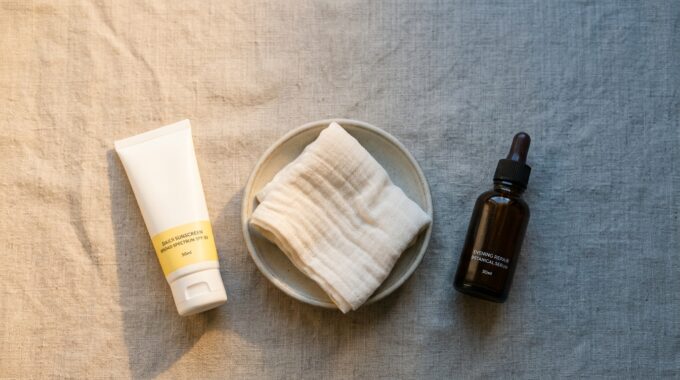
Most people looking for a new serum to deal with dull skin or thinning hair are looking in just the wrong direction — the real answer lies elsewhere: sleep, sun protection, and consistency. Trendy products can smooth things out for a day. It takes a few weeks of the same simple routines, consistently followed, to see a real difference in the texture of skin and hair.
Table Of Content
- Key Takeaways
- Know Your Skin and Hair Before You Build a Routine
- Identifying Your Skin Type
- Identifying Your Hair Type and Scalp Condition
- Morning Routine: Defense, Not Repair
- Cleansing Without Overdoing It
- Toning to Prep the Skin
- Moisturizing for Barrier Support
- Daily Sun Protection
- Evening Routine: Repair and Renewal
- Deeper Cleansing at Night
- Exfoliating Without Overdoing It
- Targeted Serums and Actives
- Night Moisturizers
- Hair Care: Strength and Shine
- Washing and Conditioning
- Scalp Care
- Heat and Chemical Protection
- Nutrition and Hydration: What Shows Up From the Inside
- Water and Cellular Function
- Protein and Micronutrients
- Healthy Fats
- Lifestyle Factors That Support (or Undermine) Results
- Sleep as Active Repair
- Stress, Movement, and Circulation
- Habits Worth Dropping
- Weekly and Monthly Boosters
- Setting Realistic Expectations
- Frequently Asked Questions
- How long does a beauty care routine take to show permanent results?
- Does a simple routine actually work as well as an elaborate one?
- Do I need to change my skincare routine with the seasons?
- Does lack of sleep really affect skin and hair?
- What’s the most common mistake people make with beauty routines?
- The Bottom Line
Key Takeaways
- Products that work for you actually depend on the type of skin and hair you have — whether it is oily, dry, combination, or sensitive; straight, curly, or coily.
- The true function of a morning routine is protection — cleansing, moisturizing, and sun protection are what get skin through the day.
- Evening routines take the heavier work: deep cleaning, exfoliation 2-3 times a week, and active ingredients such as retinoids are for the night.
- Clinical studies have shown that sleep restriction actually decreases skin hydration and elasticity in just one night — not just a myth.
- Extras (masks, trims, scalp treatments) are for weekly and monthly use and cannot replace daily care.
- Consistency beats product complexity — people stick with the simple routines instead of the complicated ones they abandon after 2 weeks.
Know Your Skin and Hair Before You Build a Routine
Each person’s skin and hair type reacts differently to a routine; a routine built for someone else’s skin type may not work for yours.
Identifying Your Skin Type
Oily skin can be caused by overproduction of sebum and requires a mild foaming cleanser to regulate it, rather than removing all the oil. Dry skin lacks hydration and feels tight or flaky, so it requires richer, cream-based cleansers and moisturizers.
\If you have combination skin (oily T-zone and dry cheeks), you’ll want products that don’t over-treat either area. If you have sensitive skin, it can irritate easily, so it’s a good idea to patch-test new products before using them all over your skin.
Pro Tip: Apply a new product to the inside of your forearm or behind the ear for 48 hours before using it on your face — it will catch most reactions before they occur somewhere visible.
Identifying Your Hair Type and Scalp Condition
The texture of your hair (straight, wavy, curly, coily) and the condition of your scalp (oily, dry, sensitive) both influence what routine to follow. Oily scalps should be washed more often, lightly, while dry or curly hair should be washed less often so it doesn’t dry out, since it’s unable to easily replace lost moisture.
The health of the scalp is as important as the health of the hair — itchiness, flaking, or excess oil signal an imbalance that needs correcting before hair care products can do their job.
Morning Routine: Defense, Not Repair
A morning routine isn’t meant to undo anything overnight — it’s about preparing skin and hair for what the day brings, like pollution, sun, and dust.
Cleansing Without Overdoing It
Overnight sweat, oil, and residue need to be removed before anything else goes on — but the goal is removal, not stripping. Lukewarm water works better than hot water, since hot water pulls more natural oil from the skin and can worsen dryness over time.
A light foaming cleanser is best for oily skin, a creamy hydrating cleanser is best for dry skin, and a fragrance-free formula that won’t irritate is best for sensitive skin.
Toning to Prep the Skin
Toner is optional, but for those who use it, it helps neutralize the skin’s pH and prepares it to better absorb serums and moisturizers. Alcohol-based astringent toners work well for oily, acne-prone skin, while alcohol-free versions suit dry or sensitive skin better.
Moisturizing for Barrier Support
Hydration is a must for all skin types, and moisturizer does the job by binding water and strengthening the skin’s natural barrier. This matters as much for oily skin as dry skin, since stripping away all the oil can trigger the skin to produce even more. Lightweight gels work well for oily and combination skin, while richer creams suit dry or mature skin.
Daily Sun Protection
Most of the work of a routine can be undone in an instant: UV exposure destroys collagen and speeds up hyperpigmentation and aging. The American Academy of Dermatology’s recommendations call for a broad-spectrum sunscreen of SPF 30 or higher on all exposed skin daily, reapplied roughly every two hours during extended outdoor exposure, since SPF 30 blocks about 97% of UVB rays. This holds true even on cloudy days or near windows, since UV rays pass through both clouds and glass.
Pro Tip: The amount dermatologists recommend for full-body coverage is about a shot glass’ worth, but most people apply far less than that to the face alone — which is part of why sunburn still happens despite “protection.”
Evening Routine: Repair and Renewal
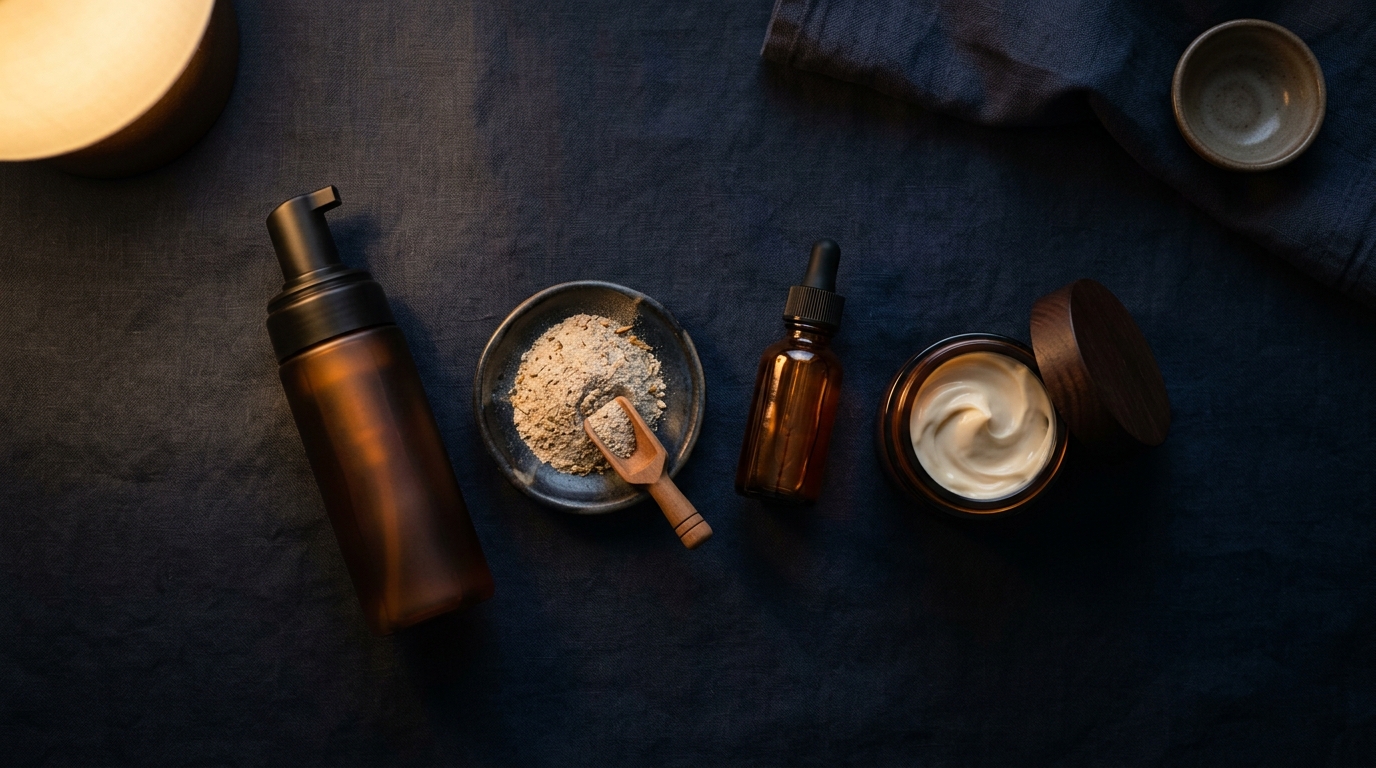
The real skin turnover and repair takes place while we sleep, which is why most of the meaningful work in a skincare routine happens in the evening.
Deeper Cleansing at Night
Nighttime cleansing needs to remove makeup, sunscreen, and pollution particles that have built up during the day, which typically means a more thorough clean than in the morning. A foaming cleanser is ideal for nighttime use on oily or acne-prone skin, while a creamy cleanser is better for dry skin that shouldn’t be over-stripped before bed.
Exfoliating Without Overdoing It
Exfoliation clears dead skin cells and clogged pores, which leaves skin more receptive to moisturizers and serums afterward. Most skin types benefit from exfoliating two to three times weekly, while sensitive skin may do better with gentler chemical exfoliants rather than physical scrubs.
Targeted Serums and Actives
Ingredients like retinoids work better at night, since they increase sun sensitivity and are more effective when skin isn’t also contending with UV exposure. Consistency matters more than potency here — a product used only occasionally can irritate skin rather than deliver the benefits a regular routine would.
Night Moisturizers
A richer night moisturizer or cream helps skin repair itself while sleeping. Ingredients like hyaluronic acid and ceramides help reinforce the barrier and reduce water loss overnight — a step oily skin types often skip unnecessarily, even though skipping it can trigger extra oil production to compensate.
Hair Care: Strength and Shine
Washing and Conditioning
Wash your hair according to scalp oil production, not a fixed schedule — oily scalps usually need washing two to three times a week, while dry or curly hair can go longer between washes.
Conditioner replenishes moisture and smooths the cuticle after washing, and a weekly deep-conditioning treatment helps repair damage from heat styling, weather, or chemical treatments that daily conditioner alone can’t fully address.
Scalp Care
A healthy scalp supports healthy hair growth more directly than most people realize. Scalp massage increases circulation, helping deliver nutrients to hair follicles, while natural oils like coconut or jojoba can help with dryness and flaking when used as an occasional treatment rather than a daily habit.
Heat and Chemical Protection
Heat styling tools and chemical treatments like coloring or relaxing both weaken hair structurally over time. A heat protectant before styling and lower heat settings reduce cumulative damage, and spacing out chemical treatments gives hair more recovery time between stressors.
Nutrition and Hydration: What Shows Up From the Inside

Water and Cellular Function
Adequate hydration supports skin elasticity and helps skin look plumper and less dull, while chronic dehydration tends to make fine lines and tightness more noticeable. This isn’t a topical substitute — drinking water supports the same barrier function that moisturizer works on from the outside.
Protein and Micronutrients
Hair and skin are both largely protein-based structures, so inconsistent protein intake shows up over time as weaker hair and less resilient skin. Vitamin C supports collagen production, vitamin A supports skin and scalp cell turnover, and zinc and iron deficiencies are commonly linked to hair thinning and slow healing.
Healthy Fats
Fats from sources like fish, nuts, and seeds support the skin’s barrier function from the inside, working alongside — not instead of — topical moisturizers. Diet quality also affects hormone levels, which in turn can influence breakouts and inflammation.
Lifestyle Factors That Support (or Undermine) Results
Sleep as Active Repair
Sleep isn’t a passive backdrop to a skincare routine — it’s part of the mechanism. A study in Clinical and Experimental Dermatology found that skin hydration and elasticity decline measurably within a single night of sleep restriction, with the effect compounding over repeated short-sleep nights. Poor sleep also reduces growth hormone release, which normally supports collagen production overnight.
Pro Tip: If skin looks duller than usual after a bad night’s sleep, that’s not imagination — clinical measurements show reduced hydration and barrier function within 24 hours of sleep loss.
Stress, Movement, and Circulation
Regular exercise increases blood flow and oxygen delivery to skin and scalp tissue, supporting the same repair processes a topical routine is working toward.
Chronic stress works in the opposite direction — elevated cortisol is linked to breakouts, hair shedding, and slower skin recovery, which is part of why stress management, even something as simple as regular movement, shows up in skin and hair outcomes.
Habits Worth Dropping
Smoking and heavy alcohol use both accelerate skin aging and compromise barrier function, working against whatever a topical routine is trying to achieve. Reducing exposure to environmental pollution and unprotected sun exposure has a similar cumulative protective effect.
Weekly and Monthly Boosters
Daily care maintains skin and hair; weekly and monthly care address the deeper, cumulative stress that daily steps alone don’t fully resolve.
| Booster | Frequency | Primary Benefit | Time Commitment | Best For |
|---|---|---|---|---|
| Gentle exfoliating mask/peel | 1x/week | Clears buildup, boosts absorption | 10–15 min | Dull or congested skin |
| Deep-conditioning hair mask | 1x/week | Repairs cuticle, restores elasticity | 15–20 min | Heat-styled or chemically treated hair |
| Scalp oil treatment | 1–2x/month | Reduces dryness and flaking | 20–30 min | Dry, tight, or itchy scalp |
| Professional facial/consult | 1x/month | Adjusts routine to changing needs | 45–60 min | Persistent or seasonal skin issues |
Setting Realistic Expectations
Small improvements — less dryness, smoother texture — tend to show up within a few weeks of consistent care. Deeper changes, like measurably stronger hair or reduced breakage, generally take a few months, since they depend on new growth and gradual repair rather than any single treatment. Routines abandoned after a week or two rarely get far enough to show results, which is part of why consistency outperforms complexity here.
Frequently Asked Questions
How long does a beauty care routine take to show permanent results?
Small improvements like reduced dryness are often noticeable within a few weeks, while deeper changes such as improved hair strength or reduced breakage usually take 2 to 3 months of consistent care. Structural repair depends on new cell and hair growth, which follows its own biological timeline regardless of routine intensity.
Does a simple routine actually work as well as an elaborate one?
A simple, consistently followed routine generally outperforms a complex one that gets skipped or altered frequently. Consistency is the variable most strongly linked to visible improvement, more so than the number of products used at any one time.
Do I need to change my skincare routine with the seasons?
Skin and hair respond to shifts in humidity, temperature, and sun exposure, so minor seasonal adjustments — like switching to a richer moisturizer in winter — help maintain balance. Major overhauls usually aren’t necessary; small tweaks to hydration level or SPF use tend to be enough.
Does lack of sleep really affect skin and hair?
Clinical studies measuring skin hydration and elasticity have found measurable declines after as little as one night of sleep restriction, with effects compounding over repeated short-sleep nights. Growth hormone release, which supports collagen production, is also reduced by inadequate sleep.
What’s the most common mistake people make with beauty routines?
Inconsistency is the most frequently cited issue — skipping steps, switching products too often, or abandoning a routine before it’s had a few weeks to show effects. Dermatology sources consistently note that steady, moderate care outperforms sporadic, intensive treatment.
The Bottom Line
A beauty routine that lasts is built on matching products to your actual skin and hair type, protecting skin with daily SPF, giving skin real repair time overnight, and backing all of it with sleep, hydration, and nutrition — not on chasing the newest product.
The visible payoff takes weeks for small changes and a few months for structural ones, and the routines that deliver results are the ones simple enough to actually keep up. If skin or hair issues persist despite consistent care, a board-certified dermatologist can identify causes a routine alone won’t fix.