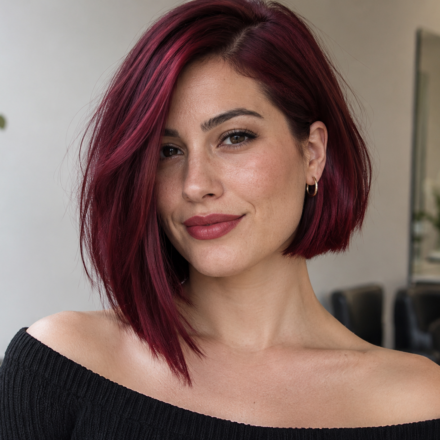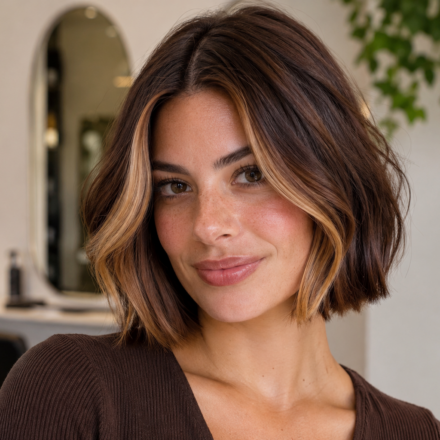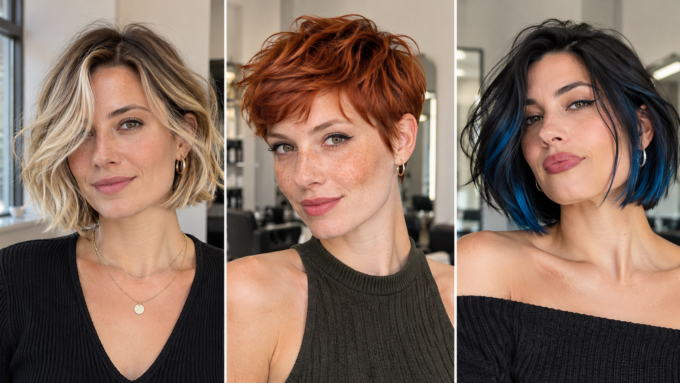
The most useful short bob hair color ideas start with placement: where will the lightest or brightest pieces sit once your haircut is dry? Blonde balayage, pink highlights, copper red and blue accents can all work on short hair, but they have different starting-colour requirements and grow-out patterns.
Table Of Content
- 1. Blonde balayage on a short bob
- 2. Pink highlights on a short bob
- 3. Copper red on a bob or pixie
- 4. Blue accents on a pixie or short bob
- Compare the four colour directions
- Make a plan for cut, colour and budget
- Home care without a rigid calendar
- Safety before hair dye
- Questions readers ask
- Which option has the easiest grow-out?
- Can temporary pink or blue be a trial?
- Do I need to wait a week between a haircut and colour?
- Choose the cut or a smaller colour change
This guide compares four options for bobs and pixie cuts, with practical questions about fading, salon visits and home care. The images are AI-generated inspiration illustrations, not photographs documenting a colour service or a guaranteed result.
1. Blonde balayage on a short bob
Balayage is a painting technique used to create a blended lightening effect. It can leave more depth near the root and brightness towards the ends. A colourist may also use foils or other techniques to reach the desired result; the finished effect matters more than insisting on one application method.
On a short bob, there is less room for a long gradient. Ask for a plan that follows the final cut, especially around the front and underneath. A slightly deeper root and darker pieces between the highlights can help the light areas remain distinct.
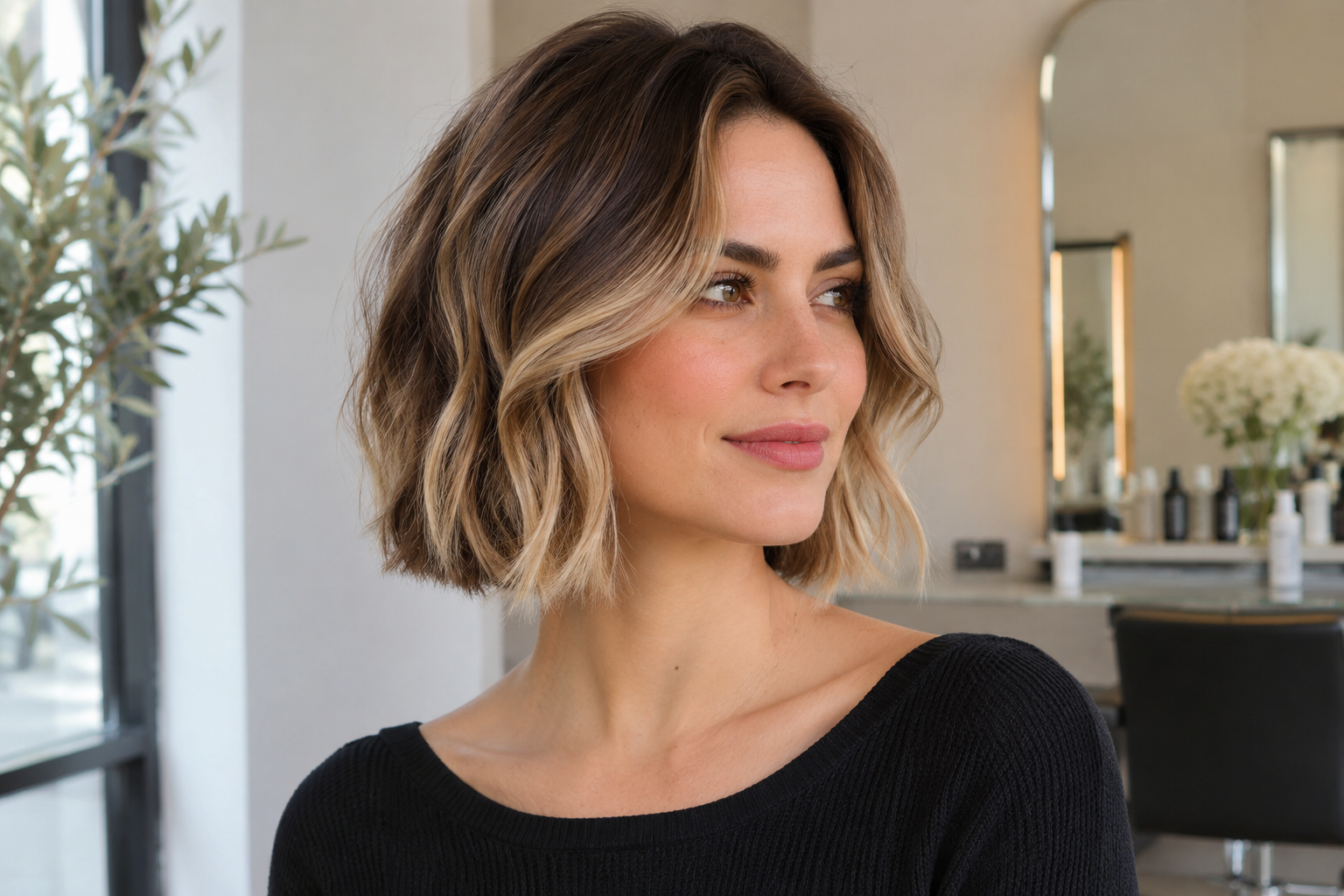
Choose it if: you like dimension and a softer root transition. Discuss first: previously dyed dark hair, the amount of lift needed and whether a beige or golden blonde is more realistic than an icy shade. Dark hair can have balayage, but the achievable brightness may require more than one session.
Ask: “Where will the brightest pieces sit after the bob is cut, and what tone can we reach without compromising the hair?” A blended root can make regrowth less obvious, but the blonde tone may still need maintenance.
2. Pink highlights on a short bob
Pink can be a faint rose tint, dusty mauve or a vivid accent. A pale pink generally needs a sufficiently light base to show clearly. A deeper pink may read differently over a warm or darker base, so use a strand test rather than assuming the shade on the box or reference will transfer exactly.
For a small first step, ask about a few visible panels or an underside section. Check whether those pieces will show with your usual parting, when tucked behind an ear and when the bob is worn straight. A placement that looks obvious in waves may disappear under a smooth top layer.
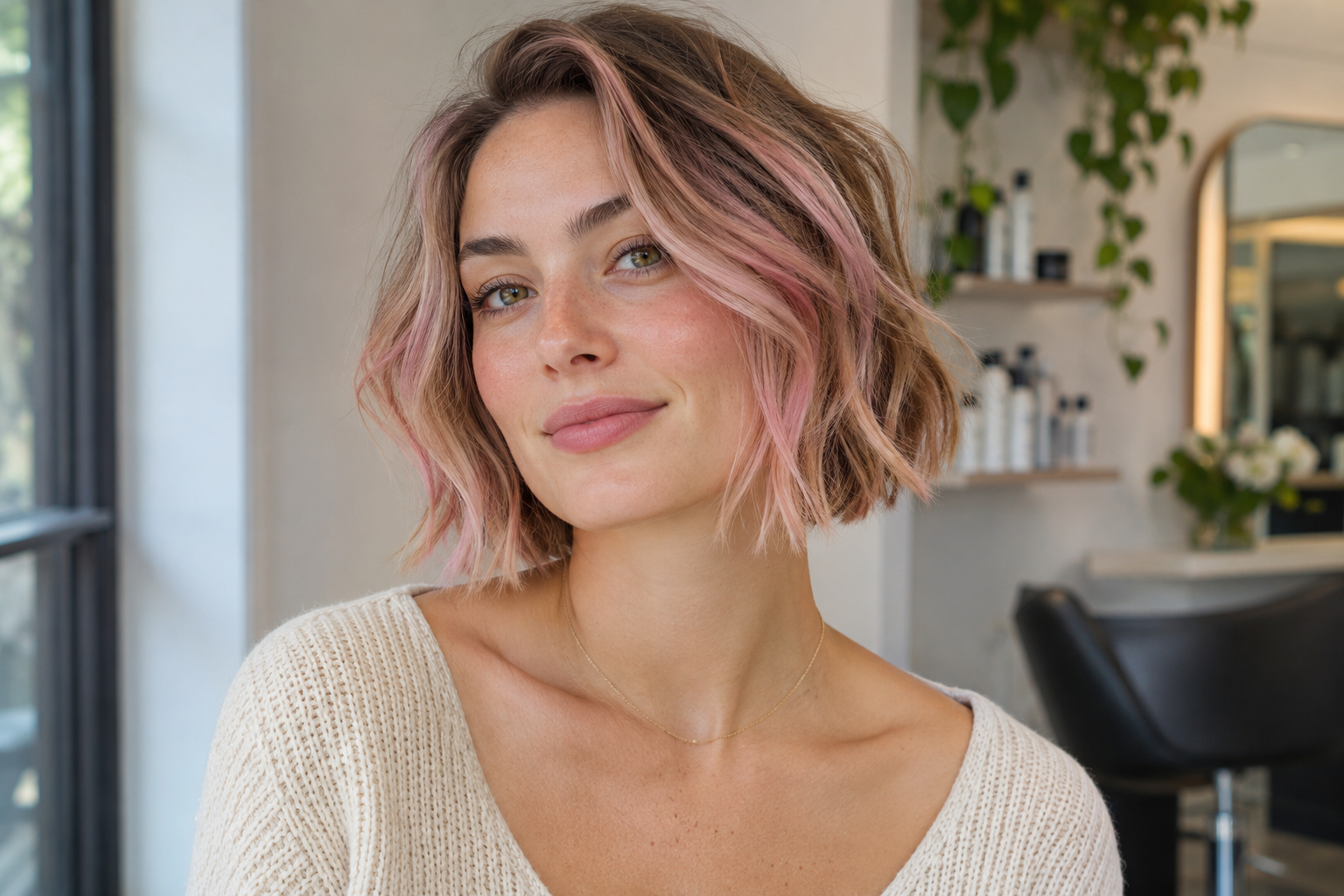
Pink fading is formula- and hair-dependent. A soft tint can wash out quickly, while some vivid products stain porous hair and last much longer than expected. Do not choose pink solely because you assume it will disappear before an event.
Ask: “What base do I need, what shade may remain as this fades, and will a colour-depositing conditioner suit my hair?” Any undertone can wear pink; compare swatches near your face and choose the contrast you like.
3. Copper red on a bob or pixie
Copper can lean golden, orange-red or deeper auburn. Movement in a layered bob or textured pixie changes how the warm tones catch light, but a blunt cut can wear copper too. Layers are a haircut choice, not a requirement for the colour.
Match the brightness to the starting hair and follow-up plan. A deeper copper-brown may be a more modest change than a vivid orange-copper, but previously dyed hair can still need correction. The fact that copper is darker than blonde does not automatically make a particular service gentle.
Ask to compare a softer auburn swatch with a brighter copper. Discuss how the chosen formula may fade on your base; there is no single guaranteed brown-red end point. A gloss or colour refresh may be useful, but not every copper service needs the same products or schedule.
4. Blue accents on a pixie or short bob
Blue can be concentrated in the longer top of a pixie, around the face on a bob or in a few hidden panels. Placement should follow the way you style your hair. Show the stylist the sweep or parting you actually use, rather than selecting the colour from a portrait alone.
A bright blue often needs a lightened base, while a dark navy effect may be more subtle. Residual yellow, previous colour and the dye formula affect the outcome and fade. Blue can leave teal, green, grey or other staining; it is not guaranteed to rinse back to a clean blonde.
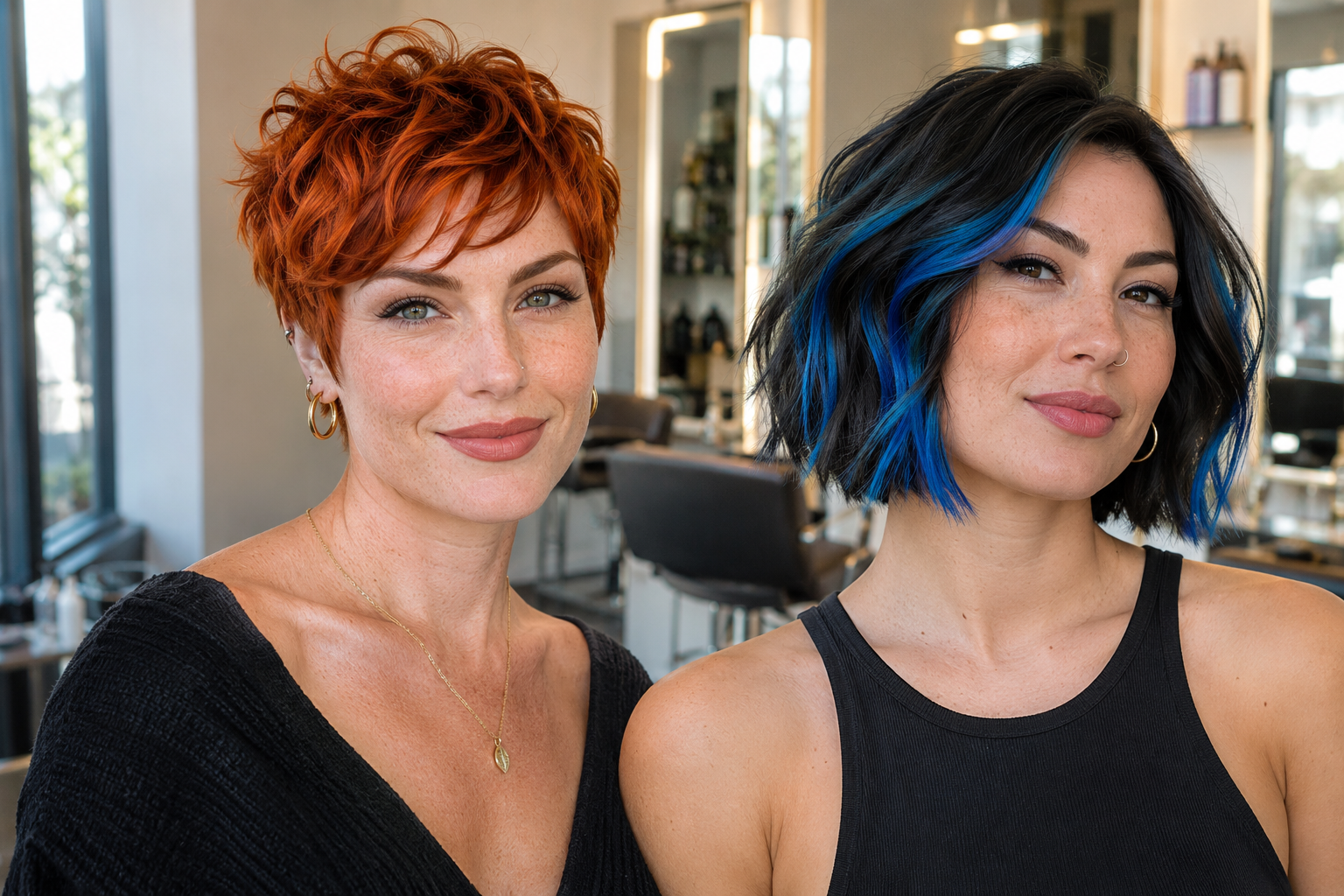
Ask: “Can we achieve this blue on my base, and what would changing it later involve?” If you expect to return to a pale blonde soon, explain that before colouring. A short cut grows out, but that does not make colour correction immediate or risk-free.
Compare the four colour directions
| Idea | Main appeal | Question before booking | What to plan for |
|---|---|---|---|
| Blonde balayage bob | Blended brightness with depth | How light can my hair safely go? | Tone maintenance and eventual highlight touch-ups |
| Pink highlights | A soft or vivid accent | Does this shade need pre-lightening? | Variable fading or staining |
| Copper bob or pixie | Warm all-over colour or dimension | Which copper depth suits the result I want? | Colour refreshes tailored to fading |
| Blue accents | High contrast in selected sections | What may be left when it fades? | Potential residual pigment and a future removal plan |
Make a plan for cut, colour and budget
- Agree on the finished length. Whether the cut happens before or after colouring, both services should follow the same plan.
- Share your colour history. Mention old dark dye, bleach, henna and chemical treatments.
- Request a strand test where appropriate. It helps assess lift, condition and colour outcome; it is separate from allergy testing.
- Get an itemised quote. Ask whether lightening, toner, treatment and styling are included, and whether multiple visits are expected.
- Price the follow-up. A root service, gloss and trim may be needed at different times. Short hair is not automatically a cheap colour appointment.
Home care without a rigid calendar
Refresh timing depends on your formula, base, hair condition and preferences. Take a daylight photograph after the appointment so you can judge the change over time. Ask what signs mean you need a toner, a colour refresh or simply a trim instead of booking every service on the same schedule.
Wash as needed for your scalp, using products suited to the colour. Condition the lengths, follow product directions and use heat protection when styling. A colour-depositing product can affect shade unevenly on porous hair, so ask before using one. Avoid treating purple shampoo as a universal fix for every unwanted tone.
Bleaching damage is not reversed by a gloss. If the hair feels brittle or is breaking, discuss reducing chemical processing. Before adding a smoothing service, see our guide to keratin treatment risks and ask the stylist about the combined plan.
Safety before hair dye
Follow the label, including allergy-test instructions before every use, and do not apply dye to an irritated scalp. Keep dye away from the eyes and wear gloves. A strand test does not replace a skin allergy test. Read the FDA hair dye safety guidance; a previous reaction needs medical advice before another dye application.
Questions readers ask
Which option has the easiest grow-out?
A blended balayage with a root close to your natural colour can soften the visible regrowth line. That does not mean the tone lasts indefinitely. Ask about your specific starting colour and how much contrast you are happy to see.
Can temporary pink or blue be a trial?
It can help you explore a colour direction, but temporary products may not show on dark hair and can stain lightened or porous hair. Follow the instructions and test an inconspicuous strand before relying on a wash-out claim.
Do I need to wait a week between a haircut and colour?
There is no universal waiting period for a cut alone. A stylist can coordinate both at one appointment. If you are unsure about a major length change, trying the cut first can help you decide on colour placement.
Choose the cut or a smaller colour change
Compare our asymmetrical, shaggy and layered bob guide if you have not settled on the shape. For brightness mainly at the front, see bob haircuts with money piece highlights.