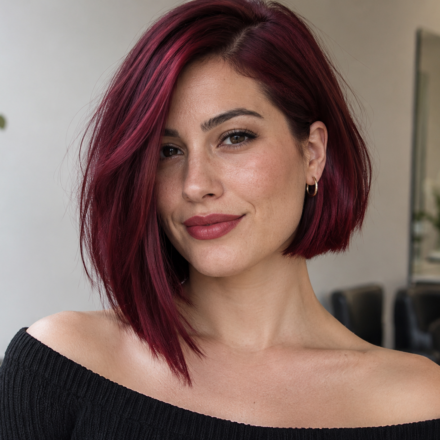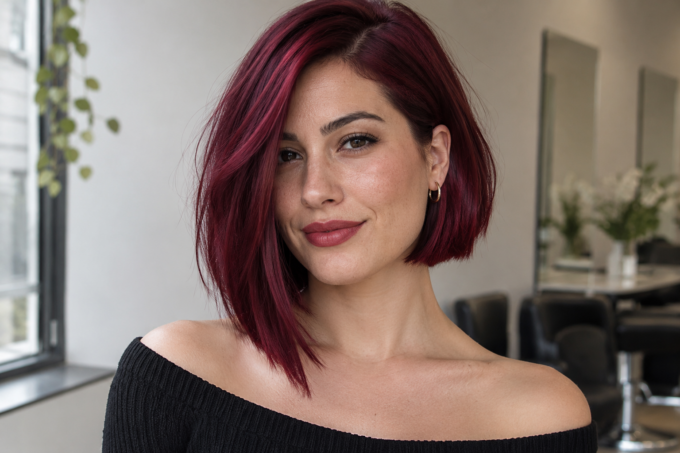
A burgundy asymmetrical bob pairs a wine-red colour with a cut that is longer on one side. But colour and haircut are separate choices: you can try burgundy on a balanced bob, or choose an asymmetrical shape in your natural shade. Separating the two makes it easier to decide which change you really want.
Table Of Content
- What makes a bob asymmetrical?
- Burgundy colour: wine, plum or red-brown?
- Shaggy bob with curtain bangs
- Layered bob: movement without a shaggy finish
- Compare the cuts before booking
- Style the shape you choose
- Maintain burgundy and the bob shape
- Plan the appointment and follow-up
- Colour safety
- Common questions
- Can an asymmetrical bob work on curly hair?
- Will layers make thin hair look thicker?
- Can I remove burgundy with a gloss?
- More short-hair ideas
This guide compares asymmetrical, shaggy and layered bobs, including curtain bangs and the questions that help you choose a cut for your texture. The images are AI-generated hairstyle inspiration, not documented salon transformations.
What makes a bob asymmetrical?
An asymmetrical bob has a deliberate difference between the lengths on either side of the face. A small difference gives a restrained diagonal line; a longer panel on one side makes the shape more obvious. It differs from a stacked or graduated bob, where the main change in length is from the back towards the front.
Your parting affects the balance. Show the stylist how you normally wear your hair and ask them to check the finished shape dry. If you change partings regularly, explain that before cutting: a shape designed around a deep side part may fall differently with a centre part.
Burgundy colour: wine, plum or red-brown?
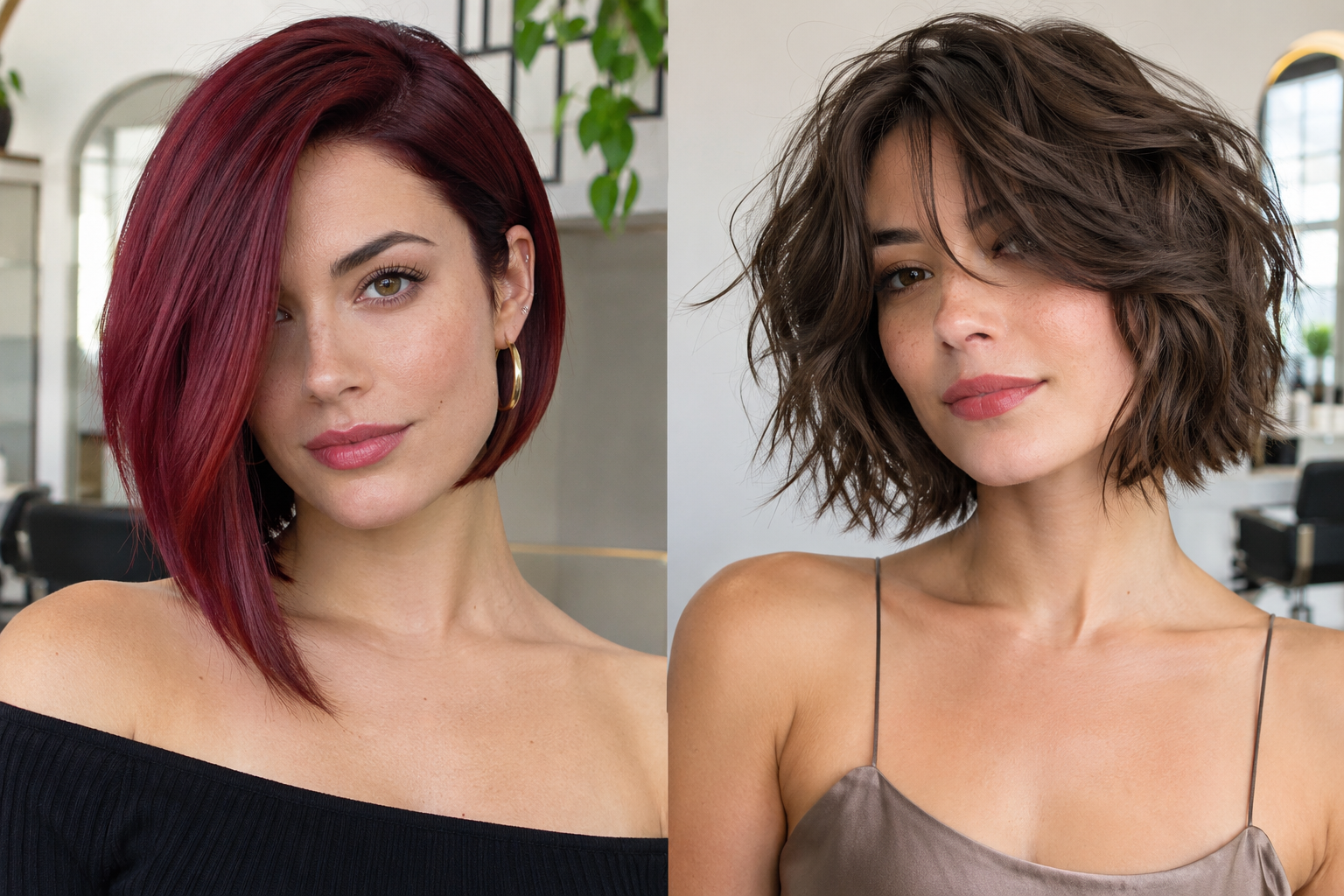
Burgundy is a family of shades, not a single formula. Some lean violet or plum; others look more red-brown. On a dark base, a subtle burgundy may show mainly in daylight. A brighter reference may require lightening, especially over previous dark dye. A colourist should assess your starting colour and history before promising the result.
Undertone suggestions can be a starting point, but they are not rules about who can wear a colour. Hold a swatch near your face in daylight and compare a plum burgundy with a warmer red-brown. Choose the effect you enjoy rather than ruling out a shade because of a skin-tone category.
Ask for this: “I like a wine-red bob with a visible difference between the sides. Can we agree on the shade in daylight, the shorter side when dry, and how it will look with my normal parting?”
Shaggy bob with curtain bangs
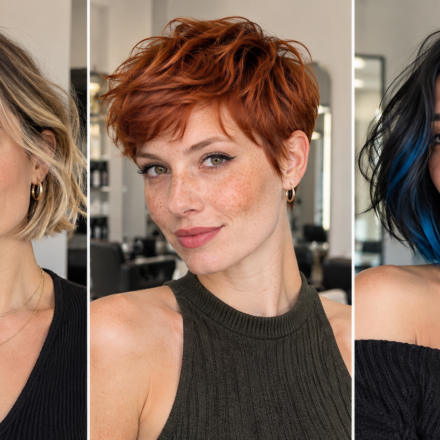
A shaggy bob uses textured layers and broken-up ends for a less polished finish. Curtain bangs separate around the parting and sweep towards the cheekbones. Together they can make a bob feel light and mobile, but the result depends on how your own hair behaves.
On naturally wavy hair, a little styling product and scrunching may be enough. On straight hair, the reference may require blow-drying or a hot tool. Ask how the cut would look air-dried and how much work is needed to recreate the photograph.
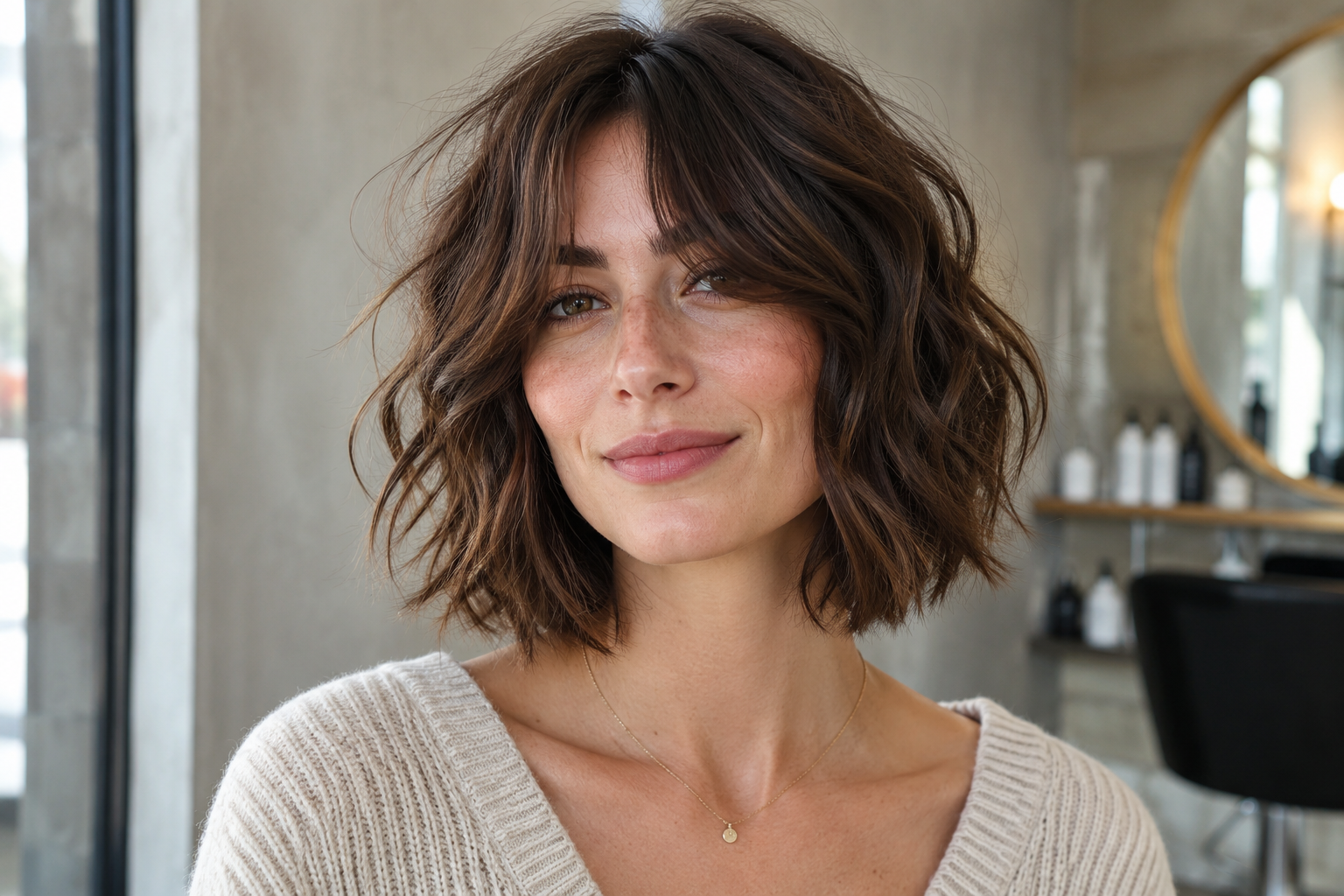
For fine hair, very short layers or heavy thinning can make the perimeter look sparse. Ask the stylist to preserve enough weight at the ends. For curls, discuss dry length and shrinkage before committing to bangs. Also point out cowlicks: they can affect how a curtain fringe separates each morning.
Layered bob: movement without a shaggy finish
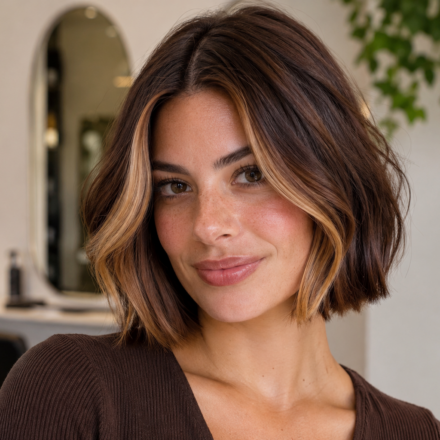
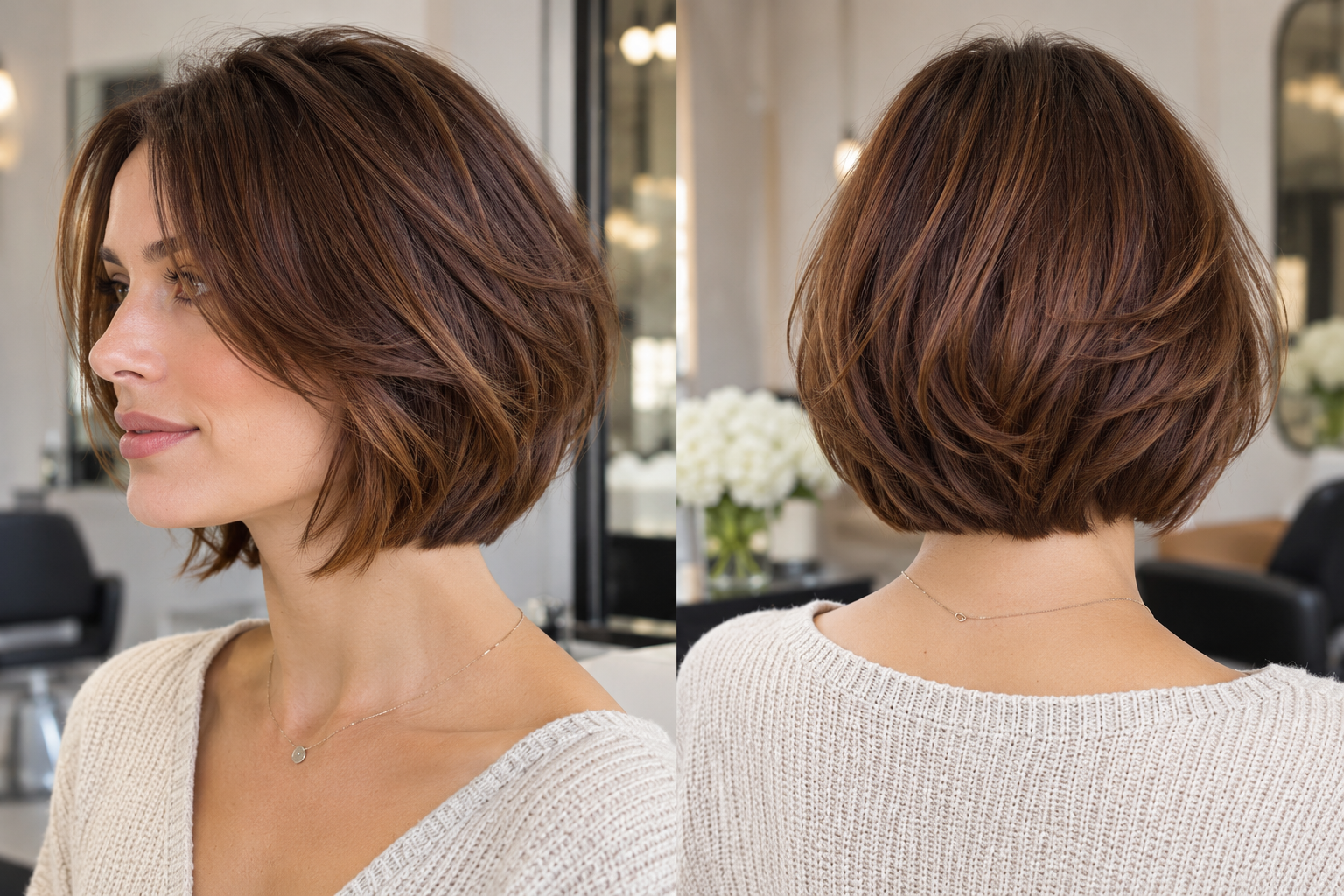
A layered bob can remain smooth and fairly solid at the ends while having shorter sections inside the cut. Layers may remove bulk from thick hair or change how the crown sits. They do not automatically create volume on every hair type; placement and styling matter.
Bring a side or back reference as well as a front portrait. The back shape is especially helpful when you want a gentle graduation rather than a stacked effect. Ask where the shortest layer will finish when dry and whether the ends will still look dense.
Compare the cuts before booking
| Cut | What defines it | Useful question | Potential trade-off |
|---|---|---|---|
| Asymmetrical bob | Different lengths at either side | Will it work with my usual parting? | The outline needs reshaping to keep the difference deliberate |
| Shaggy bob | Textured layers and a relaxed finish | How will it air-dry on my texture? | Fine ends may look sparse if too much weight is removed |
| Layered bob | Layers tailored to movement or bulk | Where will the shortest layer sit? | Some references need a blow-dry to show the shape |
Style the shape you choose
- Start with your parting. Put it in while the hair is damp, especially for an asymmetrical cut.
- Choose the finish. Lift roots for a fuller silhouette, or dry downwards for a smoother line. Use a temperature appropriate for your hair and tool.
- Keep product light at first. A small amount of mousse, cream or texture spray may be enough; add more only where needed.
- Check the bangs separately. Ask your stylist to demonstrate how to handle your fringe and cowlicks.
Maintain burgundy and the bob shape
Cut and colour do not need identical schedules. A fringe may need a tidy-up before the rest of the bob; a burgundy gloss may fade before the shape needs changing. Discuss an initial review date and adjust it according to your regrowth, finish and budget.
Fading depends on the dye, base colour, porosity, washing and exposure. Burgundy may become redder, browner or lighter; it is not guaranteed to fade to one neat shade. Ask what your particular formula is likely to leave behind and whether a colour-depositing product is appropriate.
Wash when your scalp needs it, condition the lengths and limit repeated high heat. Before adding another chemical service, discuss compatibility with the stylist. Our guide to keratin treatment risks explains questions to raise about smoothing treatments.
Plan the appointment and follow-up
Bring your colour history, front and back references, a daily styling-time limit and a budget. Ask for a quote that includes the cut, colour, any lightening or toner, and styling. Correcting old dye can change both the cost and number of visits; short hair alone does not guarantee a quick service.
If you are unsure about both a short cut and a new colour, consider making one change first. A subtle asymmetry is easier to adjust than a very long panel, and keeping your natural colour initially lets you judge the shape on its own.
Colour safety
Follow the dye label, including allergy-test instructions before every use. A strand test checks the hair outcome and does not replace a skin allergy test. Avoid application to an irritated scalp, protect the eyes and wear gloves. Read the FDA hair dye precautions. Seek medical advice before another dye application if you have had a previous reaction.
Common questions
Can an asymmetrical bob work on curly hair?
Yes, but the difference should be judged with your curl pattern and dry shrinkage in mind. Bring a reference with a similar texture and agree on the shortest dry length.
Will layers make thin hair look thicker?
They can change movement and silhouette, but removing too much weight can expose sparse ends. Ask about minimal layering or a stronger perimeter if density is your main concern.
Can I remove burgundy with a gloss?
A gloss may alter or soften the appearance. It does not reliably remove old pigment or restore lightened hair to its original state. Tell the colourist your long-term plan, especially if you hope to go blonde later.
More short-hair ideas
For brightness concentrated around the face, compare these bob haircuts with money piece highlights. For broader colour options, explore blonde, pink, copper and blue short-hair ideas.