A bob with money piece highlights combines a short haircut with brighter sections around the face. The contrast can be gentle, such as caramel against chocolate brown, or dramatic, such as red against black. The useful question is how that colour will look with your usual parting, natural texture and maintenance routine.
Table Of Content
- What is a money piece on a bob?
- 1. Brunette bob with a caramel money piece
- 2. Black bob with a red money piece and bangs
- 3. Platinum bob with a red money piece
- 4. Red highlights through a short black bob
- Compare the four options
- Choose placement for the hair you actually wear
- Maintenance and appointment planning
- Hair dye safety
- Questions to ask before booking
- Will a money piece be easy to grow out?
- Can I do it at home?
- What should I bring to the salon?
Below are four directions to discuss with a colourist, plus a practical guide to placement and upkeep. The hairstyle images are AI-generated inspiration illustrations, rather than photographs of salon results; use them to explain a colour direction, not as a promise of an exact outcome.
What is a money piece on a bob?
A money piece is a face-framing section that contrasts with the surrounding hair. It can start close to the root or blend in lower down. A fine section gives a subtle highlight; a wider panel makes a more obvious statement. There is no universal ideal width: density, your parting and the amount of contrast you want all matter.
On a short bob, placement is particularly visible because there is less length for a gradual blend. Ask to see where the colour will sit when your hair is worn as usual, including tucked behind an ear. Lightening the front can still cause breakage, even though fewer strands are treated than with a full head of highlights.
1. Brunette bob with a caramel money piece
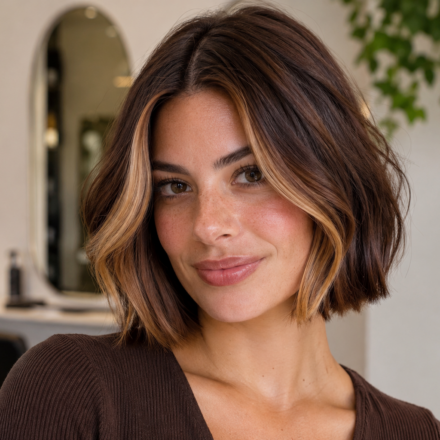
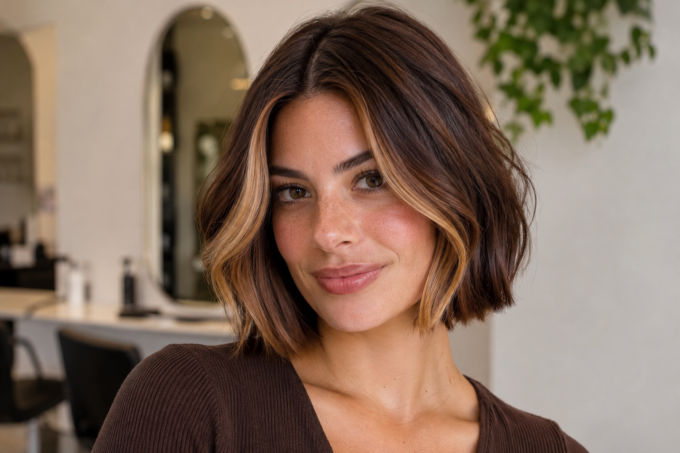
Caramel gives a chocolate or dark brown bob a warmer frame without the sharp contrast of platinum. A softly blended root can make regrowth less obvious, while brighter ends show the shape of the cut. Decide whether you want honey, golden caramel or a more neutral beige before the appointment; these can look quite different against the same brunette base.
Ask your stylist: “I want to keep most of my brunette colour and brighten the front with a soft caramel blend. Can we keep the root transition subtle and check the placement with my normal parting?” Bring a reference with a similar starting colour. Previously dyed dark hair may need a different plan from natural brunette hair.
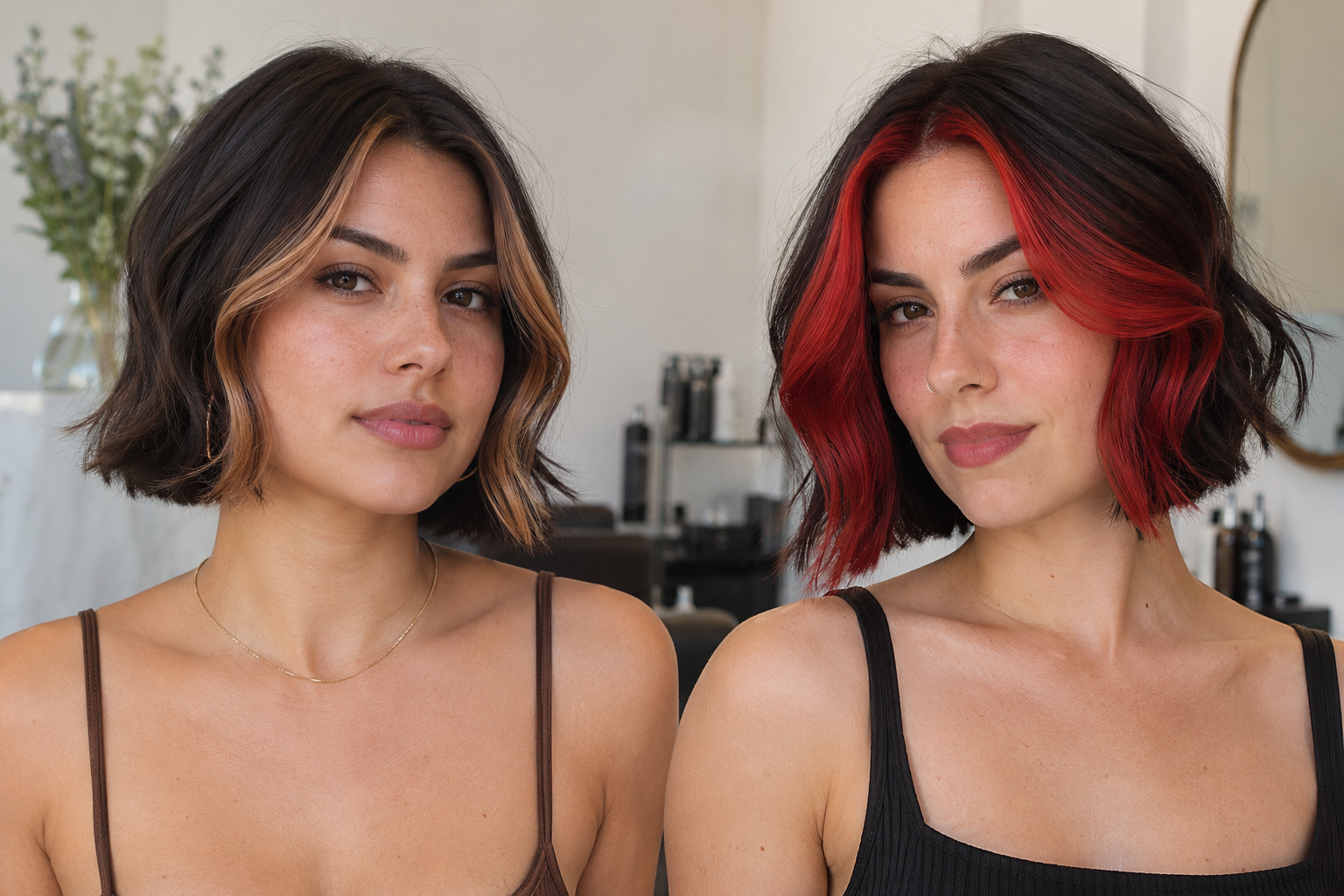
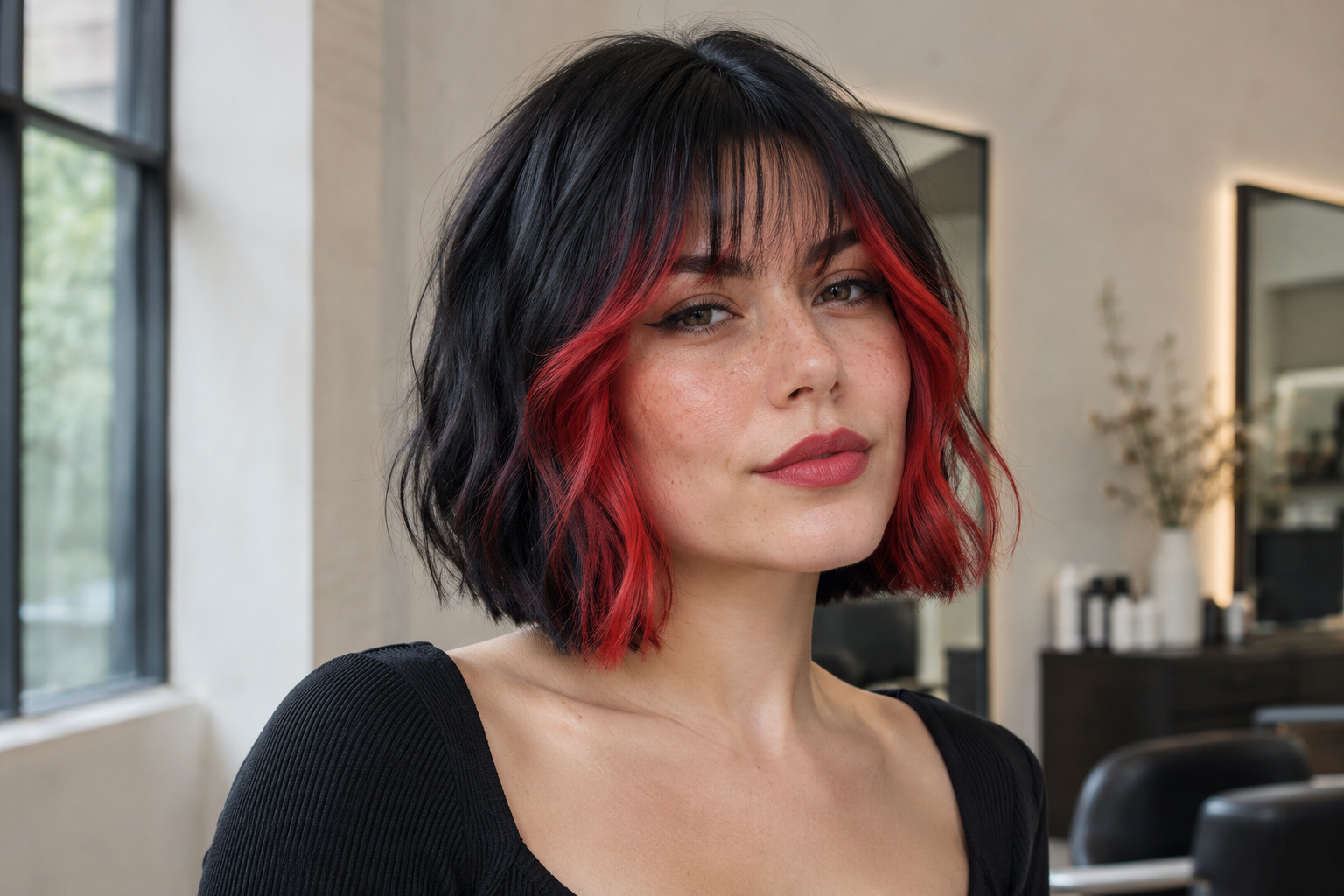
2. Black bob with a red money piece and bangs
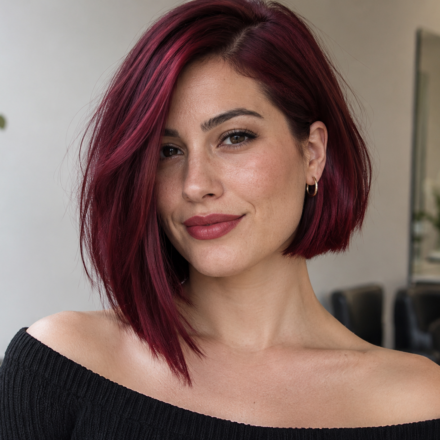
Red sections stand out against a black bob, especially where a fringe meets the sides. Choose the red deliberately: cherry, wine and orange-red give different effects. You can keep a dark fringe and colour the longer side sections, or include a little red through the fringe for a more connected frame.
Discuss whether your base needs lightening to achieve the desired brightness. A red tint on dark hair may be visible mainly in strong light; a vivid panel often needs more preparation. Tell the colourist if the black is from previous dye, and ask how the red might stain or transfer onto towels.
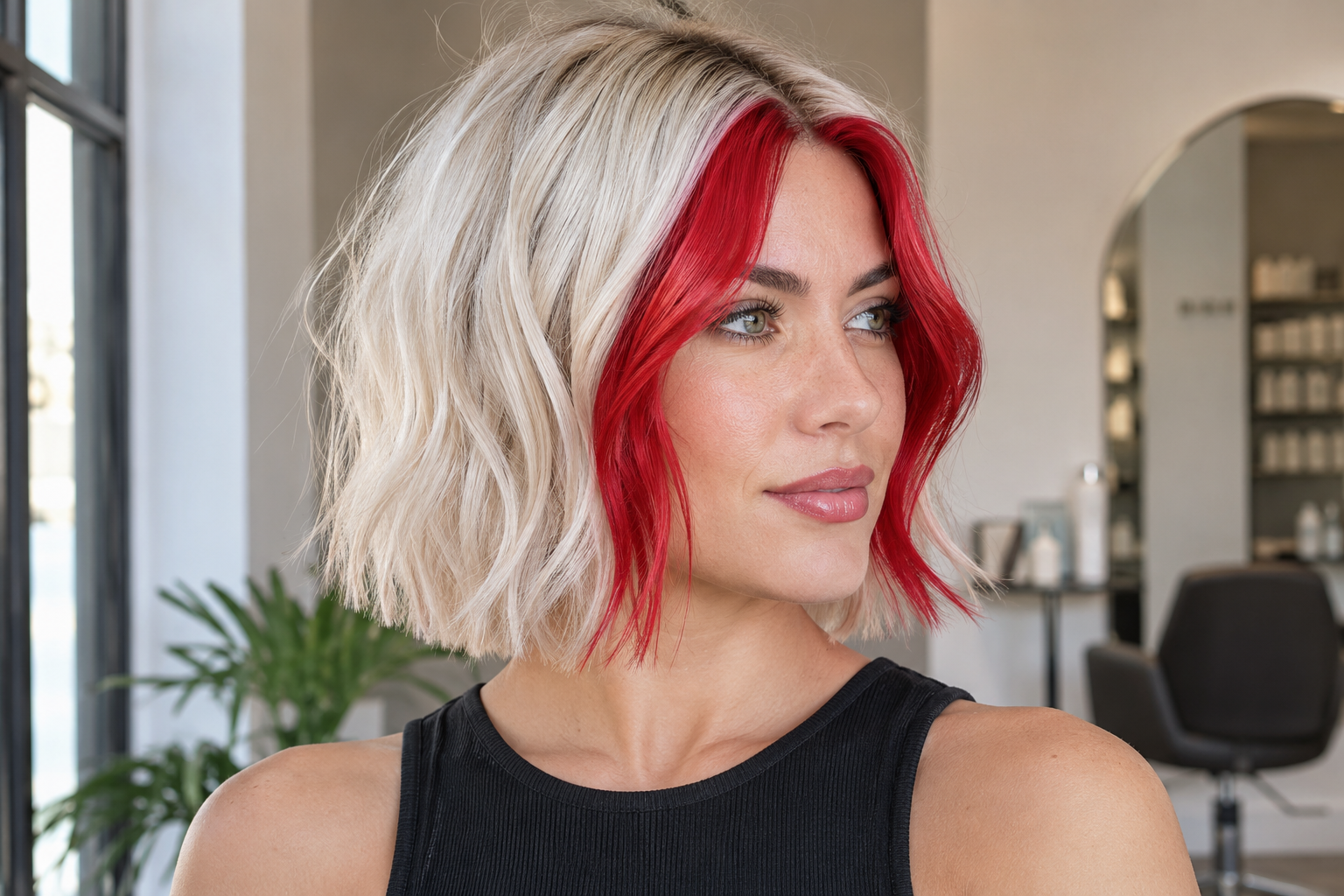
3. Platinum bob with a red money piece
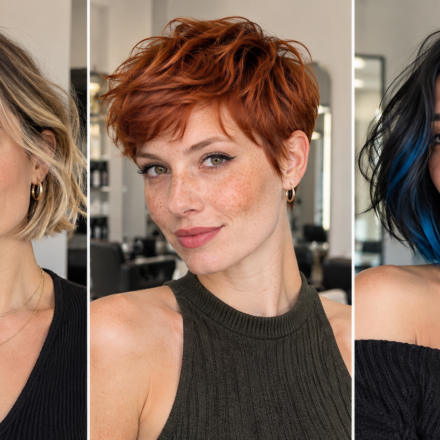
This is a high-contrast option with two maintenance jobs: keeping the blonde tone you like and refreshing the red. The colourist also needs to plan rinsing and aftercare so the red does not bleed into the pale sections. It is worth asking what the look may become as the red fades.
Reaching platinum can take multiple appointments and may be unsuitable for fragile or heavily processed hair. Conditioner or a bond-care product does not make unlimited bleaching safe. Ask for a strand test and an honest assessment before agreeing to the final shade.
4. Red highlights through a short black bob
If you want colour visible from the side and back as well as the front, ask about adding red panels through the bob. This goes beyond a classic money piece. The extra placement can show particularly well in a textured finish, but it also means more coloured sections to maintain.
Ask the stylist to separate the face-framing plan from the all-over highlight plan when quoting the service. You may find that a front panel gives enough impact without committing to additional lightening.
Compare the four options
| Look | Visual effect | Main upkeep question |
|---|---|---|
| Brunette and caramel | Soft, warm contrast | How will the root blend grow out? |
| Black and red with bangs | A bold frame around the face | How often will the red need refreshing? |
| Platinum and red | Very high contrast | How will blonde toning and red bleeding be managed? |
| Black with several red panels | Colour visible through more of the cut | How many sections need lightening and future touch-ups? |
Choose placement for the hair you actually wear
- Fine hair: keep enough density at the front. Ask whether a narrow blended section would work better than a large lightened panel.
- Thick hair: check that the colour remains visible beneath the top layers when it falls naturally.
- Curly or wavy hair: assess the effect with the natural curl pattern and shrinkage in mind.
- Side parting: show the exact parting you use. Symmetrical sections may appear uneven once the hair is swept to one side.
If you are still choosing the cut, compare our asymmetrical, shaggy and layered bob guide. For colour beyond the front sections, see these short bob and pixie hair colour ideas.
Maintenance and appointment planning
Ask for an individual refresh schedule rather than treating a fixed number of weeks as a rule. Regrowth, dye formula, porosity, washing and the contrast with your natural hair affect how soon you want a touch-up. A red colour refresh, a blonde toner and a root-lightening service are different appointments.
Wash as needed for your scalp, use products suitable for your colour and condition the lengths. Use heat protection and avoid repeatedly passing a hot tool over fragile front sections. Before combining colour with a smoothing treatment, read our guide to keratin treatment risks and discuss both services with the stylist.
Request a written quote covering the cut, lightening, colour, toner if needed and styling. Include the likely follow-up service. Starting colour and previous dye can affect appointment time more than the short length alone.
Hair dye safety
Follow the product directions, including the allergy-test instructions before every use. A strand test checks the hair result; it does not replace a skin allergy test. Wear gloves, keep dye away from the eyes and do not colour an irritated scalp. The FDA hair dye safety guidance explains precautions. A previous reaction needs professional medical advice before another dye application.
Questions to ask before booking
Will a money piece be easy to grow out?
A blended root can soften the contrast, but lightened lengths remain lightened until they grow out or are cut off. A gloss may disguise the difference temporarily; it does not restore your original pigment.
Can I do it at home?
Precise face-framing placement is difficult to judge on your own head. If lightening is needed, especially over old dye, consult a colourist. Temporary colour products can offer a different way to experiment, but follow their directions and remember that even temporary colour can stain porous hair.
What should I bring to the salon?
Bring front and side references, a photo of a result you dislike and a clear history of previous colour. Explain your normal parting, styling time and follow-up budget. Agree on a realistic result before the service begins.