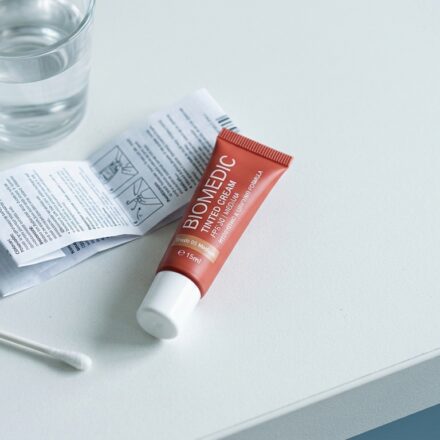

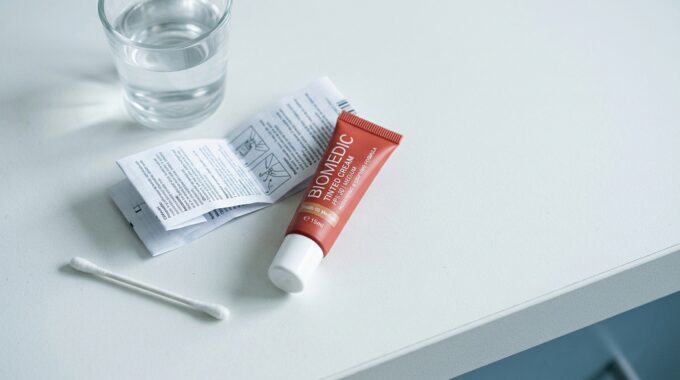
Walgreens Tinted Acne Treatment Cream contains 10% benzoyl peroxide — the highest concentration available in an OTC product — and one of the drier formulas around. That’s important to know before making up your mind about this product, or its concentration, for your skin.
Table Of Content
- Key Takeaways
- What’s Actually In This Formula
- The Real Active Ingredient
- What Isn’t Confirmed
- What This Product Is Actually Suited For
- Who Benefits From 10% Benzoyl Peroxide
- Who Should Consider a Gentler Option First
- How to Use It Without Excess Irritation
- A Cautious Introduction
- Sun Protection Is Not Optional
- Comparing Benzoyl Peroxide Strengths
- Common Mistakes With This Type of Product
- When to Consider a Different Approach
- Frequently Asked Questions
- The Bottom Line
Key Takeaways
- This is a dual-purpose product: a cosmetic tint for light coverage, combined with maximum-strength 10% benzoyl peroxide as the active acne treatment.
- 10% benzoyl peroxide is the strongest OTC concentration sold, generally more effective against acne-causing bacteria but also more likely to cause dryness and irritation than lower concentrations.
- This is not a gentle, sensitive-skin-first formula — people with reactive or dry skin typically do better starting with a 2.5% or 5% benzoyl peroxide product instead.
- The tint provides only light, cosmetic coverage — it doesn’t match every skin tone and isn’t a substitute for full coverage makeup on more visible redness or scarring.
- Like all benzoyl peroxide products, daily sunscreen is necessary, since it increases sun sensitivity.
What’s Actually In This Formula
The Real Active Ingredient
While a few product descriptions online mention salicylic acid, aloe vera, and chamomile, the actual FDA drug facts label for Walgreens Tinted Acne Treatment Cream lists benzoyl peroxide at 10% as the sole active ingredient. This is a meaningfully different profile than a gentle salicylic acid formula — benzoyl peroxide works primarily by killing acne-causing bacteria, and at the maximum 10% strength, it’s generally the most aggressive OTC option available, not the mildest.
Product marketing across some retailers describes this cream as calming or suited to sensitive skin, but that framing doesn’t match what a maximum-strength benzoyl peroxide formula typically does. Benzoyl peroxide, especially at 10%, commonly causes some degree of dryness, redness, or peeling, particularly during the first couple of weeks of use.
Pro Tip: If you’ve never used benzoyl peroxide before, don’t start at 10%. Most dermatologists recommend beginning with a 2.5% formula and only increasing strength if a lower concentration doesn’t produce results after several weeks.
What Isn’t Confirmed
Some third-party product descriptions mention soothing additions like aloe vera or chamomile extract, but these don’t appear as active or clearly listed ingredients on the official drug facts label available through FDA and pharmacy reference databases. If you’re specifically looking for calming botanical ingredients alongside an acne treatment, it’s worth checking the actual ingredient list on your specific product’s packaging rather than relying on retailer marketing copy, since formulations and descriptions can vary or be inconsistently reported.
How to read an OTC acne product’s drug facts label
What This Product Is Actually Suited For
Who Benefits From 10% Benzoyl Peroxide
A maximum-strength formula like this is generally better suited to established acne that hasn’t responded to lower-strength options, rather than as a first product for someone new to benzoyl peroxide. Oily, non-sensitive skin tends to tolerate the higher concentration better than dry or reactive skin types.
Who Should Consider a Gentler Option First
People with sensitive, dry, or easily irritated skin are generally better served starting with a 2.5% benzoyl peroxide product or a salicylic acid-based alternative, since the jump in irritation risk from 5% to 10% is often disproportionate to any added benefit. If you’ve reacted poorly to benzoyl peroxide in the past, this maximum-strength version is not the place to try it again.
How to Use It Without Excess Irritation
A Cautious Introduction
Because this is a maximum-strength product, starting with once-daily application — even every other day initially — gives skin a chance to build tolerance before increasing frequency. Applying a thin layer only to affected areas, rather than as an all-over treatment, reduces unnecessary irritation to skin that isn’t currently breaking out.
Pro Tip: Benzoyl peroxide can bleach fabric, including pillowcases and towels. Let the product fully absorb and dry before your skin contacts bedding or light-colored fabric.
Sun Protection Is Not Optional
Benzoyl peroxide increases skin’s sensitivity to UV exposure, making daily sunscreen a requirement rather than a suggestion while using this product. Applying sunscreen over the treated area each morning, and reapplying through the day if you’re outdoors, reduces the added sun-sensitivity risk this ingredient carries.
Comparing Benzoyl Peroxide Strengths
| Concentration | Typical Use Case | Irritation Risk |
|---|---|---|
| 2.5% | First-time users, sensitive skin | Lower |
| 5% | Moderate acne, some prior tolerance | Moderate |
| 10% (this product) | Established acne, prior benzoyl peroxide tolerance | Higher |
Research comparing these concentrations has generally found that 2.5% and 10% produce fairly similar effectiveness for many users, with the higher concentration mainly adding irritation risk rather than proportionally more benefit — which is worth knowing before assuming “maximum strength” automatically means better results.
Common Mistakes With This Type of Product
- Applying too much, too often, from the start — easing in avoids unnecessary peeling and redness
- Skipping sunscreen — benzoyl peroxide’s photosensitivity effect doesn’t pause because a tinted cream provides some visual coverage
- Combining with other strong actives (retinoids, additional benzoyl peroxide products) in the same routine without spacing them out, which compounds irritation
- Expecting the tint to match all skin tones — shade range for tinted treatments is typically narrower than full-coverage makeup lines, so testing on your jawline before full-face use is worth the extra step
layering acne actives without over-irritating skin
When to Consider a Different Approach
If a maximum-strength formula causes significant dryness, peeling, or irritation that doesn’t improve with reduced frequency, that’s a sign to step down to a lower concentration rather than push through. Acne that doesn’t respond to consistent benzoyl peroxide use after 8–12 weeks, or that involves painful, deep, or cystic breakouts, is a reasonable point to consult a dermatologist rather than continuing with over-the-counter maximum-strength options.
Frequently Asked Questions
Q1: Does Walgreens Tinted Acne Treatment Cream contain salicylic acid?
No — the official drug facts label lists benzoyl peroxide 10% as the sole active ingredient, not salicylic acid. Some retailer product descriptions have described it differently, so checking the actual packaging label is the most reliable way to confirm what’s in the specific product you’re buying.
Q2: Is 10% benzoyl peroxide too strong for sensitive skin?
For many people with sensitive or dry skin, yes — 10% is the maximum OTC strength and carries a higher irritation risk than 2.5% or 5% formulas. Starting with a lower concentration and only increasing if needed is the more cautious approach for reactive skin types.
Q3: Can this tinted cream replace makeup for covering redness?
Not fully — it provides light, cosmetic-level coverage rather than the coverage of a full concealer or foundation. For significant redness, scarring, or uneven tone, a dedicated color-correcting product layered separately will generally provide more complete coverage.
Q4: How long before benzoyl peroxide actually clears acne?
Most people need 4–8 weeks of consistent use before seeing meaningful improvement, since it works by gradually reducing acne-causing bacteria and inflammation over time. Switching products before that window passes usually means never finding out if the one you stopped using would have worked.
Q5: Does benzoyl peroxide really bleach fabric?
Yes — benzoyl peroxide is a known bleaching agent for dyed fabric, which is why white pillowcases and towels are generally recommended while using any benzoyl peroxide product. Letting the product fully dry before contact with fabric reduces but doesn’t eliminate this risk.
The Bottom Line
Walgreens Tinted Acne Treatment Cream is a maximum-strength 10% benzoyl peroxide product with a cosmetic tint layered on top — not the gentle, botanical-forward formula some descriptions suggest. It’s a reasonable option for people with established acne who’ve already tolerated benzoyl peroxide at lower strengths, but it’s not the right starting point for sensitive skin or first-time users.
Checking the actual drug facts label before purchase, rather than relying on marketing descriptions, is the most reliable way to know what you’re actually applying.