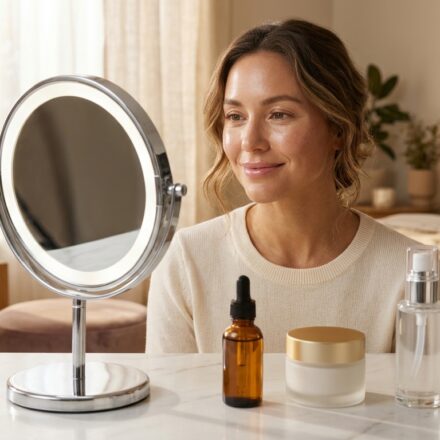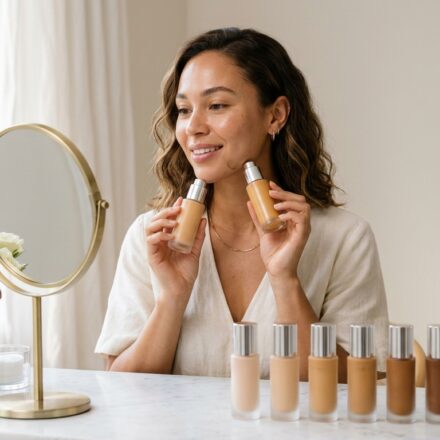
Crossing into your forties and beyond brings a renewed sense of personal confidence, but it often brings changes to how your favorite cosmetics behave. If you have noticed that the full-coverage foundation or matte powder you loved in your twenties now settles into smile lines, clings to dryness, or makes you look tired, you are experiencing the natural evolution of your skin barrier.
Table Of Content
- Key Takeaways
- Understanding How Skin Changes After 40
- Prepping Mature Skin Before Makeup: Hydration and Plumping
- Step 1: Gentle Cleansing That Respects the Barrier
- Step 2: Plumping with Hyaluronic Acid and Glycerin
- Step 3: Deep Barrier Conditioning with Peptides and Ceramides
- Step 4: Broad-Spectrum Dewy Sunscreen
- Step 5: Hydrating Primer over Mattifying Formulas
- Choosing and Applying Foundation for Mature Skin
- What to Look for in Foundation Formulas
- The Damp Sponge Application Technique
- Under-Eye Concealing: Pinpoint Placement Without Creasing
- Step 1: Prep the Eye Contour
- Step 2: Use Color Correction for Dark Hollows
- Step 3: Pinpoint Application
- Lifting the Face: Cream Blush, Brows, and Subtle Eye Definition
- Cream Blush: Place High for an Instant Lift
- Framing the Face with Soft, Feathery Brows
- Eyeshadow and Eyeliner: Soft Satins Over Harsh Lines
- Defining the Lips: Preventing Feathering and Restoring Fullness
- Setting Techniques That Will Not Settle into Wrinkles
- Step-by-Step Routine: Natural Makeup for Women Over 40
- Common Mistakes to Avoid on Mature Skin
- Conclusion
- FAQs
- Q1: What is the best type of foundation for mature skin with wrinkles?
- Q2: How do I stop foundation from settling into smile lines and forehead creases?
- Q3: Should women over 40 stop using powder?
- Q4: Why does my under-eye concealer look cakey and crepey?
- Q5: Can women over 40 wear shimmer eyeshadow?
Learning how to apply makeup on mature skin over 40 is not about masking your age; it is about celebrating your features with lighter textures, strategic hydration, and flattering placement.
As we mature, our skin produces less natural sebum and experiences a gradual decline in collagen and elastin. Heavy, powdery cosmetics that once provided a smooth matte canvas now emphasize texture and create creases.
In this guide, I will share practical, dermatologist-informed techniques to restore natural radiance, lift your features, and keep your makeup looking fresh and luminous all day.
Key Takeaways
- Hydration Plumps Surface Lines: Skin loses moisture and natural lipids with age; layering humectants and ceramide-rich creams before makeup creates a cushion that prevents pigment settling.
- Sheer, Luminous Bases Outperform Heavy Coverage: Full-coverage matte foundations emphasize texture; lightweight serum foundations and hydrating skin tints flex with expressions without cracking.
- Cream Formulas Create an Instant Lift: Swapping powder blushes, bronzers, and highlighters for nourishing cream textures melts into skin and restores a youthful, dewy bounce.
- Target Concealer Sparingly: Heavy under-eye concealer cakes over fine lines; place a tiny dot of hydrating, serum-infused concealer only in the inner tear trough where dark shadow pools.
- Set with Precision, Not Puffs: Dusting powder across your entire face dulls natural radiance; use a small eyeshadow brush to press micro-fine translucent powder only where unwanted shine occurs.
Understanding How Skin Changes After 40
To achieve a flattering makeup look on mature skin, we first need to understand the biological shifts happening beneath the surface. Beginning in our late thirties and accelerating throughout our forties and fifties, the skin undergoes distinct structural changes:
- Decreased Sebum Production: Sebaceous glands slow down their oil secretion. While this reduces acne breakouts, it also leaves the outer skin barrier drier and more prone to dehydration.
- Collagen and Elastin Depletion: The body naturally produces approximately one percent less collagen each year after age twenty. This gradual loss reduces dermal thickness and skin elasticity, meaning skin does not bounce back as quickly when facial muscles move.
- Thinner Epidermis around the Eyes: The skin surrounding the eyes is already the thinnest on the body, but over forty, it becomes even more delicate. Heavy, dry cosmetics placed here quickly crack into crow’s feet and under-eye hollows.
- Slower Cell Turnover: Natural exfoliation slows, allowing dull, dead skin cells to accumulate on the surface. When makeup is applied over unconditioned, uneven skin cells, it grabs patchily and looks dull.
Recognizing these shifts changes our entire makeup philosophy. Instead of trying to construct an artificial matte barrier over your face, your goal is to feed your skin barrier with moisture, choose flexible liquid and cream formulas, and let your natural skin glow through.
Prepping Mature Skin Before Makeup: Hydration and Plumping
No makeup application can look radiant on thirsty, unprepared skin. Thoughtful skincare prep is where your glow actually begins.
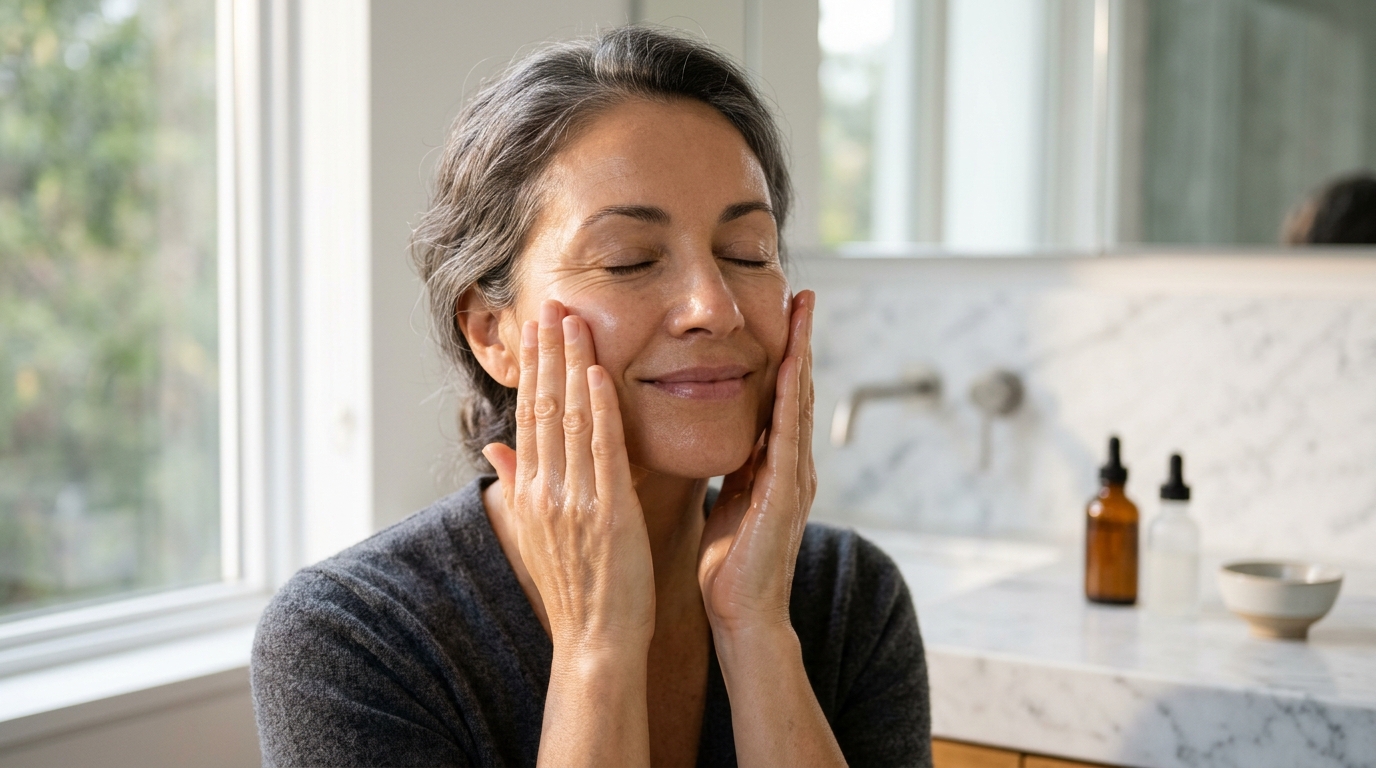
Step 1: Gentle Cleansing That Respects the Barrier
Start your morning with a creamy, non-foaming cleanser or a simple lukewarm water rinse. Foaming gel cleansers containing harsh surfactants strip away the few remaining natural lipids mature skin produces, causing immediate tightness. Lukewarm water cleanses away overnight debris while keeping your delicate moisture mantle intact.
Step 2: Plumping with Hyaluronic Acid and Glycerin
Apply a water-based hydrating serum formulated with multi-molecular hyaluronic acid and glycerin onto freshly dampened skin.
Hyaluronic acid holds up to one thousand times its weight in water, drawing moisture into surface skin cells to physically plump the appearance of superficial fine lines. Press the serum into your skin using upward motions across your forehead, cheeks, and neck.
Step 3: Deep Barrier Conditioning with Peptides and Ceramides
Follow your serum immediately with a lipid-rich moisturizer packed with ceramides, squalane, and signaling peptides. Peptides help support healthy barrier architecture, while ceramides seal in the hydration you just applied.
Take a nickel-sized dollop and massage it into your face, taking an extra thirty seconds to stimulate circulation. Allow your moisturizer to absorb for three to five full minutes before applying cosmetic products. If you rush to apply foundation over wet moisturizer, the pigments will slide around and separate.
Step 4: Broad-Spectrum Dewy Sunscreen
Daily sun protection remains the most effective skincare step you can take. UV rays break down collagen and exacerbate hyperpigmentation and age spots.
Choose a broad-spectrum SPF 30 or higher with a dewy, moisturizing finish. Modern fluid mineral sunscreens containing zinc oxide and squalane provide daily protection while leaving a soft, luminous sheen that acts as a natural primer.
Step 5: Hydrating Primer over Mattifying Formulas
If you use a primer, steer clear of silicone-heavy mattifying formulas designed to dry down oil. These formulas create a dry barrier that causes foundation to look flat. Instead, choose a light, water-based gripping primer or an illuminating lotion containing niacinamide and light-reflecting pearl pigments. Apply it across the high points of your face to give your skin an lit-from-within glow.
Choosing and Applying Foundation for Mature Skin
The biggest mistake women over forty make is using heavy foundation to cover age spots, redness, or wrinkles. Heavy foundation does the opposite: it sinks into fine lines, sits like a mask, and emphasizes the very texture you want to soften.
What to Look for in Foundation Formulas
When selecting foundation for mature skin, your primary criteria should be emollience, flexibility, and light reflection:
- Serum Foundations and Skin Tints: These formulations blend color pigments with hydrating skincare ingredients like squalane, hyaluronic acid, and plant seed oils. They offer sheer-to-medium buildable coverage that moves fluidly with your facial expressions without cracking.
- Radiant or Satin Finishes: Matte foundations absorb light, which emphasizes hollows and draws attention to texture. Radiant finishes bounce light away from fine lines, optically softening their appearance.
- Avoid Powder Foundations: Mineral and pressed powder foundations absorb natural oils throughout the day, leaving mature skin looking chalky, dry, and aged after a few hours of wear.
The Damp Sponge Application Technique
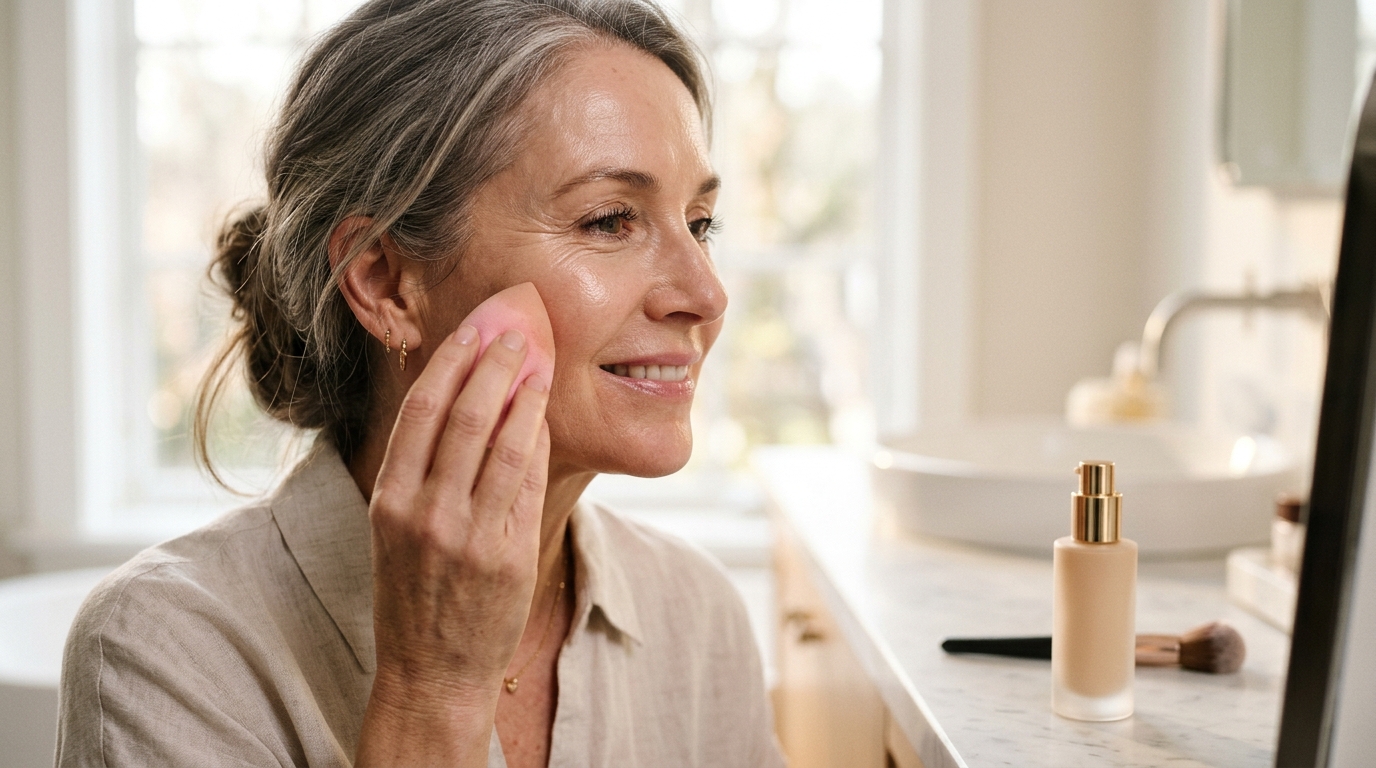
How you apply your base matters just as much as the bottle you select. Ditch stiff foundation brushes whose bristles can sweep up micro-flakes and leave harsh streaks.
A damp beauty sponge is the ideal tool for mature complexions:
- Thoroughly wet your makeup sponge with warm water and squeeze out all excess moisture in a clean towel until it is soft and slightly damp.
- Dispense a single pump of liquid foundation onto the back of your hand.
- Dip the rounded base of the sponge into the foundation and gently bounce—never drag—the sponge across the center of your face where redness is concentrated.
- Work outward toward the hairline and jawline in feather-light pressing motions. Bouncing stamps a micro-thin, even veil of pigment onto the skin while pressing moisture directly into the epidermis.
- Sheer out the coverage as you reach areas with active expression lines, such as crow’s feet and forehead furrows. The less product resting in those creases, the less there is to settle and bunch.
Under-Eye Concealing: Pinpoint Placement Without Creasing
The under-eye area is often where mature makeup looks go wrong. Thick, dry concealers layered across the entire lower lid create a dry, crepey effect that adds ten years to your appearance.
Step 1: Prep the Eye Contour
Before touching concealer, apply a tiny bead of peptide-infused eye cream along the orbital bone. Allow it two minutes to sink in so the skin feels supple and cushioned.
Step 2: Use Color Correction for Dark Hollows
If you have prominent blue or purple dark circles, do not try to overpower them with layers of thick, pale concealer. Instead, use a peachy or salmon-toned color corrector.
A sheer wash of peach neutralizes blue-purple shadows on fair-to-medium skin, while warm terracotta neutralizes darkness on deep skin. Because the corrector neutralizes the discoloration, you need far less concealer on top.
Step 3: Pinpoint Application
Select a lightweight, radiant serum concealer that matches your facial skin tone—avoiding shades that are two shades too light, which create an artificial, ghostly half-moon under your eyes.
Place just one small dot of concealer in the inner hollow beside your tear duct (where discoloration is deepest) and a second tiny dot at the outer corner of the eye angled upward toward the temple. Use the tip of your ring finger or a soft, damp mini-sponge to blend.
Leave the delicate area directly below your lower lash line virtually product-free. This technique brightens your eyes while keeping expression lines clear of heavy pigment.
Lifting the Face: Cream Blush, Brows, and Subtle Eye Definition
As we mature, facial fat pads subtly shift downward, and contrast in our features naturally softens. Strategic placement of color and definition restores warmth and creates an optical lift.
Cream Blush: Place High for an Instant Lift
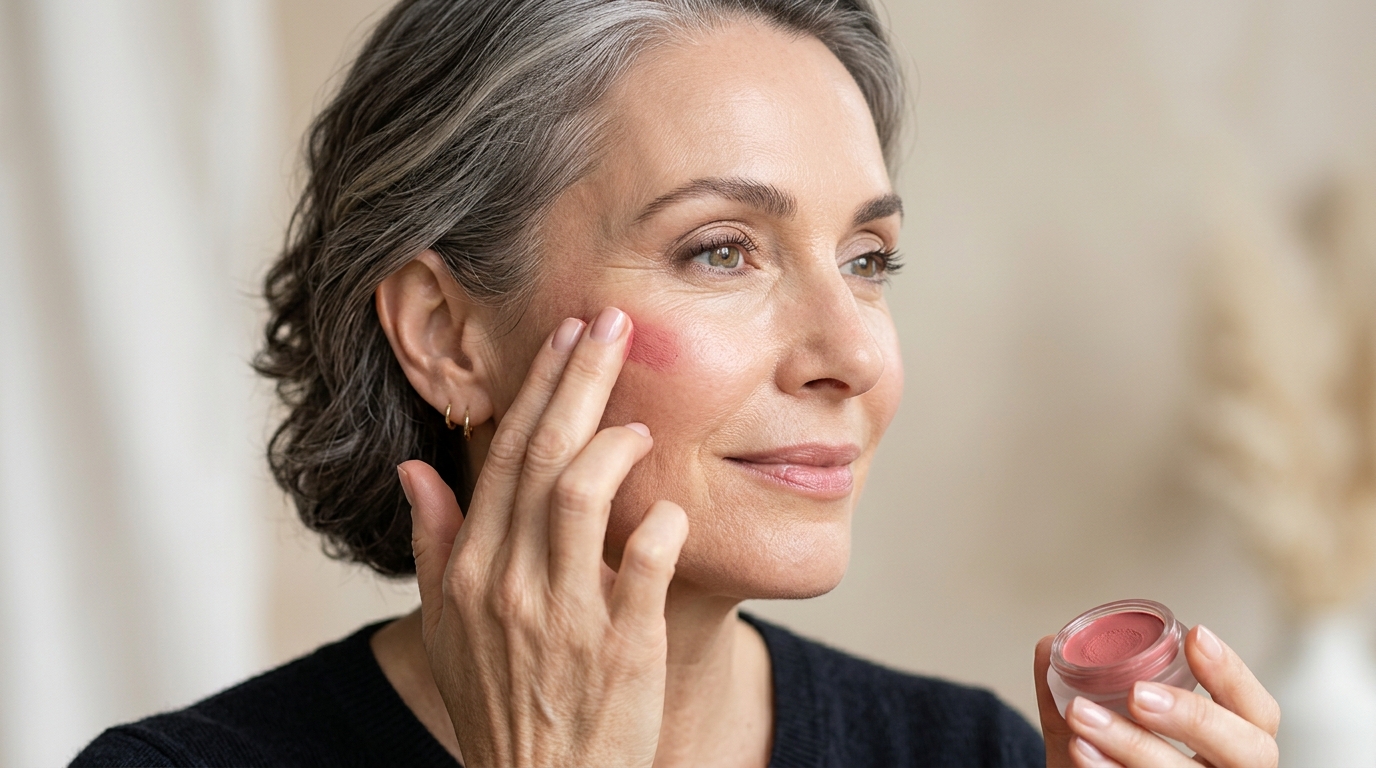
A traditional makeup tip was to smile and apply blush directly to the apples of your cheeks. For mature skin, this outdated technique actually works against you: when your face relaxes, those apples drop downward, dragging your whole face down with them.
Instead, apply your blush with an upward focus:
- Choose a warm cream or liquid blush in a soft rose, warm peach, or berry tone. Cream blushes melt into foundation, providing a healthy flush that mimics natural vitality.
- Dab the cream onto the highest point of your cheekbone, right above the pupil, and blend upward and back toward the hairline and temple.
- This diagonal placement draws the viewer’s eye upward, providing an instant lifted look to your entire bone structure.
Framing the Face with Soft, Feathery Brows
Brows naturally thin, fade, or lose tail definition over time. Well-groomed brows instantly frame your eyes and restore youthful structure to your face.
Avoid harsh, dark brow pomades or heavy blocky pencils that create severe lines. Instead:
- Choose a micro-fine brow pencil one shade lighter than your natural hair color (soft taupe, cool blonde, or warm gray).
- Use light, upward, feathery strokes to fill in sparse gaps, focusing on defining the arch and slightly extending the outer tail.
- Finish with a tinted brow gel brushed upward to hold hairs in place and add natural dimension.
Eyeshadow and Eyeliner: Soft Satins Over Harsh Lines
Eyelids lose elasticity over forty, creating natural folds and hooding. Heavy black liquid liner and chunky glitter shadows catch on creased skin and exaggerate texture.
- Stick to Warm Neutral Satins: Matte shadows can sometimes look dry, while glitter emphasizes crepey lids. Satin-finish eyeshadows in warm taupe, soft caramel, and champagne reflect gentle light and glide over textured skin smoothly.
- Blend Shadows Above the Crease: If your eyelids are slightly hooded, apply your mid-tone crease shade slightly above your natural crease while looking straight into the mirror with your eyes open. This ensures your eye color remains visible.
- Switch to Brown or Plum Gel Liners: Black liquid eyeliner can look harsh against mature skin. Swap it for a deep chocolate brown, espresso, or plum gel pencil. Line closely along the upper lash roots, then use a small smudge brush to soften the edge.
- Curl Your Lashes: An eyelash curler is an indispensable lifting tool. Gently clamp at the base of your lashes for five seconds before applying mascara. Finish with one or two coats of a defining, non-clumping mascara.
Defining the Lips: Preventing Feathering and Restoring Fullness
Natural lip volume decreases with age, and vertical lines (often called barcode lines) can cause lipsticks to bleed and feather into surrounding skin.
Follow this simple lip routine:
Hydrate
Dab a nourishing lip balm containing shea butter or hyaluronic acid onto your lips during skincare prep. Blot off any excess right before makeup application.
Neutral Lip Liner
Trace your natural lip line using a waterproof lip liner that matches your natural lip color rather than your lipstick. Lightly sketch just on the outer vermilion border of the lip to softly enhance fullness. The wax content in waterproof liner creates a physical dam that stops lipstick from migrating into vertical lines.
Creamy Lip Color
Avoid ultra-matte liquid lipsticks, which dry out lips and emphasize vertical wrinkles. Choose a hydrating satin lipstick, a tinted lip oil, or a moisturizing lip gloss.
Highlight the Center
Dab a tiny dot of a lighter gloss right in the center of your lower lip to create the optical illusion of fuller, plumper lips.
Setting Techniques That Will Not Settle into Wrinkles
One of the greatest fears for mature skin is powder. Traditional loose powder blankets the face, robs it of life, and immediately finds its way into fine lines. However, you can still set your makeup effectively without losing radiance:
- Ditch the Powder Puff: Never use a large velour puff to pack powder onto mature skin.
- Use a Small Fluffy Brush: Dip a small, fluffy eyeshadow blending brush into a micro-fine, silica-based translucent setting powder. Tap off almost all of it on the back of your hand.
- Targeted Application Only: Lightly press the brush only on areas prone to shine—the sides of the nose, between the eyebrows, and the center of the chin. Leave the cheeks, under-eyes, and forehead completely powder-free.
- Seal with a Dewy Setting Spray: Mist your face with a hydrating setting spray infused with glycerin or rosewater. The fine mist melts all cream and liquid layers together, banishing any powdery texture and creating a supple, dewy shield that holds all day.
Step-by-Step Routine: Natural Makeup for Women Over 40
Here is your complete morning quick-reference guide to putting these techniques into action:
| Step | Technique | Recommended Formula | Lift Benefit |
|---|---|---|---|
| 1. Prep | Press into skin on damp face | Hyaluronic acid serum + ceramide cream | Plumps fine lines with hydration |
| 2. Protect | Massage across face and neck | Dewy broad-spectrum SPF 30+ | Shields collagen and leaves radiance |
| 3. Base | Bounce with damp makeup sponge | Serum foundation or skin tint | Sheer, flexible coverage that will not crease |
| 4. Conceal | Tap one dot on inner corner only | Radiant serum-infused concealer | Brightens dark hollows without caking |
| 5. Blush | Blend high along upper cheekbone | Hydrating cream blush (rose/peach) | Creates an optical cheekbone lift |
| 6. Brows | Light upward feathery strokes | Micro-fine pencil + tinted gel | Restores arch and facial structure |
| 7. Eyes | Soft satin shadow + smudged brown liner | Satin neutral palette + gel pencil | Defines eyes without harsh edges |
| 8. Lips | Define outer border and fill with cream | Waterproof lip liner + satin lipstick | Prevents feathering and restores fullness |
| 9. Set | Mist generously in circular motion | Glycerin-based hydrating setting spray | Melts layers into dewy, skin-like glow |
Common Mistakes to Avoid on Mature Skin
Steer clear of these frequent beauty habits that unintentionally age mature skin:
- Applying Thick Foundation Over Wrinkles: Trying to hide wrinkles under heavy makeup only highlights them. Wrinkles move; makeup does not. Less product in expressive zones means less creasing.
- Using Matte or Frosty Eyeshadows: Extremely chalky matte shadows make eyelids look parched, while high-frost metallic shadows settle into crepey folds. Stick with soft satins.
- Skipping Lip Liner: Applying creamy lipstick directly onto mature lips without a waterproof barrier ensures feathering within two hours.
- Drawing Heavy, Dark Brows: Stenciled, dark brows look severe against softening features. Keep brow strokes light and natural.
- Over-Powdering Under the Eyes: Baking with loose powder under mature eyes turns natural laugh lines into deep cracks. Keep powder away from the eye contour entirely.
Conclusion
Mastering how to apply makeup on mature skin over 40 is an empowering shift in your beauty journey. It is about working in harmony with your skin’s natural texture rather than fighting against it.
By replacing heavy, drying foundations with hydrating serums, applying products in thin layers with a damp sponge, embracing luminous cream blushes, and lifting your features with upward placement, you create a glowing, sophisticated look that feels weightless and authentic.
Your practical next step: tomorrow morning, leave your heavy foundation in the drawer. Treat your skin to a rich layer of moisturizer, blend a sheer drop of skin tint with your damp sponge, and tap a dewy cream blush high onto your cheekbones. You will see an immediate, refreshed radiance looking back at you in the mirror.
FAQs
Q1: What is the best type of foundation for mature skin with wrinkles?
The best foundation for mature skin is a lightweight serum foundation or hydrating skin tint formulated with hyaluronic acid, squalane, or glycerin. These formulas offer flexible, light-to-medium coverage with a satin or radiant finish. They move with your facial expressions rather than settling into fine lines and wrinkles.
Q2: How do I stop foundation from settling into smile lines and forehead creases?
To prevent foundation from settling into expression lines, use as little product as possible in those areas. After applying foundation with a damp sponge, take the clean, unproduct-coated side of the sponge and gently blot over your smile lines and forehead to remove excess pigment. If product is not sitting in the crease, it cannot bunch or crack.
Q3: Should women over 40 stop using powder?
You do not have to eliminate powder completely, but you should avoid dusting it all over your face. Use a micro-fine, silica-based translucent powder sparingly with a small, fluffy eyeshadow brush, pressing it only into areas prone to excessive shine like the sides of the nose or chin. Keep your cheeks and under-eyes powder-free to maintain natural skin luminescence.
Q4: Why does my under-eye concealer look cakey and crepey?
Under-eye concealer looks cakey on mature skin when the formula is too thick, too matte, or set with heavy powder. Switch to a hydrating serum concealer with a radiant finish, apply only a pinpoint dot in the inner tear trough, blend with the warmth of your fingertip, and skip powder baking completely.
Q5: Can women over 40 wear shimmer eyeshadow?
Yes, but formula texture matters. Avoid chunky glitters or high-metallic frost eyeshadows, which sit in the folds of crepey eyelids and exaggerate texture. Instead, choose soft, finely milled satin eyeshadows. A gentle champagne or warm taupe satin applied across the mobile lid reflects light and brightens mature eyes beautifully.