Applying foundation when you have dry, dehydrated skin can feel like an exercise in frustration. You start with high hopes for a smooth, radiant glow, but within an hour, pigment clings stubbornly to dry patches around your nose, settles into forehead creases, and flakes off your chin.
Table Of Content
- Key Takeaways
- Why Foundation Clings to Dry Skin and Looks Flaky
- Skin Preparation Before Makeup: Hydration Layering
- Step 1: Gentle, Non-Foaming Cleansing
- Step 2: Gentle Surface Exfoliation (Lactic Acid or PHA)
- Step 3: Layering Humectants on Damp Skin
- Step 4: Sealing with Ceramide-Rich Emollients
- Step 5: Dewy Sunscreen and Hydrating Primer
- Choosing and Applying Foundation for Dry Skin
- What to Look for in Foundation Formulas
- The Beauty Sponge Technique (Why Brushes Fail Dry Skin)
- Concealing and Color Products for Flaky Skin
- Strategic Spot Concealing
- Transitioning to Cream and Liquid Color
- Setting Without Powder: Hydrating Mists and Dewy Finishes
- Why Powder Is the Enemy of Dry Skin
- The Targeted Powder Method (If You Must Set)
- The Power of Hydrating Setting Sprays
- Midday Rescue: How to Fix Flaky Foundation Without Starting Over
- Your Step-by-Step Hydrating Makeup Routine
- Common Mistakes That Make Dry Skin Worse
- Conclusion
- FAQs
- Why does my foundation look patchy as soon as I apply it?
- Can I mix facial oil directly into my foundation?
- What kind of applicator is best for flaky skin?
- Should I completely avoid setting powder if I have dry skin?
- How do I stop my under-eye concealer from looking dry and creased?
If this sounds familiar, you are not alone. Finding effective Makeup Tips for Dry Skin: How to Avoid a Flaky Foundation is less about buying heavier face creams and more about creating a cohesive, moisture-preserving routine from your first skincare step to your final setting mist.
When your skin barrier lacks essential water and lipids, traditional makeup formulations quickly leach moisture from the surface, causing foundation pigments to separate and look powdery.
In this comprehensive guide, I will share practical, dermatologist-informed techniques to stop your foundation from looking patchy, soothe irritated textures, and help you achieve a plump, comfortable, and luminous finish that stays smooth all day.
Key Takeaways
- Hydration and Moisturization Are Distinct Steps: Dry skin requires water-binding humectants (like hyaluronic acid) topped with lipid-rich emollients (like ceramides or squalane) before any cosmetic product touches your face.
- Chemical Exfoliation Over Harsh Scrubs: Physical face scrubs lift dry skin unevenly, worsening foundation patchiness; gentle chemical exfoliants like lactic acid smooth flakes without tearing skin.
- Cream and Serum Formulas Outperform Powders: Liquid foundations with dewy or satin finishes and cream blushes melt into dry skin instead of accentuating rough surface texture.
- Damp Sponge Application Is Essential: Stippling with a warm, damp makeup sponge presses hydration into the skin barrier while laying down an ultra-sheer, flexible layer of pigment.
- Ditch Heavy Powders for Hydrating Mists: Setting dry skin with talc-based powders guarantees flaking; choose glycerin-infused hydrating setting sprays to seal makeup without absorbing moisture.
Why Foundation Clings to Dry Skin and Looks Flaky
To prevent foundation from looking patchy, you need to understand what happens at a microscopic level when makeup meets a compromised moisture barrier. Healthy skin has a smooth outer layer known as the stratum corneum, made of skin cells bound together by a lipid matrix of ceramides, cholesterol, and fatty acids.
When your skin is dry or dehydrated, this lipid matrix becomes depleted. Instead of lying flat in an overlapping pattern, dead skin cells curl upward along their microscopic edges. When you apply liquid or powder foundation over unconditioned dry skin, the cosmetic binders dry down, pulling moisture out of the formula and causing pigment particles to clump around those raised, jagged skin cell edges.
Furthermore, dry skin tends to absorb the liquid base of your foundation like a dry sponge, leaving the pure dry pigment sitting exposed on top of your face. Environmental factors like cold winter air, indoor heating, harsh cleansers, and hot showers strip surface moisture even further. The goal of a successful hydrating makeup routine is to saturate those thirsty skin cells and coat them with a flexible emollient barrier before foundation ever touches your skin.
Skin Preparation Before Makeup: Hydration Layering
Proper skincare prep accounts for eighty percent of your makeup’s final appearance on dry skin. Rushing through your morning skincare guarantees visible flakes by lunchtime.
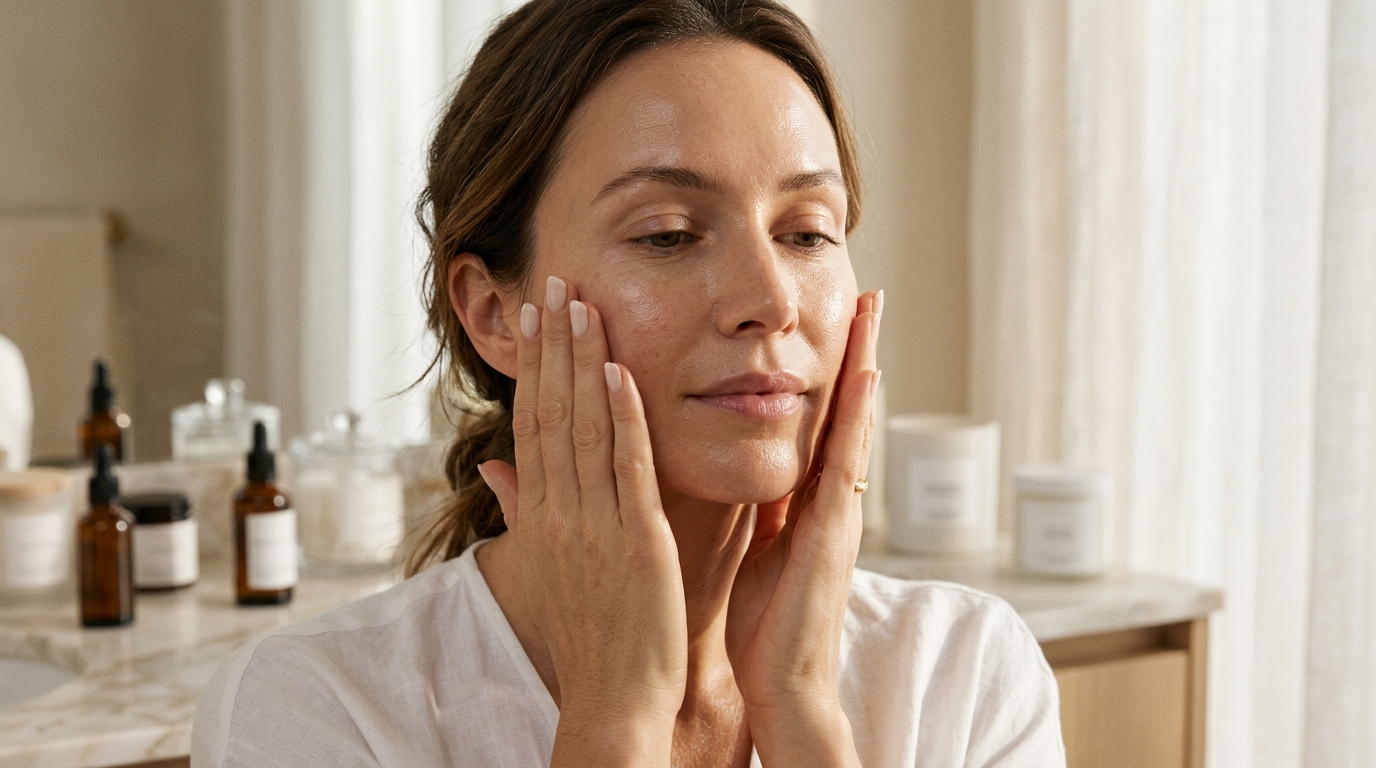
Step 1: Gentle, Non-Foaming Cleansing
Begin your routine by re-evaluating your morning wash. If your skin feels tight or parched when you step out of the bathroom, your cleanser is stripping your lipid barrier. Swap harsh foaming cleansers for a milky, cream-based, or oil-based cleanser that preserves your acid mantle.
On mornings when your skin feels especially dry, consider skipping cleanser entirely. A rinse with lukewarm water removes overnight residue while leaving your natural protective oils undisturbed. Always avoid hot water, as high temperatures quickly melt away the natural fats your skin needs to hold onto moisture.
Step 2: Gentle Surface Exfoliation (Lactic Acid or PHA)
Never attack dry, flaky skin with coarse face scrubs made of walnut shells or gritty beads. Aggressive scrubbing creates microscopic abrasions, stimulates inflammation, and causes foundation to look even more uneven.
Instead, rely on gentle chemical exfoliants containing lactic acid or polyhydroxy acids (PHAs). Lactic acid is an alpha-hydroxy acid with a unique dual property: it dissolves the intercellular bonds holding dead skin flakes together while simultaneously functioning as a natural humectant that attracts water. Incorporate a gentle lactic acid or PHA serum two to three evenings a week to maintain a smooth surface canvas.
Step 3: Layering Humectants on Damp Skin
Humectants are ingredients that pull water into the epidermis from deeper skin layers and the surrounding air. Common examples include hyaluronic acid, glycerin, panthenol (vitamin B5), and beta-glucan.
The secret to using humectant serums correctly is applying them onto damp skin. If you apply hyaluronic acid to bone-dry skin in a low-humidity room, it can actually draw moisture upward from your deep skin reserves, leaving your surface drier. Lightly spritz your face with pure thermal water or an alcohol-free essence, then press your hydrating serum into your face with gentle upward motions.
Step 4: Sealing with Ceramide-Rich Emollients
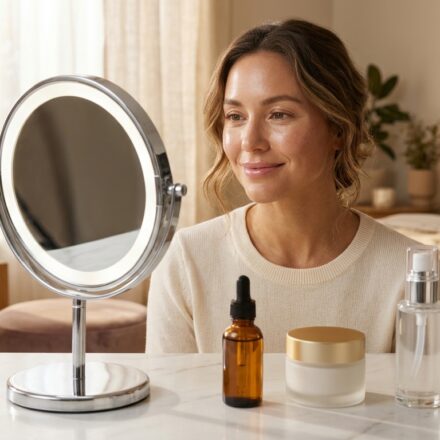
Applying a hydrating serum without an occlusive or emollient moisturizer allows that newly added water to evaporate through a process called transepidermal water loss. To lock that moisture in place, follow immediately with a rich moisturizer containing ceramides, squalane, or shea butter.
Ceramides replenish the natural glue between skin cells, smoothing down those lifted flakes. Take a nickel-sized amount of moisturizer and massage it gently into your cheeks, forehead, and jawline. Allow your skincare to sink in for three to five full minutes before touching any makeup. Giving skincare time to absorb prevents foundation from sliding or pilling.
Step 5: Dewy Sunscreen and Hydrating Primer
Finish your prep with a broad-spectrum sunscreen featuring a radiant, dewy finish. Chemical sunscreen formulas or mineral sunscreens formulated with hydrating botanical oils glide across dry patches without leaving a chalky cast.
If you enjoy primers, avoid any product marked “pore-blurring,” “oil-control,” or “mattifying.” These products contain silica powders that absorb oil and exacerbate dryness. Instead, opt for a luminous, water-based, or oil-infused hydrating primer that adds slip and bounce to your skin.
Choosing and Applying Foundation for Dry Skin
The formula you select and the tools you use determine whether your makeup sits like a dewy second skin or cracks into dry patches.
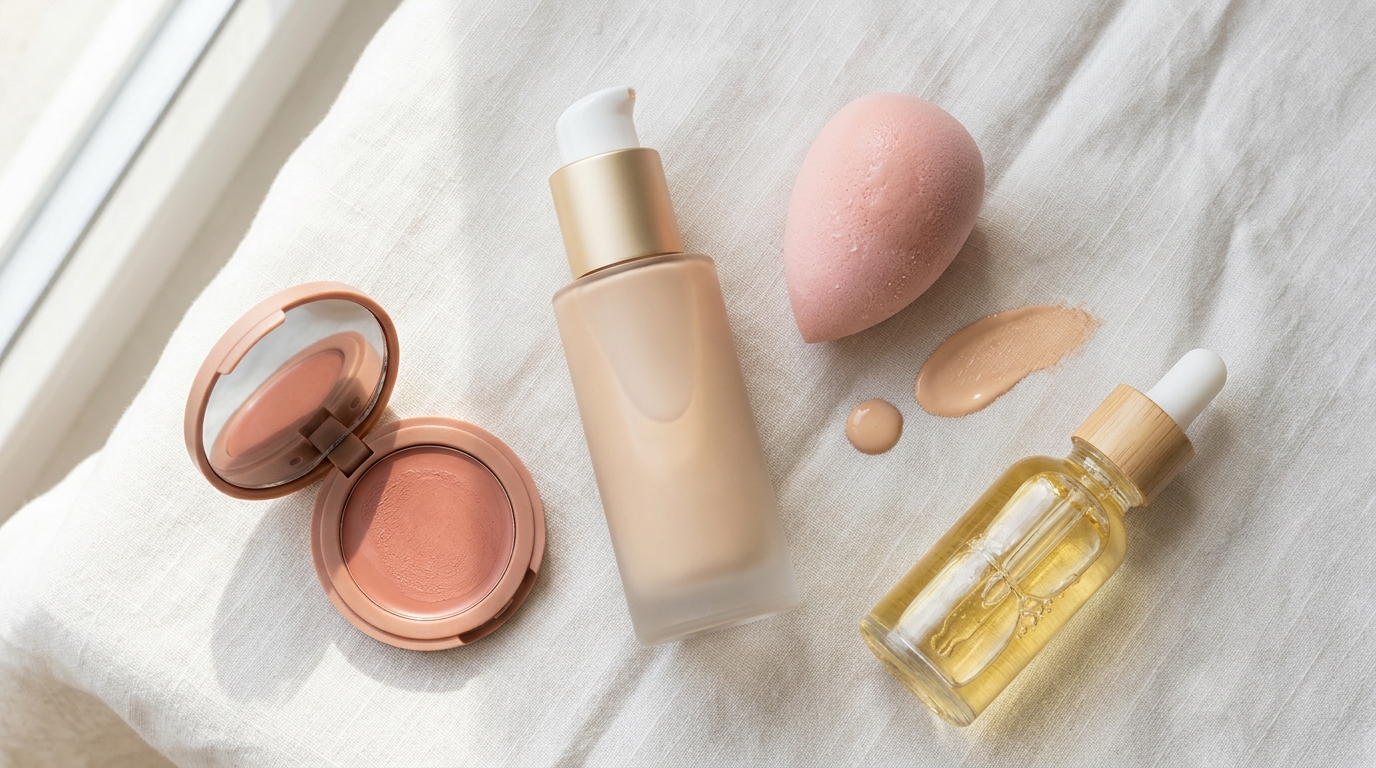
What to Look for in Foundation Formulas
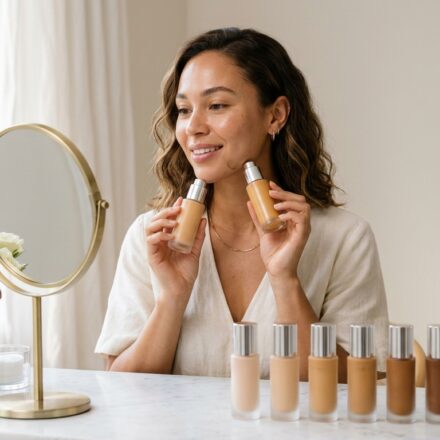
When shopping for foundation for dry skin, avoid matte, velvet, long-wear, and powder foundations. Instead, focus on labels and formulations built specifically for moisture retention:
- Dewy, Luminous, or Radiant Finishes: These formulas reflect light, which naturally diffuses the look of fine lines and uneven surface texture.
- Serum Foundations and Skin Tints: Serum foundations combine light-to-medium pigment suspended in a nourishing skincare base of hyaluronic acid and plant oils. They offer breathable, buildable coverage that flexes with facial expressions.
- Key Nourishing Ingredients: Look for squalane, jojoba oil, glycerin, aloe vera, and vitamin E high on the ingredient list.
- Avoid Denatured Alcohol: Check that alcohol (specifically denatured alcohol or alcohol SD-40) is not listed in the first five ingredients, as it accelerates drying and causes immediate flaking.
The Beauty Sponge Technique (Why Brushes Fail Dry Skin)
Foundation brushes feature hundreds of tightly packed bristles. As you sweep a brush across dry skin, the bristles lift up the micro-edges of dry skin cells, mechanically creating visible flaking where none appeared before.
A damp beauty sponge is the ultimate applicator for dry skin:
- Soak your teardrop makeup sponge thoroughly under running warm water until it expands to twice its original size.
- Squeeze out every drop of excess moisture using a clean hand towel. The sponge should feel cool and slightly damp, not wet.
- Dispense one pump of foundation onto the back of your hand.
- If your skin is exceptionally parched, add half a drop of pure jojoba oil or squalane into the foundation and mix them together on your hand.
- Dip the rounded base of your damp sponge into the foundation and stipple (gently bounce) the product onto your face.
- Bouncing presses the moisture into the skin while stamping pigment flat, effectively pressing any stubborn dry flakes down rather than kicking them up.
Concealing and Color Products for Flaky Skin
Heavy, drying concealers and chalky powder blushes can quickly undo all the hard work you put into your hydrating base.
Strategic Spot Concealing
Under-eye skin is naturally the thinnest area on your body and has virtually no oil glands. Using thick, matte concealers under the eyes results in immediate crepey texture.
Choose a lightweight, serum-infused liquid concealer with a radiant finish. Apply only where necessary: a tiny dot in the inner tear duct hollow and a small dab at the outer corner of the eye. Blend gently with your ring finger—the natural warmth of your fingertip helps melt the emollients into the skin seamlessly.
For dry blemishes or healing acne spots that have scabbed over, avoid packing on layers of dry concealer. Dab a tiny touch of rich moisturizer directly onto the spot, wait sixty seconds, apply a dab of hydrating concealer with a fine brush, and feather the edges outward.
Transitioning to Cream and Liquid Color
Powder blush, bronzer, and highlighter sit on top of dry skin and accentuate roughness. Replace them entirely with cream or liquid alternatives:
- Cream Blush: Cream blushes formulated in sticks or pots melt effortlessly into foundation. Dab a small amount onto the apples of your cheeks and blend upward toward the temples using your damp sponge.
- Liquid Bronzer: A liquid or gel bronzer warms up fair or dull complexions without leaving behind a dusty, muddy shadow.
- Balm Highlighters: Skip highlighters containing chunky glitter or micro-shimmer, which settle into texture. Choose a clear highlighting balm or a dew-drop liquid highlighter to create a glass-skin sheen.
Setting Without Powder: Hydrating Mists and Dewy Finishes
One of the most persistent myths in makeup application is that every liquid base must be heavily powdered. If you have dry skin, packing on translucent powder is the fastest route to a cracked, flaky disaster.

Why Powder Is the Enemy of Dry Skin
Standard translucent setting powders use talc, cornstarch, or silica to absorb surface oils and sweat. When applied to dry skin that produces minimal oil, these powders absorb your skin’s vital moisture instead. Within two hours, the skin contracts, causing the foundation beneath to crack into tiny fissures that emphasize every dry patch.
The Targeted Powder Method (If You Must Set)
If you need powder to stop mascara from transferring or to set your smile lines, apply it strictly with precision:
- Use a micro-fine, silica-free pressed powder formulated with hyaluronic acid or squalane.
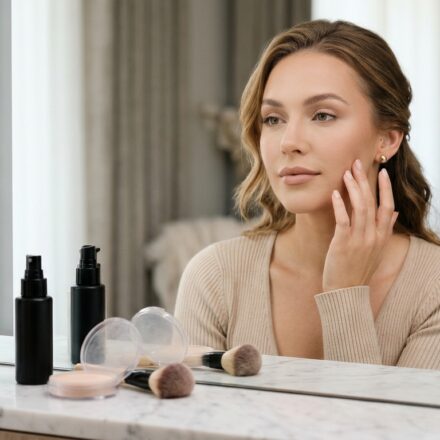
- Pick up a tiny amount on a small, fluffy eyeshadow blending brush.
- Tap off all excess powder on the back of your hand.
- Lightly press—never sweep—the brush directly onto high-movement creases (such as under the eyes or along the smile lines). Leave your cheeks, forehead, and jawline completely powder-free.
The Power of Hydrating Setting Sprays
Instead of using powder as your setting agent, rely on a hydrating setting mist. High-performance setting sprays for dry skin contain humectants like glycerin and soothing botanicals like rosewater or aloe vera, combined with light polymers that form a flexible, moisture-trapping shield over makeup.
Hold the bottle ten inches away from your face. Close your eyes and mist generously across your face in a circular motion. As the fine mist settles, it dissolves any lingering powdery residue, binds your foundation layers together, and leaves behind a soft, dewy glow that resists flaking.
Midday Rescue: How to Fix Flaky Foundation Without Starting Over
Even with careful prep, dry winter air or air-conditioned offices can cause dry patches to emerge around 3:00 PM. Here is how to refresh your face without washing everything off and starting from scratch:
- Do Not Add Powder: Never apply more powder over flaky areas. It will instantly cling to the dry skin and turn chalky.
- Mist First: Spray a fine hydrating mist across your face to reintroduce water to the dried makeup layer.
- Use a Drop of Facial Oil: Place a single drop of squalane or argan oil onto the back of your hand. Gently tap the oil with your ring finger and press it directly onto the flaky patch. The oil softens the keratinized skin cells and re-emulsifies the foundation pigments.
- Smooth with a Sponge: Take the clean edge of a slightly damp makeup sponge and gently tap over the area to smooth down the edges and blend the pigment back into your skin.
Your Step-by-Step Hydrating Makeup Routine
Follow this quick daily morning checklist to keep your foundation smooth, supple, and glowing:
| Step | Action | Recommended Product Type | Purpose |
|---|---|---|---|
| 1. Cleanse | Wash with lukewarm water or milky cleanser | Non-foaming cream cleanser | Preserves the delicate acid mantle |
| 2. Hydrate | Apply to damp skin with gentle pressing | Hyaluronic acid / Glycerin essence | Saturates skin cells with water |
| 3. Replenish | Massage into face and neck | Ceramide & Squalane barrier cream | Seals water and smooths dry skin flakes |
| 4. Protect | Apply broad-spectrum protection | Dewy, chemical or hydrating mineral SPF | Shields against UV-induced dehydration |
| 5. Prep | Apply a thin veil over dry areas | Water-based luminous hydrating primer | Creates a bouncy, moisture-rich grip |
| 6. Base | Stipple with warm, damp sponge | Serum foundation or radiant skin tint | Melts into skin without catching flakes |
| 7. Conceal | Tap inner eye corners with ring finger | Radiant, lightweight serum concealer | Brightens without creasing into dry lines |
| 8. Color | Blend onto cheekbones with sponge | Cream blush & balm highlighter | Adds healthy dimension and dewy shine |
| 9. Set | Mist generously in circular motion | Glycerin-infused hydrating setting spray | Locks makeup in a flexible shield |
Common Mistakes That Make Dry Skin Worse
Avoid these frequent habits to keep your makeup looking smooth and fresh:
- Applying Foundation Over Dry Flakes: Trying to cover up an active flake with foundation only highlights it. Always address the flake during skincare prep with a warm damp cloth or gentle chemical exfoliant before applying makeup.
- Using Matte or “Long-Wear” Foundations: Formulations advertised as 24-hour matte contain quick-drying volatile silicones that set like cement and suck moisture out of dry skin within minutes.
- Over-Baking with Loose Powder: Leaving mounds of loose powder on dry under-eyes creates permanent creasing that lasts all day.
- Skipping Primer on Rough Patches: Foundation needs a smooth intermediary layer to glide over dry cheeks. A hydrating primer acts as that buffer.
Conclusion
Mastering makeup tips for dry skin comes down to shifting your mindset from coverage to conditioning. Flaky, patchy foundation is not an inevitable reality of having dry skin; it is simply a signal that your skin barrier needs more hydration, gentle care, and emollient cushion before pigment is introduced.
By prioritizing water-binding humectants, sealing with ceramides, choosing serum foundations, applying with a damp sponge, and swapping powders for hydrating mists, you can enjoy a radiant, luminous complexion that looks fresh from morning until night.
Your practical next step: tomorrow morning, skip the foaming face wash, apply your moisturizer onto freshly dampened skin, and swap your foundation brush for a damp sponge. You will see an immediate difference in how smooth and comfortable your makeup feels.
FAQs
Why does my foundation look patchy as soon as I apply it?
Foundation looks patchy immediately upon application when the skin beneath is unevenly hydrated. Dry skin absorbs the water and solvent base of your foundation within seconds, leaving unblended clumps of dry pigment behind. To stop this, ensure you apply a rich moisturizer to damp skin and allow it three minutes to absorb before applying foundation.
Can I mix facial oil directly into my foundation?
Yes, mixing one to two drops of a lightweight facial oil (such as squalane, jojoba, or rosehip oil) directly into your liquid foundation on the back of your hand is one of the best techniques for dry skin. It adds emollience, gives the foundation extra slip, and leaves a dewy finish that prevents mid-day flaking.
What kind of applicator is best for flaky skin?
A damp makeup sponge is by far the best tool for flaky skin. Brushes have bristles that sweep against skin and lift the edges of dry skin cells, creating visible flakes. A damp sponge uses bouncing, stippling motions that press flakes flat against the face while depositing a thin, hydrated veil of pigment.
Should I completely avoid setting powder if I have dry skin?
You do not need to avoid powder entirely, but you should avoid dusting it all over your face. Only apply a micro-fine, hydrating pressed powder to areas prone to creasing (such as right beneath the lower lash line or smile lines) using a small, fluffy brush. Keep cheeks, forehead, and jawline powder-free to maintain natural skin radiance.
How do I stop my under-eye concealer from looking dry and creased?
Under-eye skin has few oil glands and becomes crepey when layered with heavy matte concealers. Prep the under-eye area with a lightweight, peptide-rich eye cream and let it absorb fully. Use a hydrating serum concealer with a dewy finish, apply just one or two small dots, blend with the warmth of your fingertip, and skip heavy powder baking.