
Gentle Skin Renewal Methods
Gentle Skin Renewal Methods are the foundation of healthy, resilient, and naturally radiant skin. As opposed to peeling too fast or exfoliating too hard to disrupt the integrity of your skin, this method aids in your skin natural cell turnover process in a more relaxed, managed, and long-term manner.
Table Of Content
- Gentle Skin Renewal Methods
- Key Takeaways
- Understanding the Skin Renewal Process
- The Natural Turnover Cycle
- Why Aggressive Exfoliation Causes Damage
- The Philosophy Behind Gentle Skin Renewal Methods
- Types of Gentle Skin Renewal Methods
- Physical Gentle Skin Renewal Methods
- Soft Washcloth Method
- Enzyme-Based Exfoliation
- Microfiber Cleansing Pads
- Chemical Gentle Skin Renewal Methods
- Low-Strength AHAs
- PHAs: The Most Beginner-Friendly Option
- Azelaic Acid
- Retinol — Introduced Slowly
- Non-Exfoliating Renewal Boosters
- Hydration Improves Natural Shedding
- Barrier Repair Supports Renewal
- Facial Massage and Circulation
- The Role of Sleep in Renewal
- Building a Gentle Renewal Routine
- Morning Routine
- Evening Routine (Exfoliation Night)
- Evening Routine (Recovery Night)
- 30-Day Gentle Skin Renewal Plan
- Week 1: Barrier Reset
- Week 2: Introduce One Renewal Night
- Week 3: Monitor Skin Response
- Week 4: Maintain Consistency
- Frequency Guidelines
- Gentle Skin Renewal Methods for Different Skin Types
- Sensitive Skin
- Acne-Prone Skin
- Dry or Mature Skin
- Combination Skin
- Common Mistakes to Avoid
- When to Seek Professional Help
- Summary: Gentle Skin Renewal Methods
- Frequently Asked Questions
- Q1. What are Gentle Skin Renewal Methods?
- Q2. How often should I exfoliate for safe skin renewal?
- Q3. Can I use retinol with gentle renewal methods?
- Q4. What are signs I’m over-exfoliating?
- Q5. Is exfoliation necessary for glowing skin?
Well-done skin renewal is expected to make the skin smoother, brighter, less congested, and less wrinkled, without leaving the skin red, burning, or even permanently sensitive. According to the current culture in skincare, a lot of individuals feel that more potent products are much faster in desired effects.
The acids with high percent, daily shedding toners, high-powered scrubs, and applied active ingredients are sold as having a dramatic transformation. However, in most skin types, particularly delicate ones, acnes-prone skin, or damaged by barriers, aggressive resurfacing causes inflammation – and inflammation retards healing.
Key Takeaways
- Dermal renewal is an inherent process which gets slowed by age and stress.
- Violent exfoliation usually results in inflammation and slows the progress.
- Effective renewal is based on barrier health.
- Light exfoliation routines of 1- 3 times a week are normally adequate.
- Moisturizers made of ceramides and hydration are helpful in promoting healthy turnover.
Understanding the Skin Renewal Process
You have got skin that keeps on renewing. The topmost layer is the stratum corneum, which consists of the deceased skin cells, which shed off naturally, and are replaced by new cells produced in the inner layers.
The Natural Turnover Cycle
-
During the teens and first several years of your life: ~28days.
-
Late twenties to thirties: ~30–35 days
-
Forties and beyond: 40+ days
As we age, cell turnover slows. Renewal can further be slowed down by environmental stress, UV exposure, sleep deprivation, dehydration as well as poor barrier health.
When the dead cells on the surface become excessive you may have noticed:
- Dull appearance
- Rough texture
- Clogged pores
- Uneven tone
- Lines on the face appearing to be deeper.
- Products that are not absorbed by the skin.
Nevertheless, the skin cannot shed too fast without interfering with its protective layer. The trick lies in promoting renewal – not assaulting it.
Why Aggressive Exfoliation Causes Damage
A good number of individuals mistake the concept of tingling with effectiveness. Yet aggravation is no indication of progress.
Over-exfoliation can cause:
- Micro tears on the skin barrier.
- Heightened trans epidermal water loss (TEWL).
- Chronic redness
- Oil overproduction
- Increased breakouts
- Heightened sensitivity to sunlight
Once inflammation is chronic, the skin enters the repair phase as opposed to renewal phase. That is why non irritating resurfacing plans are safer and can be quite effective in the long run.
Healthy renewal of the skin occurs optimally in case the barrier is moist and hydrated.
The Philosophy Behind Gentle Skin Renewal Methods
The goal of Gentle Skin Renewal Methods is simple:
Do not disrupt the natural process of your skin but help it to move slowly.
This philosophy includes:
- Repair before exfoliating
- And shed off moderately and strategically.
- Hydrate consistently
- Protect from UV damage
- Introduce active ingredients slowly
The process of making the skin sustainable is founded on serene continuity rather than on extremity.
Types of Gentle Skin Renewal Methods
There are three major categories:
- Physical renewal
- Chemical renewal
- Renewal (non-exfoliating) Supportive.
They are both effective when applied sparingly.
Physical Gentle Skin Renewal Methods
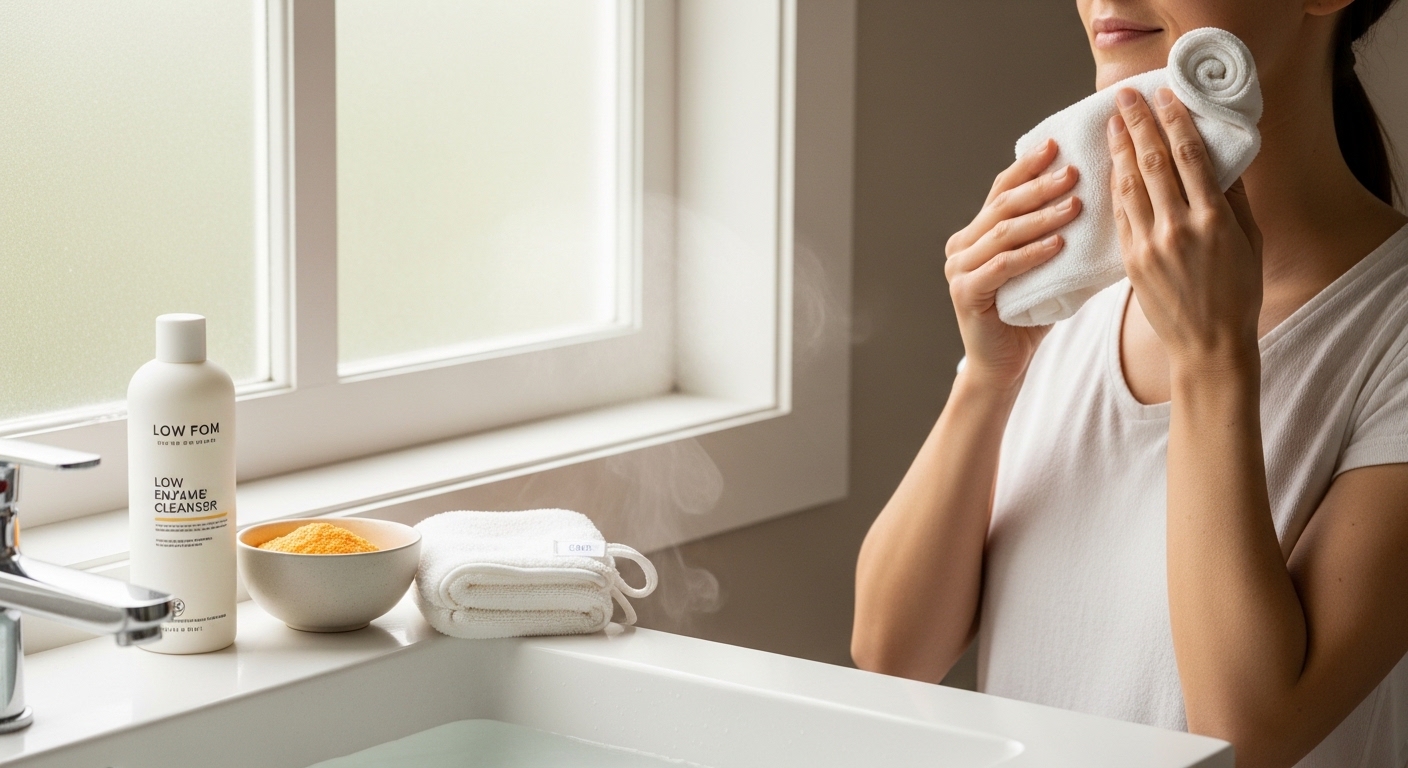
In its mild form, physical exfoliation is safe when it is done gently and in infrequent occasions.
Soft Washcloth Method
Surface build up can be cleared by use of a soft cotton washcloth, which is clean and will not harm the barrier.
How to do it properly:
- Wash using a low foaming cleanser.
- Use lukewarm water (never hot)
- Lightly move the cloth in small circles
- Avoid pressure
- Limit to once or twice weekly
It is a gentle exfoliation process that does not go deep into the skin layers and eliminates loose cells that are located on the surface. Do not use thick scrubs that have big particles such as crushed walnut shells, and salt crystals. These produce unequal abrasions which may result in inflammation.
Enzyme-Based Exfoliation
Fruit enzymes (e.g. papain of papaya or bromelain of pineapple) are used to dissolve dead surface cells, instead of scrubbing them off by hand.
Benefits:
- Gentle on sensitive skin
- Minimal irritation
- Smooths texture gradually
- Suitable for beginners
Enzymes are slow and are best used in the sensitive skin exfoliation. Their average contact time is 5-10 minutes and the frequency of use is 1 time per week.
Microfiber Cleansing Pads
When combined with cleanser, soft microfiber cloths remove the dead skin cells.
Guidelines:
- Use light pressure only
- Replace cloths frequently
- Should not be used together with chemical exfoliation the same day.
The secret of safe bodily renewal is moderation.
Chemical Gentle Skin Renewal Methods
The chemical exfoliation may seem as an intimidating term yet when used at lower strength and suitable frequency, it can prove to be highly effective.
Low-Strength AHAs
Bonds between dead cells are dissolved by alpha hydroxy acids (such as glycolic or lactic acid).
For gentle use:
- Choose 5–8% concentration
- Start once weekly
- Apply at night
- Follow with moisturizer
In most cases, lactic acid may be consumed more easily than glycolic acid because it is bigger in size.
AHAs can be especially used on dry or damaged skin by the sun.
PHAs: The Most Beginner-Friendly Option
PHAs are larger and their molecules take a long time to penetrate and are less irritating.
Benefits include:
- Hydrating properties
- Lower risk of redness
- Suitable for reactive skin
- Gradual smoothing effect
PHAs are typically regarded as the securest type of non-irritating resurfacing in case of the beginner.
Azelaic Acid
Azelaic acid helps with mild renewal that eliminates inflammation and to create a clearer tone.
Ideal for:
- Acne-prone skin
- Post-inflammatory hyperpigmentation
- Redness-prone skin
The frequency of use is 2-4 times a week and it combines with barrier-repair moisturizers.
Retinol — Introduced Slowly
Retinol speeds up cell turnover and it should be introduced gradually.
Start with:
- Low concentration
- 1–2 nights per week
- Apply moisturizer on (sandwich method) before and after.
Should not be used together with strong acids.
Gradual introduction will avoid irritation and will permit the value with time.
Non-Exfoliating Renewal Boosters
One of the most overlooked Gentle Skin Renewal Methods is improving hydration and barrier health.
Hydration Improves Natural Shedding
In the state of skin dehydration, the dead cells adhere to the surface. The moist skin exfoliates more effectively.
Look for:
- Glycerin
- Hyaluronic acid
- Beta-glucan
- Aloe vera
Hydration causes the skin to become fat and feel smooth within it without exfoliation.
Barrier Repair Supports Renewal
The lipid layer is rebuilt by ceramides, cholesterol and fatty acids. A dense barrier enables cells to divide effectively. Often, by working on repair, instead of exfoliating more often, a person will have smoother texture in their work.
Facial Massage and Circulation
Massage helps to increase blood circulation and lymphatic drainage.
How to do it:
- Apply moisturizer
- Use upward strokes
- Spend 2–3 minutes
- Keep pressure light
Enhanced flow of blood to body provides nutrients required in healthy circulation.
The Role of Sleep in Renewal
The maximum regeneration of the skin occurs at night. The growth hormone rises during the deep sleep and assists the production of collagen as well as cell regeneration. Even the best products do not work without proper rest.
Building a Gentle Renewal Routine
The following is an equal weekly plan.
Morning Routine
- Gentle cleanse or rinse
- Hydrating serum
- Barrier-supporting moisturizer
- Broad-spectrum sunscreen
The reason behind the necessity of sunscreen is that the newly rejuvenated skin is more vulnerable to UV damage.
Evening Routine (Exfoliation Night)
- Gentle cleanse
- Apply mild exfoliant
- Hydrating serum
- Barrier cream
Evening Routine (Recovery Night)
- Cleanse
- Hydrate
- Rich moisturizer
Alternate exfoliation with repair days.
30-Day Gentle Skin Renewal Plan
Week 1: Barrier Reset
Focus entirely on hydration and repair.
Week 2: Introduce One Renewal Night
Add mild exfoliation once weekly.
Week 3: Monitor Skin Response
If no irritation occurs, increase to twice weekly.
Week 4: Maintain Consistency
Avoid increasing strength too quickly.
Expected improvements:
- Brighter complexion
- Smoother surface
- Reduced congestion
- More even tone
Significant change takes 6–8 weeks.
Frequency Guidelines
- Sensitive skin: 1–2 times weekly
- Normal skin: 2–3 times weekly
- Oily skin: 2–3 times weekly
Daily exfoliation is rarely necessary.
Reduce frequency if you notice:
- Stinging
- Peeling
- Persistent redness
- Tightness
Gentle Skin Renewal Methods for Different Skin Types
Sensitive Skin
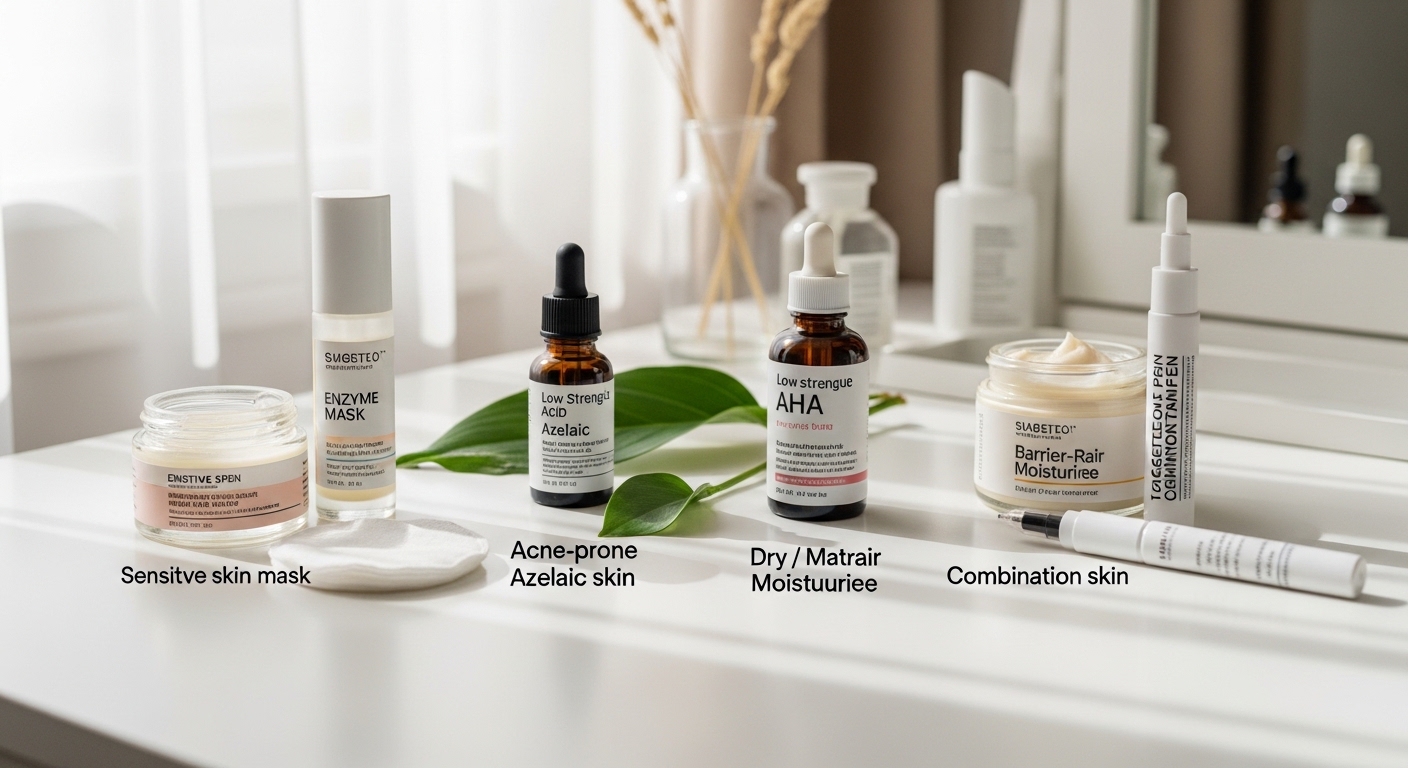
Use PHAs or enzyme masks. Avoid fragrance-heavy products.
Acne-Prone Skin
Combine azelaic acid with light peeling. Pay attention to the management of inflammations.
Dry or Mature Skin
Blend low strength AHAs and enriched barrier creams.
Combination Skin
If it is a case of acne on the face, spot-treat the oily areas and not all over.
Common Mistakes to Avoid
- Mixing multiple acids
- Exfoliating acids and using retinol simultaneously.
- Skipping sunscreen
- Using hot water
- Changing products frequently
Patience is essential.
When to Seek Professional Help
Consult a dermatologist if you experience:
- Severe cystic acne
- Rosacea flare-ups
- Persistent hyperpigmentation
- Ongoing barrier damage
Professional treatments may be required for deeper concerns.
Summary: Gentle Skin Renewal Methods
Gentle Skin Renewal Methods focus on improving skin texture, tone, and radiance without damaging the skin barrier. This method does not accelerate the skin to exfoliate aggressively or harshly, using high-strength acids but rather helps the skin to turnover in its own manner, with mild and consistent and barrier-safe methods. Balance is the key to the renewal of healthy skin.
In cases of a healthy skin barrier that is well hydrated, dead skin cells naturally and effectively exfoliate. Instead, over-exfoliation results in irritation, inflammation, redness, as well as breakouts – eventually slackening the process of renewal instead of making it quicker.
The risk-averse renewal plan comprises:
- Light exfoliation 133 times per week.
- Acids that are easy to use such as PHAs or weak AHAs.
- Azelaic acid acne prone/sensitive skin.
- Regular hydration using such ingredients as glycerin and hyaluronic acid.
- Aid of reparation of barriers with the help of ceramides and fatty acids.
- Every day sunscreen to shield freshly rejuvenated skin.
Other non exfoliating elements like sleep, hydration, and mild facial massage too are a potent force behind natural turnover. The lesson here is quite easy to grasp and that is that renewal is best done slowly, gradually and in a manner that is not irritating.
You provide a more sustainable way of creating a smoother, brighter, healthier skin by focusing protection as well as intensity and consistency as aggression.
Frequently Asked Questions
Q1. What are Gentle Skin Renewal Methods?
Gentle Skin Renewal Methods are skincare approaches that support natural cell turnover without causing irritation or damaging the skin barrier. They include mild exfoliation techniques, hydrating ingredients, barrier-repair products, and gradual introduction of active ingredients instead of aggressive resurfacing treatments.
Q2. How often should I exfoliate for safe skin renewal?
For most people:
-
Sensitive skin: 1–2 times per week
-
Normal or combination skin: 2–3 times per week
-
Oily skin: 2–3 times per week
Daily exfoliation is rarely necessary and may lead to irritation or barrier damage.
Q3. Can I use retinol with gentle renewal methods?
Yes, but introduce it slowly. Start with a low concentration 1–2 times per week and avoid combining it with strong acids on the same night. Always support it with hydration and barrier-repair ingredients to reduce irritation.
Q4. What are signs I’m over-exfoliating?
Common signs include:
-
Redness that doesn’t fade
-
Burning or stinging
-
Increased breakouts
-
Tight, shiny skin
-
Flaking and sensitivity
If these occur, pause exfoliation and focus on barrier repair for at least one to two weeks.
Q5. Is exfoliation necessary for glowing skin?
Not always. Sometimes dullness is caused by dehydration rather than dead skin buildup. Improving hydration and barrier health alone can enhance brightness without increasing exfoliation.