

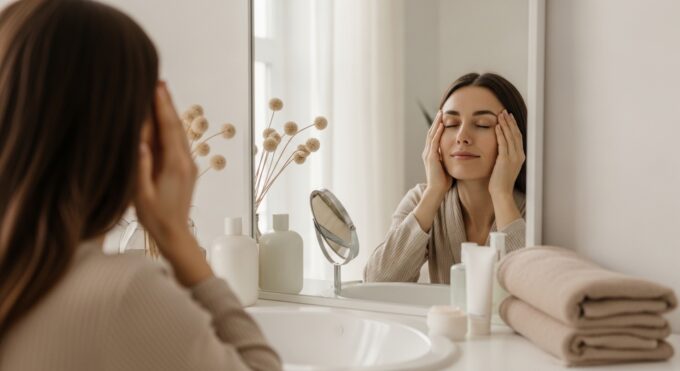
Face Relaxation Techniques at Home
Face Relaxation Techniques at Home can play a powerful role in improving both your skin health and overall well-being. Face Relaxation Techniques at Home are simple practices that help release tension in facial muscles, improve blood circulation, and support the skin’s natural repair process.
Table Of Content
- Face Relaxation Techniques at Home
- Key Takeaways
- Understanding Facial Tension and Why It Happens
- Preparing for Face Relaxation Techniques at Home
- Simple Face Relaxation Techniques at Home
- Forehead Relaxation
- Temple Pressure Massage
- Eye Area Relaxation
- Cheek and Mid-Face Massage
- Jaw Release Technique
- Breathing Techniques That Relax the Face
- A Complete Facial Relaxation Routine
- Natural Methods That Support Facial Relaxation
- Creating a Weekly Deep Relaxation Ritual
- Common Mistakes to Avoid
- Final Thoughts
The issues that many individuals experience due to daily stresses, spending hours on screen, and bad sleeping patterns are tightness in the jaw, lines on the forehead, strain in the eyes, and dull, dry skin. It is possible to learn how to make facial muscles relax naturally at home and thereby mitigate these problems by developing a self-care routine that is soothing. There is unexpected tension in your face.
When you are stressed or worried or fatigued, you tighten the muscles around the forehead, temples, jaw and even about the eyes without even noticing. In the long run, this stress may cause headaches, lines in the face, puffiness, and discoloration of the skin. The good news is that simple face relaxation techniques at home can gradually release this built-up tension and help restore a more relaxed and healthy appearance.
Key Takeaways
- Face relaxation techniques at home help release built-up tension in facial muscles, which can improve circulation, reduce puffiness, and support a healthier natural glow over time.
- Such simple exercises as light facial massage, pressure on the temples, jaw relaxation and slow breathing may be very helpful to relieve stress which is so evidenced on the face.
- Facial relaxation techniques are more effective in preparing the skin with cleansing and a touch of water to avoid irritation in the process of the massage.
- Consistency is a key factor as using such techniques on a regular basis (even a few minutes a day) will eventually result in a new, more comfortable face, a skin texture, and a general sense of relaxation.
- Face relaxation techniques at home work best as part of a broader self-care routine that includes proper skincare, adequate sleep, hydration, and stress management.
Understanding Facial Tension and Why It Happens
Before practicing face relaxation techniques at home, it helps to understand why facial tension develops. Emotional expressions and responses to stress are very closely intertwined with the muscles that make up the face. Whenever the body is put under a strain or feeling anxious, the nervous system triggers the fight or flight mode. This reaction causes tightening of the body muscles including the face.
Some of the daily habits that cause a facial tension include:
- Emotional pressure and stress.
- Clenching of the jaw or teeth grinding.
- Spending too much time in front of computer monitors.
- Poor posture
- Lack of sleep
- Always the same facial expression like frowning.
These aspects make the facial muscles remain contracted than usual. When left over an extended period of time this tension impacts circulation and makes the skin lose its natural radiance.
Practicing face relaxation techniques at home helps shift the body into a calmer state known as the “rest and repair” mode. This state of rest permits the blood to flow better, stimulates lymphatic circulation and makes the skin prettier and smooth.
Preparing for Face Relaxation Techniques at Home
It is possible to make your relaxation practice more effective with a couple of small steps. Preparation assists the skin in taking in the advantage of the massage and makes the methods to be pleasant and relaxing. Begin by cleaning your face with a mild soap to clear the dirt, oil and make-up.
Washed skin will enable your fingers to move easily without any irritation. It is followed by cleaning and then using some light moisturizer or facial oil. The friction is minimized and it makes the massage movements less difficult. The second step is to create a peaceful atmosphere.
Switch off the bright lights, switch off phone notifications and then take some slow breaths and then proceed. These minor activities aid the body to be in a resting position and therefore the facial relaxation methods are better. You can also take a minute or two to use a warm towel before you can start. The warmness calms down the facial muscles and softens the skin to be gently massaged.
Simple Face Relaxation Techniques at Home
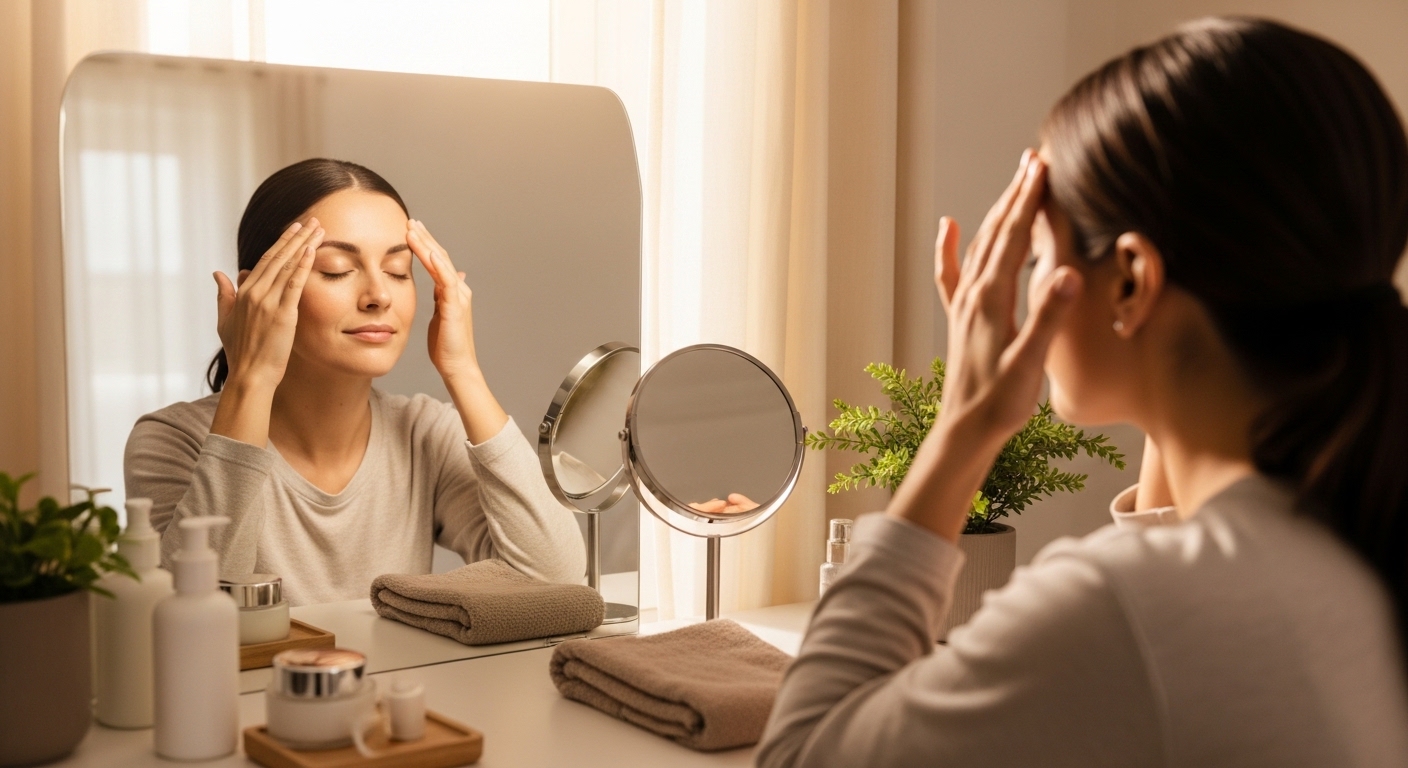
The most effective face relaxation techniques at home are gentle, slow, and consistent. This is not aimed at high pressure but the release of tension with the involvement of the enhancement of the circulation.
Forehead Relaxation
One of the most visible areas of the stress is the forehead. It is habitual to unconsciously squeeze the eyebrows or frown when concentrating. In order to relax this section, you should put both hands on the forehead and slowly move the fingers, pushing them to the temples.
Perform this motion gradually in a minute or so. This movement will aid in the release of tight muscles and make skin smooth. Another thing to do is to press your fingertips gently along the brow line and push outwards. This eases stress and can possibly help to ease the lines of expression as time passes.
Temple Pressure Massage
Temples are sensitive places and stress can accumulate easily in the temples, particularly when the time spent in front of the screen is prolonged. A light circular movement, which dispels this tension, is possible. Two fingers must be put on top of the temple in slow circular movements.
Breath slowly and continue about thirty seconds. This method does not only relax the muscles on the face but it can also be used to relieve minor headaches and mental exhaustion. Practicing this simple step regularly is one of the easiest ways to include face relaxation techniques at home in your daily routine.
Eye Area Relaxation
The muscles around the eyes are sensitive and prone to stress when people are reading, being in front of a screen, and sleep deprivation.
Eye relaxation exercises assist in removing the puffiness and enhancing circulation. Lightly tap with your ring finger around the orbital bone with the inner corner of the eye as the start point then moving outward. This pressure must be very mild. Also you can rest your palms over your closed eyes taking some few seconds to breathe very slowly.
Your hands are so warm that they make you feel relaxed and the muscles of the eye are relaxed. These minor movements aid in the relaxation of the facial muscles as well as in the eyes being made to feel refreshed.
Cheek and Mid-Face Massage
The cheek has a significant contribution to the circulation in the face and natural glow. Light massage here would enhance the circulation and give a more healthy look.
Put your fingers on the sides of the nose and rub them upwards on the cheekbones. Perform this lifting movement a number of times.
This circulation movement promotes skin vitality which is natural. Circular movements that are done slowly on the cheeks can also aid in relaxing facial muscles and also enhancing the circulation of natural oils on the surface skin.
Jaw Release Technique
Another part of the body that people carry tension is the jaw and this is most likely to happen when the individual grinds his teeth or clenches his jaws when faced with stressful scenarios.
As a way of releasing this tension, put your fingers along the jawline and massage in small circles. Beginning close to ears and proceed to chin. You can also open and close your mouth gradually as well as exerting low pressure on the jaw muscles. This will aid relaxation of muscles and could lessen tightness which is part of a headache.
Among all face relaxation techniques at home, jaw massage can provide some of the most noticeable relief because this area tends to hold a significant amount of stress.
Breathing Techniques That Relax the Face
Respiration is a significant factor in relaxation. As one starts to breathe slowly and deeply, the nervous system is signaled by the body to relax. This is to assist facial muscles to relax automatically. A simple breathing method is to have four seconds of slow breathing inhaling through the nose, two seconds of holding and the mouth has six seconds of exhaling. Continue doing so in a few minutes. When breathing, you should be conscious of your face muscles.
Indication of whether the forehead, jaw or eyes are tense. These areas consciously need to be softened. Combining breathing with face relaxation techniques at home improves the overall effect and creates a deeper sense of calm.
A Complete Facial Relaxation Routine
At least a few methods can be used as a part of a more holistic approach to relaxation in a short routine. Start by washing the face and putting a little bit of oil or moisturizer. Begin the ritual using soft strokes on the forehead to loosen the upper face.
Then proceed to the temples and use slow circular movements. Lightly tap around the eyes so as to relieve the strain. Circular motions of the cheeks upwards (to enhance flow of blood in the body) and then by doing circular motions along the jawline to get tight muscles to relax.
This whole routine would require approximately ten minutes, and could be used in the evening as a relaxing self-care routine.
Natural Methods That Support Facial Relaxation
A number of natural habits can be used to augment the impacts of facial relaxation. One of such simple options is the warm compress therapy. Applying warm towel to face few minutes would help to warm the muscle and promote circulation. Another beneficial technique is stretching of the face.
Facial muscles may be made more flexible by gradually lifting the eyebrows, puffing the cheeks, and stretching the jaw. Herbal steam may be also helpful in supporting relaxation through the opening of the pores and stimulating the circulation. Nevertheless, it must be applied sparingly so as not to overheat the skin.
These natural methods complement face relaxation techniques at home and create a more complete self-care experience.
Creating a Weekly Deep Relaxation Ritual
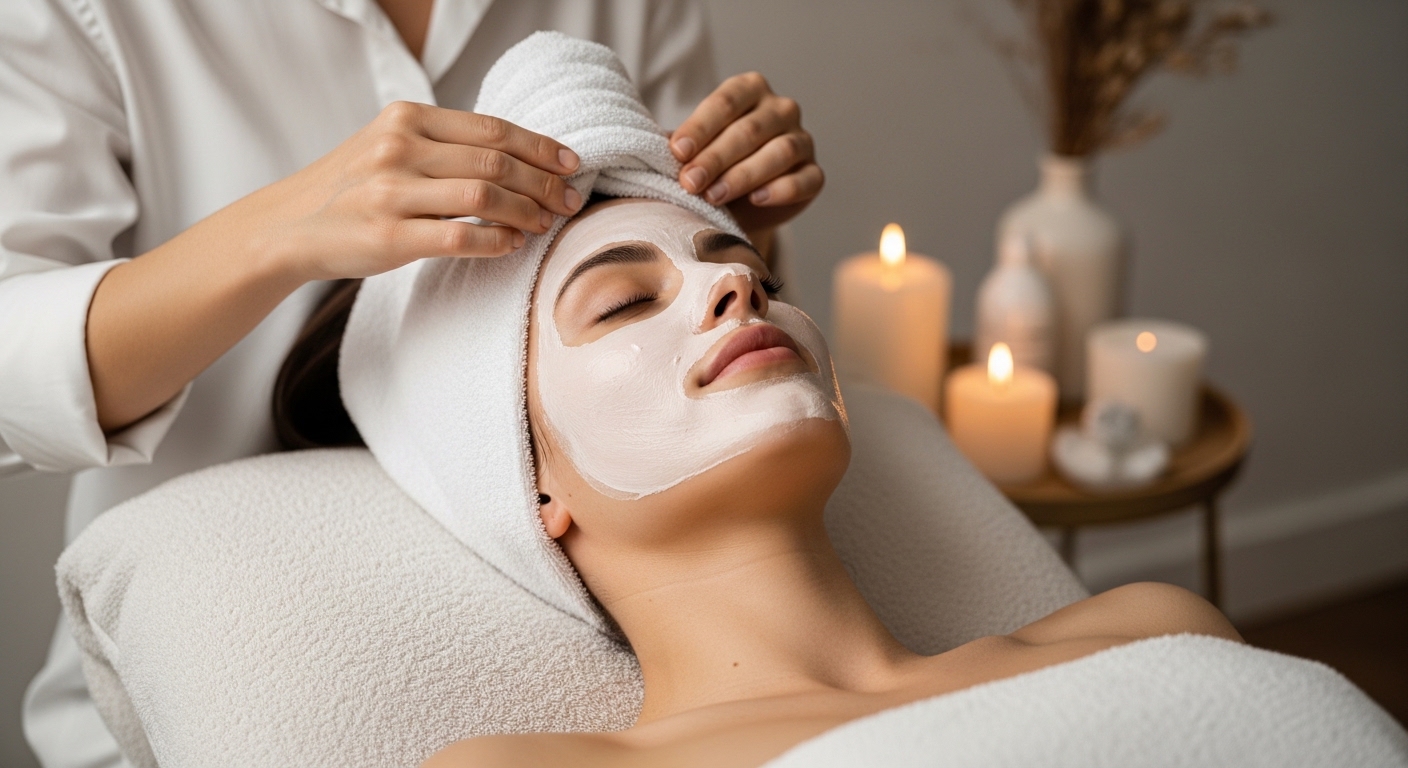
Whereas the short daily practices are better, it is possible to have a longer session of relaxation once a week that can give better results.
A facial relaxation session can be performed every week and it might include:
- Gentle cleansing
- Warm towel compress
- Extended facial massage
- Hydrating mask
- Does the neck relax and does the shoulder relax.
Twenty to thirty minutes on this routine will enable the skin and muscle to relax completely. It also allows one to get a respite off stressful situations in life and the body and mind can revitalize.
Common Mistakes to Avoid
Although face relaxation techniques at home are simple, a few mistakes can reduce their effectiveness. One of the most mistakes is to put excessive pressure. The muscles of the face are sensitive and intense pressure may not relax the skin, it irritates it.
The other error is massaging in dry skin. Friction is also painful when no moisturizer or oil is applied, which makes it red. Such haste in the process also eliminates relaxation.
These methods are effective when slow and conscious movements are involved. Last but not least, consistency is needed. It might feel good at times to practice in an infrequent manner but consistent sessions do have the most observable benefits.
Final Thoughts
Face Relaxation Techniques at Home offer a simple yet powerful way to care for both your skin and your overall well-being. You take a few minutes a day to indulge in a little massage, breathing, and mind relaxation and you have given your facial muscles the opportunity to relax and your skin the advantage of better circulation.
Consistency is the most significant aspect. No one big activity can help you decrease the stress, have a healthier skin, and build a less stressful routine that can be easily integrated into your life. In the long-run, these methods not only assist in making your face appear more relaxed and refreshed but also offer a nice self-care moment in the hectic world.