

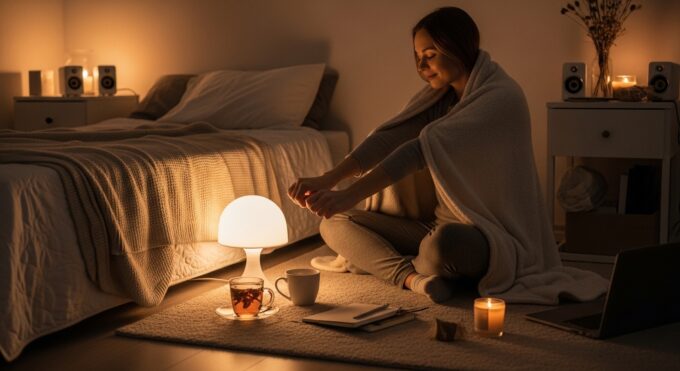
Calming Rituals Before Bedtime
Calming Rituals Before Bedtime are one of the most effective ways to fall asleep naturally and improve sleep quality over time. Now, when you are frequently lying in bed after a hard day, are you so tired of your body but not of your nervous system? Calming Rituals Before Bedtime help retrain your brain to shift from alert mode into rest mode without force or frustration.
Table Of Content
- Calming Rituals Before Bedtime
- What Happens to Your Body at Night
- Why Bedtime Rituals Work Better Than Sleep Hacks
- Principles of Effective Calming Rituals
- Gentle, Low-Effort Activities
- Predictability and Consistency
- Sensory Calming
- Personalization Over Perfection
- 30–60 Minute Calming Bedtime Ritual (Step-by-Step)
- Step 1: Digital Wind-Down
- Step 2: Body Relaxation
- Step 3: Mental Unloading
- Step 4: Sensory Calm
- 10-Minute Calming Rituals for Busy Nights
- Calming Rituals for Different Sleep Struggles
- Trouble Falling Asleep
- Waking Up at Night
- Anxiety at Bedtime
- Bedtime Rituals for Different Energy Levels
- When You’re Physically Exhausted
- When You’re Mentally Overstimulated
- Calming Rituals for Different Personalities
- Creating a Sleep-Friendly Bedroom Environment
- Common Mistakes That Ruin Bedtime Calm
- How Long It Takes for Bedtime Rituals to Work
- Customizing Your Personal Bedtime Ritual
- When Bedtime Rituals Aren’t Enough
- Final Thoughts
- Frequently Asked Questions
- Q1: How long should bedtime rituals last?
- Q2: Can rituals work without strict sleep times?
- 3: Is it okay to skip nights?
- Q4: Why does relaxation feel uncomfortable at first?
- Q5: Do rituals help with anxiety long term?
A lot of individuals do not distinguish between fatigue and sleepiness. You may be physically exhausted but being mentally frenzied. When you are tired then you do not have energy. When you are calm, then your nervous system is safe enough to turn off. In the absence of peace, sleep will be hard to come by.
The bedtime rituals are effective in that they bring about consistency. When they are repeated on a daily basis, they give a clear message to the brain, the day is gone and it is safe to rest. Through this guide, you will be taught how to develop basic, consistent, nightly relaxation plans that have the capacity to calm your mind, lessen stress, and develop long-term sleeping habits.
What Happens to Your Body at Night
There are two primary states of the nervous system of your body, alert and relaxed. The sympathetic system makes you active and alert during the day. The parasympathetic system should replace the sympathetic at night, so that it becomes slower and prepares your body to rest.
The hormone, cortisol, the stress hormone, is naturally caused to reduce in the evening. Simultaneously, the level of melatonin increases to indicate sleep. Nevertheless, this shift is postponed by stress, bright lights and overstimulation. When you send a late mail, get lost in endless scrolls, or think about something you are not doing, your brain will perceive it as being in the middle of the day.
Melatonin release with stress is slowed down; hence, it becomes difficult to fall asleep. The habits at night have a direct effect on the quality of sleep. Hormones are managed and help to get a more restful evening that is calm and predictable.
Why Bedtime Rituals Work Better Than Sleep Hacks
Sleep tricks come in handy with fast solutions. A special pillow, a new supplement or a single method may come to the rescue. However, rituals bring permanent transformation. Rituals rely on repetition. Repeatedly performing the same relaxing activities at night, your brain will be attached to them as a way of being safe.
With time, the cues become automatic stimuli to relax. Calming Rituals Before Bedtime work because they reduce uncertainty. Predictability is a blessing to the brain.
It entails more relaxed knowing what is going to happen. Little things work better than radical measures. An easy 20-minute relaxation before going to bed every night would do better than drastic but intermittent changes.
Principles of Effective Calming Rituals
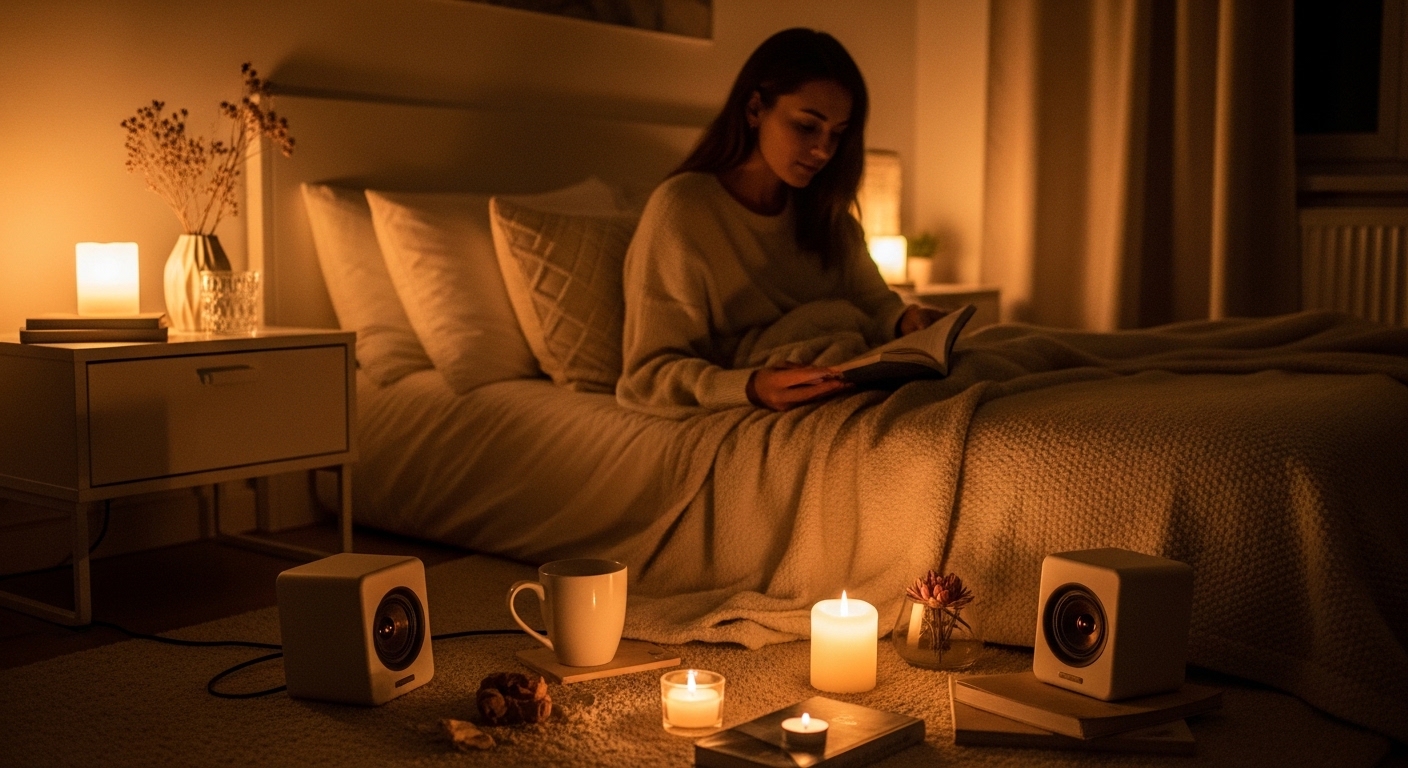
Gentle, Low-Effort Activities
It is not nighttime to work intensively. Select low stimulation behaviors that reduce stimulation intensity as opposed to heightening it.
Predictability and Consistency
Taking the same order every night exercises your nerves. Internal safety is developed through consistency.
Sensory Calming
The soothing textures, soft light and sounds are the indicators of rest. The stress levels are directly affected by the sensory input.
Personalization Over Perfection
Your ritual must be aligned to your way of life. The ideal routine does not exist. It is more about being comfortable than fashionable.
30–60 Minute Calming Bedtime Ritual (Step-by-Step)
Step 1: Digital Wind-Down
The screens overexcite the brain by using brilliant light and continuity. Blue light postpones the creation of melatonin whereas scrolling enhances cognitive activity.
Minimize screen time by dimming screens, specifying a time when screens turn off or by watching audio rather than video. Reading a relaxing book, stretching, or listening to soft music are some of the activities to do instead of scrolling. These options reduce the level of mental stimulation but they are still considered interesting.
Step 2: Body Relaxation
The stress can manifest itself in the shoulders, jaw and hips. Light stretching or slow movement helps to relieve tension which has been accumulated throughout the day.
Focus on slow breathing. Make your breath out a little longer than your breath in in order to trigger relaxation. Do not do tough exercises in the evenings. Exercises of high intensity increase adrenaline and postpone the onset of sleep.
Step 3: Mental Unloading
There are racing thoughts which occur at bedtime. When the distractions are ceased, the mind becomes noisy. Make a list of the pending tasks or worries and leave them at that.
This mere action lets the cognitive pressure off. It is also possible to engage in thought labeling: when you find yourself with a thought, simply refocus on finding breath. The end means the liberation, not the resolution.
Step 4: Sensory Calm
The lighting must be cozy and low. The brain is alert because of bright overhead lights. There is a soft instrumental sound available, white noise, or utter silence – whichever is most relaxing.
Grounding cues are formed by the use of comfort rituals like wrapping in a warm blanket, lotion gradual application, or hot herbal tea. These minor indicators support relaxation methods which develop consistency during the night.
10-Minute Calming Rituals for Busy Nights
An hour is not always available in every evening. Micro-rituals still work. Switch-off screens ten minutes before. Stretch lightly. Take five slow breaths. Light dimming before sleep.
In the case of a parent or with shift workers, add relaxing behaviors to the current ones, i.e. taking a shower, brushing teeth. It is the consistency rather than time. Even short evening relaxation practices are favorable in long term enhancement.
Calming Rituals for Different Sleep Struggles
Sleep problems are not similar. There are those who are unable to fall asleep. Others wake up repeatedly. Others have the nervousness the instant they lie down on the pillow. Knowing what you are fixated on specifically will assist you in selecting the correct method of calming down rather than imposing a blanket solution.
Trouble Falling Asleep
Long periods of lying awake before falling asleep are likely to keep your nervous system in the alert state. This mostly occurs when the mental stimulation is carried on too late at night. It is important to minimize mental contributions during the last hour.
The brain is switched on by heavy discussions, intense shows, work emails or emotionally charged conversations. You can be exhausted but your mind is alert. Rather, move to activities with low demand. Reading slowly in warm light is good since it makes use of your mind without overstimulating it.
Select content that is calming as opposed to engaging or emotionally charged content. The stress response can be controlled using gentle breathing exercises. Attempt breathing in using your nose at a slow pace of four counts and exhaling using six counts. Breaths that are longer give an impression of security to the body.
When the thoughts are running, do not attempt to resolve them. Problem-solving is an activity that keeps the brain busy. Rather, accept the thought and get back to your breath. Over time, consistent Calming Rituals Before Bedtime retrain the brain to associate nighttime with slowing down rather than thinking harder.
Waking Up at Night
Nocturnal awakenings are frequent particularly when stress prevails. The worst thing to do at such times is to pick up your phone. Bright light inhibits melatonin and sends the brain the message that it is morning. The cortisol can also be spiked by notifications or news. In getting up keep the room dark.
Checking time is to be avoided as clock-watching is more pressurizing. Breath slowly or have body awareness. Feel the weight of the body using the mattress. Make yourself relax the jaw and shoulders.
To eliminate anxiety you can say to yourself in silence a calming phrase like I am resting. The aim is not to make oneself fall asleep but get back to relaxed state. Sleep is a natural consequence of the feeling of security that the body has regained.
Anxiety at Bedtime
Bedtime Rituals for Different Energy Levels
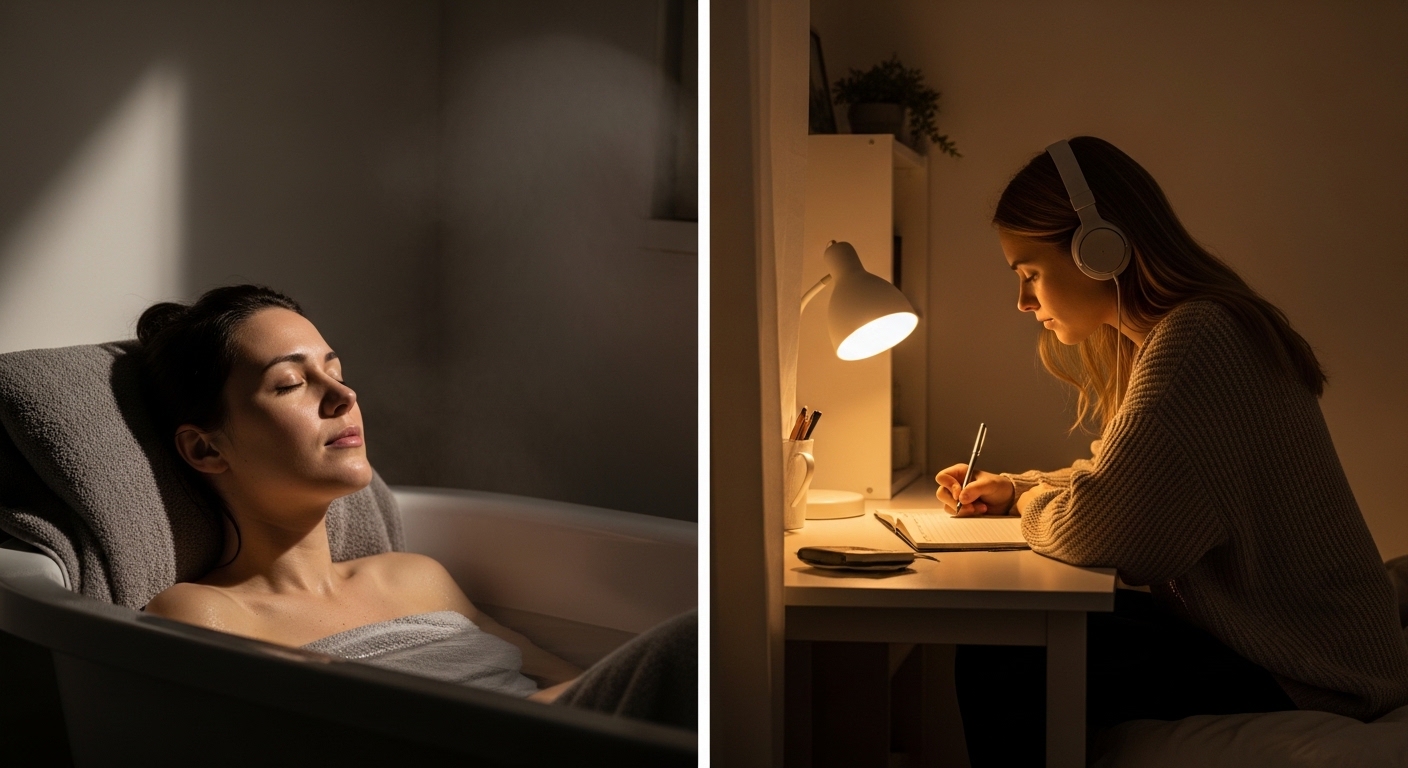
Depending on your energy level, certain rituals will be conducive to you.
When You’re Physically Exhausted
Rituals should be minimal in case your body is too tired. Muscles and body tension can be reduced by a warm shower or bath. Do it through breathing slowly in the dark. Neither stimulating content nor extreme stretching. The nervous system is weak when one is overtired. Simplicity works best.
When You’re Mentally Overstimulated
Mental overstimulation can be comparable to a racing mind or the inability to switch off. Sensory calming is important in this instance. Turn down the lights sooner than it is normal to do. Play low-volume music e.g. soft instrumental music or nature sounds.
Thoughts should be written down before going to bed so that the mind does not loop. The idea here would be to minimize the input of the brain so that it can gradually reduce.
Calming Rituals for Different Personalities
Local ideal ritual does not exist. The personality determines what is relaxing. Movement-based relaxation is the best option to those who do not like to meditate. Stillness may not be necessary to achieve similar benefits, and can be replaced by light stretching, slow yoga, or silent reading.
Organized journaling is effective in the case of over thinkers. Rumination can be reduced by writing three things that are concerning and one positive thought. Creative-minded people can take pleasure in light sketching or writing poetry, or journalling. Emotion can be released through expression.
Very sensitive people usually require less sense input. The reduced light, gentle clothes, and reduced noise establish an incarceration effect. Individualization renders the night routine viable. When a ritual is coerced, it is not going to be sustained.
Creating a Sleep-Friendly Bedroom Environment
The ritual must not have any competition with your bedroom. Lighting plays a major role. Lights are warm and dim which promotes melatonin. Bright overhead lights should be avoided during the time before sleep. Temperature matters.
A low temperature helps induce sleep, since a cooler environment indicates that it is night. Comfort is essential. Pillows and bed breathings that are conducive to physical relaxation. Disruptions are minimized by noise control. The sudden sounds may be buffered with white noise machines, fans or earplugs.
The ritual and environment collaborate. When your bedroom is always used to mean relaxation, your body reacts quicker. With a longer course of time, just being in the space will lead to relaxation.
Common Mistakes That Ruin Bedtime Calm
Coercing relaxation is among the top mistakes. Calm cannot be demanded. When you attempt too hard to go to sleep, you become anxious.
Exercising activities that are excessively stimulated, e.g., exercising, talking or interacting with someone enthusiastic or using some media, etc. maintain cortisol levels.
Alcohol can experience initially calming effects, but it interferes with the deep sleep patterns and causes more awakenings at night. Poor sleeping habits disorient the circadian rhythms.
Although this is not essential as perfection is required, there is overall regularity that facilitates hormonal equilibrium. The defence of your routine makes it more effective.
The minor interruptions every now and then are normal but the regular practices form resilience.
How Long It Takes for Bedtime Rituals to Work
The initial couple of nights will be strange. Your brain is adapting itself to a new pattern. In a period of one to two weeks, they find it easier to fall asleep. Sleep onset shortens. There may be a reduction in night awakenings. The advantages of sleep are not limited to sleep over time.
Mood stabilizes. Energy becomes steadier. The baseline anxiety tends to reduce. Patience is essential. Calming Rituals Before Bedtime build gradually through repetition, not instant transformation.
Customizing Your Personal Bedtime Ritual
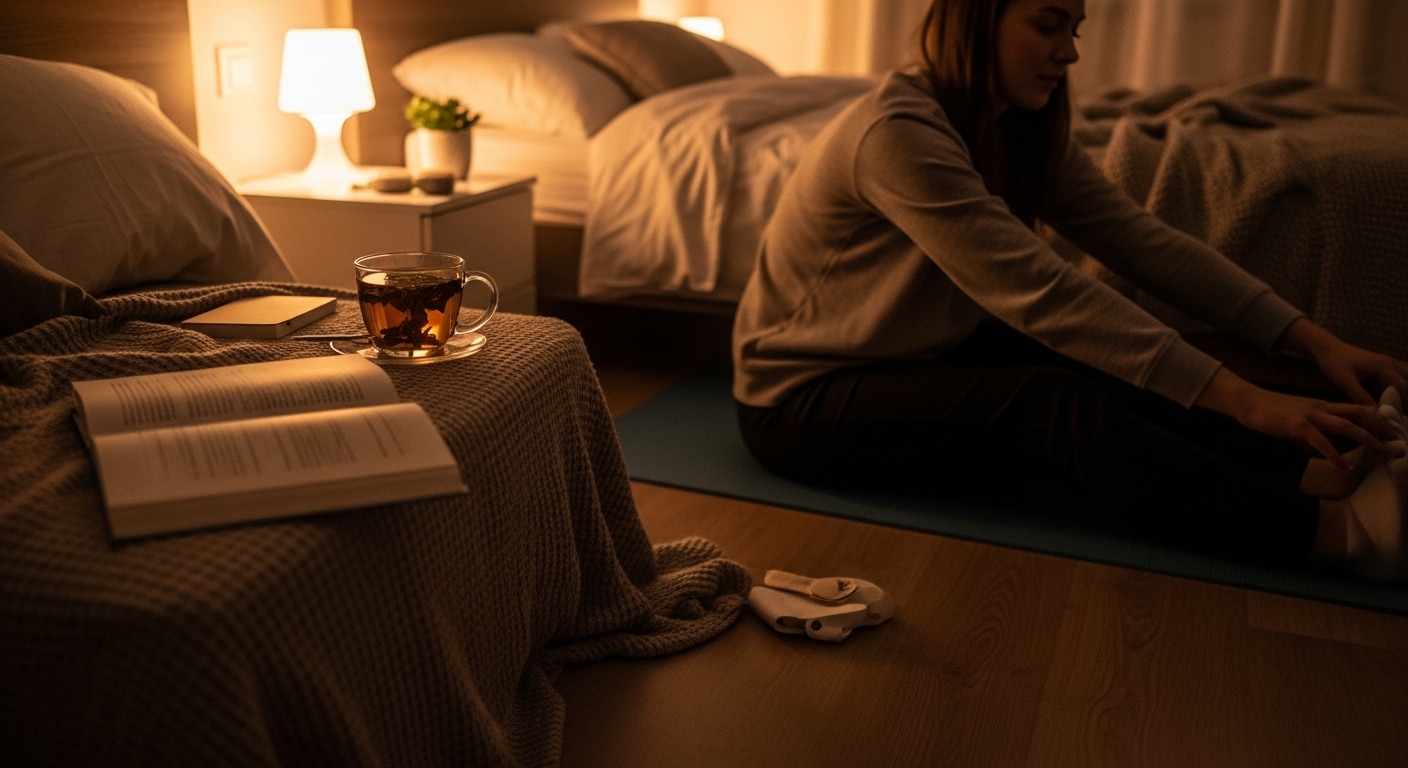
Prefer two or three relaxing anchors instead of developing a system that is intricate. e.g. dim lights, stretching softly, and reading. Rituals should be according to your way of life. Evenings are hectic, so do not take too much time. In case you like to take more time to wind-down, grow gradually.
Adapt when life changes. Flexibility may be necessitated by travel, work shifts or family demands. Abdicate the notion of ideal sleeping patterns. It is better to be consistent than to be precise. Even incomplete rituals aid in the control of the nervous system.
When Bedtime Rituals Aren’t Enough
In case of insomnia and the persistent effort, it is possible to use the professional help even in weeks. Sleep problems that last along with time can be indicator of anxiety disorders, hormonal disorders, burnout or other health related issues.
Calming Rituals Before Bedtime support healthy sleep patterns, but they do not replace medical care when deeper intervention is required. Seeking help is not failure. It is a move towards long-term well being.
Final Thoughts
Sleep is a skill, not a switch. It can not be pushed, but can be helped. Calming Rituals Before Bedtime teach your nervous system that nighttime is safe. Minor routines at night establish the confidence in your body. Restlessness is turned to deep sleep as time goes by as a result of consistency.
When you have a busy mind at night, then you should start slowly. Even the most basic of rituals that are performed every day are capable of making a significant change. You do not need perfection. It requires both time and practice.
Frequently Asked Questions
Q1: How long should bedtime rituals last?
Twenty to thirty minutes is ideal, but even ten minutes can help.
Q2: Can rituals work without strict sleep times?
Yes. Consistent patterns matter more than exact timing.
3: Is it okay to skip nights?
Occasional flexibility is fine. Return gently the next evening.
Q4: Why does relaxation feel uncomfortable at first?
Your body may be used to constant stimulation. Stillness can feel unfamiliar before it feels safe.
Q5: Do rituals help with anxiety long term?
Yes. Regular relaxation techniques lower baseline stress over time.